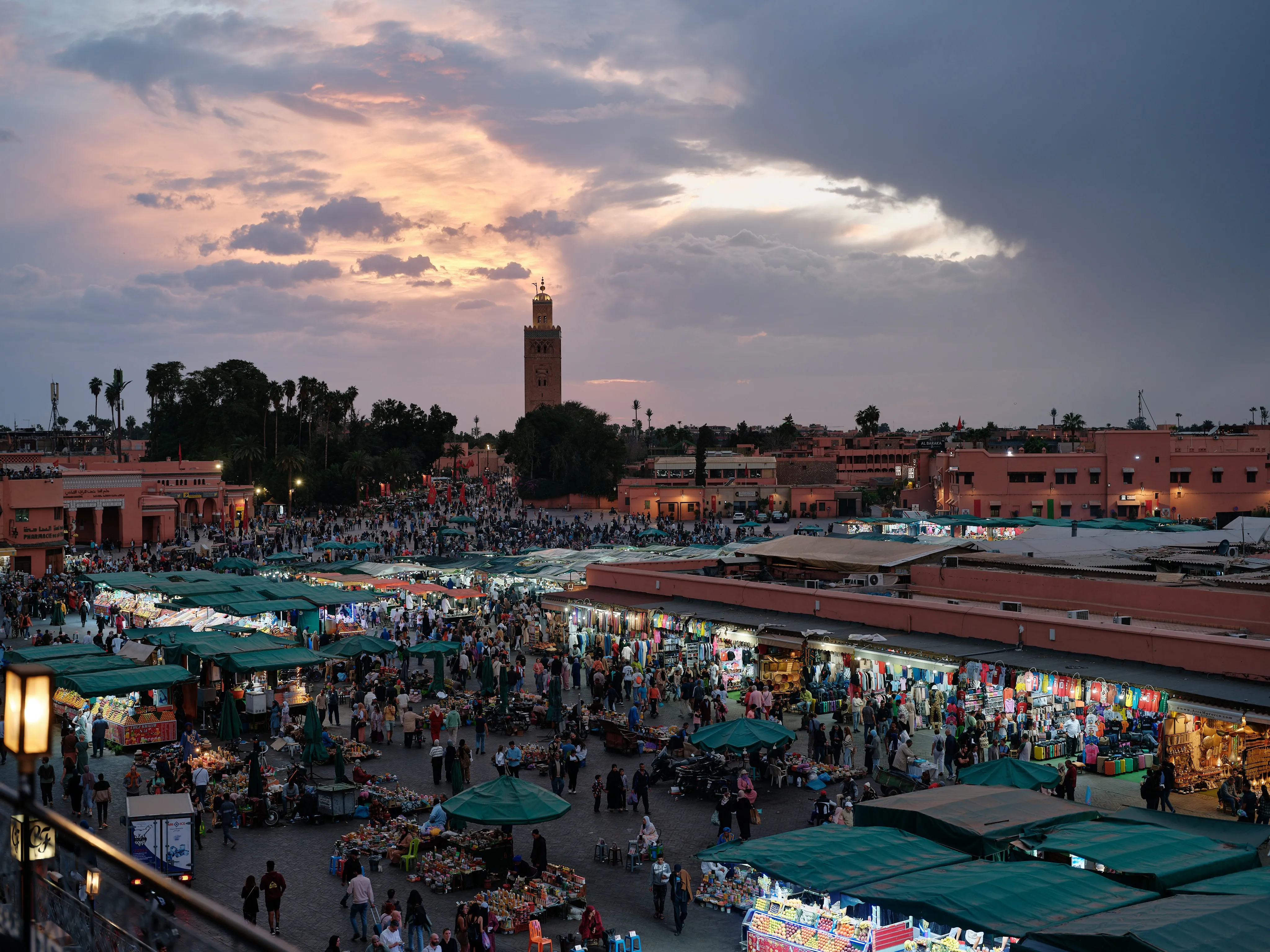
Yes, Jemaa el-Fna is worth it — as long as you know what you’re coming for and you go at the right time. If you’re expecting a “clean,” well-signposted and comfortable tourist site, you may be disappointed. But if you come for a sensory, human and living immersion — an open-air theatre unlike anywhere else in the world, listed by UNESCO — then the square more than delivers. That’s the nuance: Jemaa el-Fna isn’t a monument you “visit,” it’s an experience you live, and everything hinges on your state of mind.
Let’s be frank: the question “is it a tourist trap?” keeps coming up, and it’s a fair one. Yes, there are touts, inflated prices, paid photos and a degree of staging. But reducing the square to that misses the whole point. Thousands of Marrakchis come here every evening to eat, meet up, listen to a storyteller or simply wander. It isn’t a set built for tourists: it’s an authentic place of everyday life that tourism happens to frequent, which is not the same thing.
In this honest, balanced review, we answer plainly: what makes the square exceptional, what genuinely disappoints, who it appeals to (and who it appeals to less), and above all how to actually enjoy it so you don’t walk away with a bitter taste.
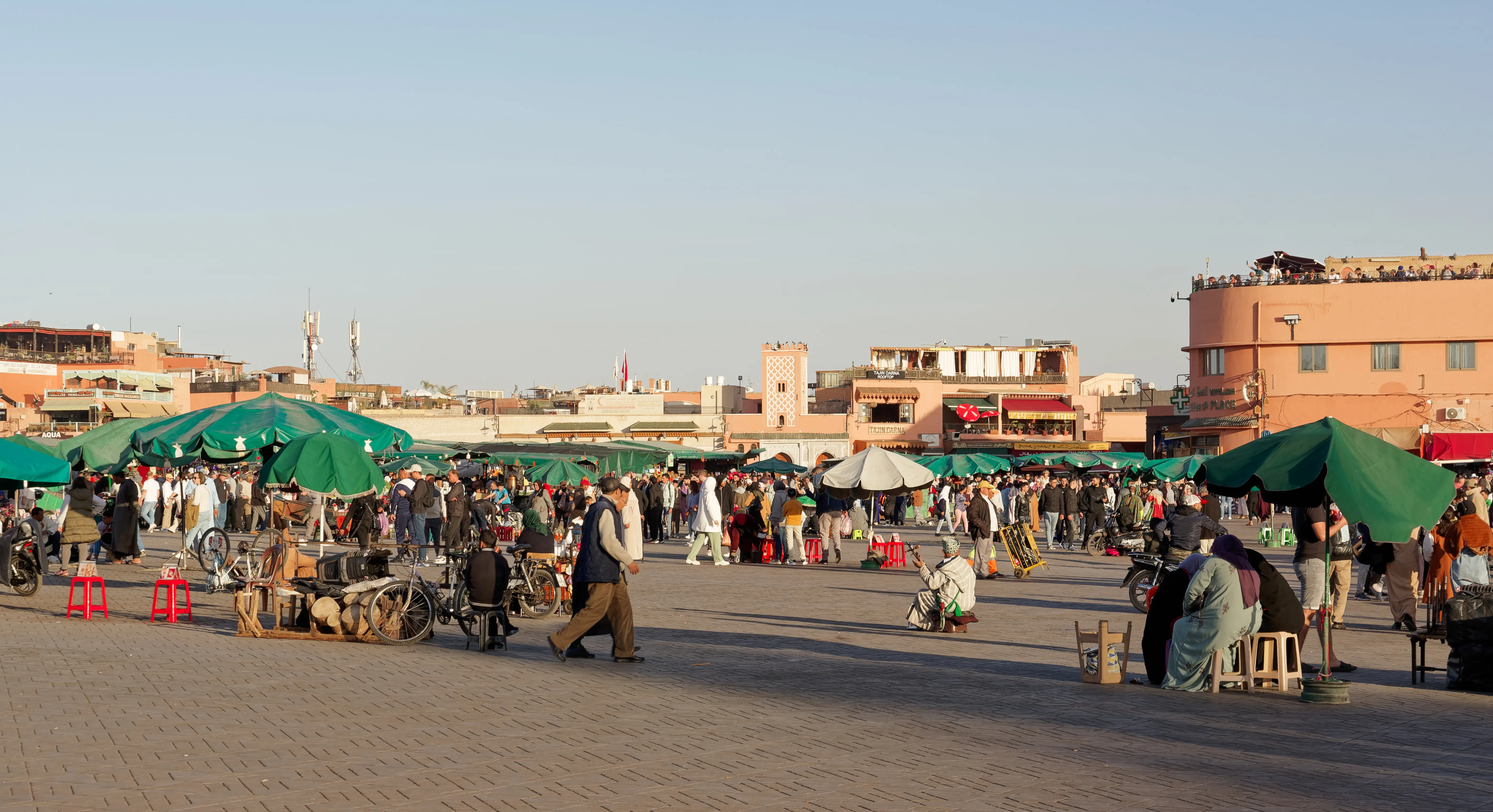
What exactly is Jemaa el-Fna?
Before passing judgement, you need to understand the nature of the place. Jemaa el-Fna is the great central square of the Marrakech medina, active for close to a thousand years. By day it’s relatively quiet: a few snake charmers, henna sellers, orange juice stands, water carriers in red costumes. It’s in the evening that the magic happens: as night falls, dozens of food stalls set up in a matter of minutes, the smoke from the grills rises, the Gnawa music troupes strike up, the storytellers (the hlaykia) gather their circles of listeners, and the square turns into a total spectacle.
In 2001, UNESCO proclaimed the square’s cultural space a “masterpiece of the oral and intangible heritage of humanity.” It isn’t the architecture that’s listed — the square is simply a large open space — but the living practices that unfold there: storytelling, music, acrobatics, an oral culture handed down from generation to generation. This distinction changes everything about how to approach it: you don’t come to admire stones, you come to witness a living tradition. To learn more, UNESCO has an official page dedicated to this cultural space.
The PROS: why the square really is worth the trip
Let’s be clear about what makes Jemaa el-Fna so strong. These are the things that, for most visitors, more than justify the trip.
- An atmosphere you won’t find anywhere else. The energy of the evening, the density of sound and sight, the smell of the skewers: nowhere else in Morocco concentrates so much intensity. It’s a sensory jolt.
- A 100% free show. Wandering, watching, listening to the musicians: all of it costs nothing. You only pay for what you consume.
- Affordable street food. You can dine perfectly well for a few euros: harira soup, snails, skewers, fried fish. The freshly squeezed orange juices are an affordable classic.
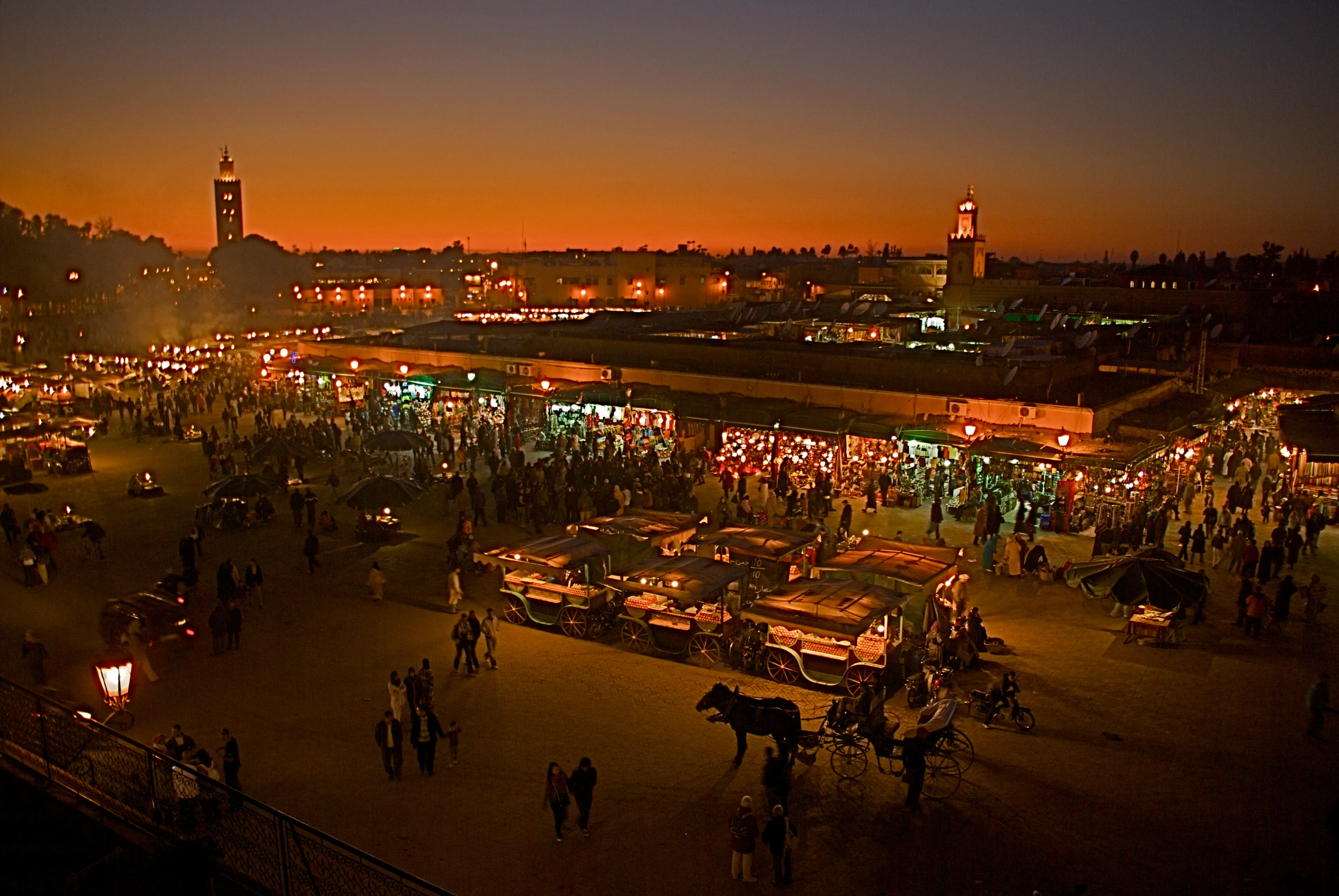
- The sunset from a terrace. One of the great moments: heading up to a rooftop, ordering a mint tea and watching the square light up as the Koutoubia is silhouetted against the orange sky.
- A genuine cultural heritage. The storytellers and the Gnawa carry on centuries-old traditions. Watching a halqa (a performance circle), even without understanding Arabic, has something moving about it.
To organise all of this without missing a thing, our complete guide to what to see and do at Jemaa el-Fna details every attraction and the best order to enjoy them in.
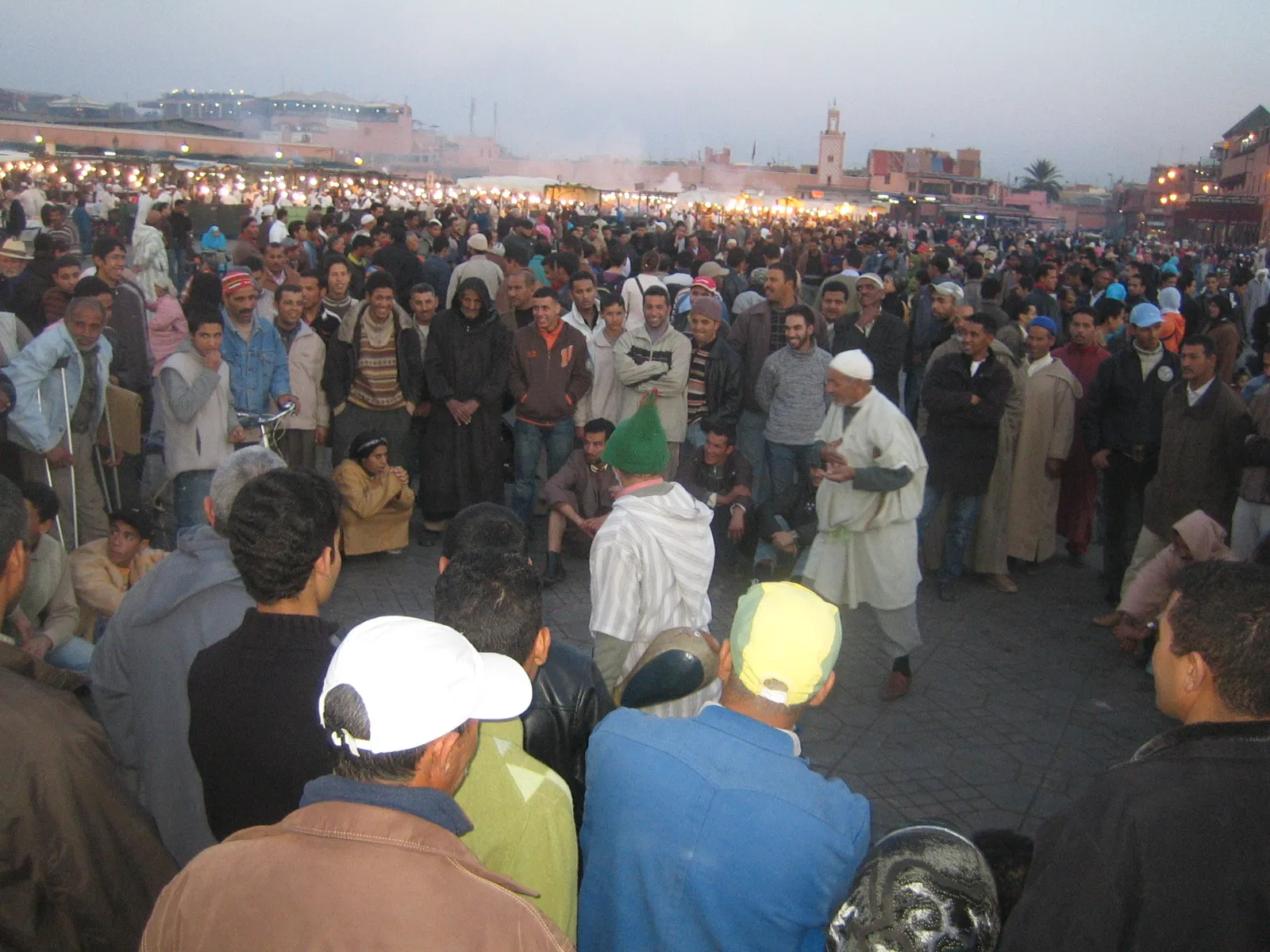
The CONS: what can disappoint (and why)
Honesty demands we name the frustrations. They’re real, but nearly all of them are avoidable if you anticipate them.
- The constant solicitations. Stall touts, forced henna, monkeys and snakes thrust into your arms for a paid photo: it’s tiring, especially if you don’t like saying no.
- “Tourist” prices. Without checking or haggling, you sometimes pay 2 to 3 times the fair price. A juice, a photo, some henna: each one can spring a nasty surprise.
- The crowds and the heat. In high season, the square is packed. In peak summer, the daytime heat is crushing — which is exactly why you go in the evening.
- Animal welfare. The monkeys kept on leashes and the charmers’ snakes raise a real ethical question. Many visitors now choose not to feed these practices.
- The feeling of “seen it before.” Some food stalls, heavily geared towards tourists, look alike and tout aggressively. The quality there is uneven.
So, tourist trap or not? The nuanced answer
It’s both at once, and that’s precisely what makes it fascinating. Jemaa el-Fna isn’t a “fake” village rebuilt for tour buses: it’s a centuries-old place of everyday life, frequented daily by locals, which has developed over time a commercial layer aimed at visitors. The two coexist in the same space.
The “tourist trap” side does exist: it’s concentrated in certain food stalls with pushy touts, the photos with animals, forced henna and prices inflated to match the customer. But a few metres away, an old Marrakchi is listening to a storyteller, a local family is dining at a harira stall, teenagers are hanging around after school. Authenticity and the trap live side by side — it’s up to you to navigate between the two.
The verdict: it isn’t a tourist trap in the sense of an artificial, meaningless place. It’s an authentic place where tourism has its excesses. Stay clear-headed and a little prepared, and you experience the real square; drop your guard, and you’ll only see its commercial face.
Who does Jemaa el-Fna really appeal to?
Not everyone has the same sensibility. Here, plainly, is who the square suits — and who it doesn’t.
| You’ll love it if… | You’ll be rather disappointed if… |
|---|---|
| You enjoy immersion, noise, life | You’re looking for calm and space |
| You’re curious about culture and people | You want a site to quickly “tick off” |
| Street food appeals to you | You’re very particular about hygiene |
| You’re happy to say no to vendors | Solicitations quickly stress you out |
| You come in the evening, with no rigid plan | You only spend 20 min there at high noon |
In short: the square delights open-minded and flexible travellers, and frustrates those expecting a smooth, structured experience. Families with children generally enjoy it a great deal (acrobats, musicians, festive atmosphere), provided they hold the little ones’ hands firmly in the crowd.
How to REALLY enjoy it: the game plan
Here’s the difference between a disappointing visit and an unforgettable evening. This advice distils everything that matters.
- Come in the evening. The square is dull by day and magical after sunset. Aim for late afternoon to catch the day-to-night shift.
- Start with a rooftop. A terrace for the sunset gives you an overview and a calm moment before diving into the fray.
- Set prices BEFORE. For henna, a photo, a dish: agree the price first, always. It’s the golden rule against nasty surprises.
- Follow the locals for food. A stall packed with Marrakchis is a mark of quality and honest prices. Steer clear of the most aggressive touts.
- Bring small change. Everything is paid in cash. Take out only the agreed amount, never your whole wad.
- Learn to say “no thanks” and keep moving. Without hostility but without hesitating. A calm refusal defuses 90% of solicitations.
- Decide your stance on the animals. Many prefer not to pay for photos with monkeys and snakes. It’s a personal choice, but an informed one.
For the precise budget of each item, see our detailed article on prices at Jemaa el-Fna, and to outwit every trap, our feature on safety and scams reviews all the techniques worth knowing.
How much time should you spend there?
Don’t make the mistake of spending just twenty minutes there in passing. To grasp the spirit of the square, allow at least two to three hours in the evening: enough time for a tea on a terrace, a stroll, dinner at a stall and a pause in front of the musicians. Ideally, come back on two different evenings during your stay in Marrakech — the atmosphere varies, and the second, more relaxed visit is often the best.
The square fits naturally into a wider exploration of the medina: it’s the starting point for the souks, the Koutoubia mosque and the main monuments. It’s the beating heart of Marrakech, and as such, missing it would be a shame. To understand its historical role and significance, the Wikipedia page on Jemaa el-Fna is a good complement.
The final word
Jemaa el-Fna is worth it — truly — for the vast majority of travellers. It isn’t a comfortable, signposted visit: it’s a raw plunge into Marrakchi culture, with its wonders and its flaws. The square rewards curiosity and preparation, and punishes naivety and haste. Arrive in the evening, with an open mind and a few reflexes in your pocket, and you’ll understand why this place has fascinated travellers for centuries. The finest part of the show, we’ll say it again, costs nothing: just sit down, watch, and let yourself be carried along.
Frequently asked questions
Is Jemaa el-Fna a tourist trap?
Partly, but not only. The square blends genuine, centuries-old local life with a commercial layer aimed at visitors (paid photos, forced henna, inflated prices). It’s not an artificial place: it’s an authentic space where tourism has its excesses. Prepared and clear-headed, you experience its authentic side.
Is it better to visit the square by day or in the evening?
The evening, without a doubt. By day, the square is relatively quiet and unremarkable. It’s at nightfall that it comes alive: food stalls, musicians, storytellers, crowds. Aim for late afternoon to enjoy the sunset and then the nighttime transformation.
How much time should you plan for the square?
Allow at least two to three hours in the evening to truly enjoy it: a tea on a terrace, a stroll, dinner at a stall, a pause in front of the performers. The ideal is even to come back on two different evenings, as the atmosphere varies from one day to the next.
Is Jemaa el-Fna suitable for families with children?
Yes, families generally enjoy it: acrobats, musicians and a festive atmosphere delight children. You simply need to hold them firmly in the dense crowd, keep an eye on the solicitations (animals) and favour early evening, before the square gets too packed.
Is the square dangerous?
No, Jemaa el-Fna is not dangerous: violence is rare and the police presence is visible. The real risks are pickpockets in the crowd and scams (prices, henna, photos). Keep your belongings close, always agree prices in advance, and check our safety feature to avoid them.