Private Driver in Marrakech: The Best Way to Get Around from Jemaa el-Fna
Private driver, petit taxi, grand taxi, bus or calèche: how to get around Marrakech from Jemaa el-Fna, with the honest pros, cons and practical tips for each.
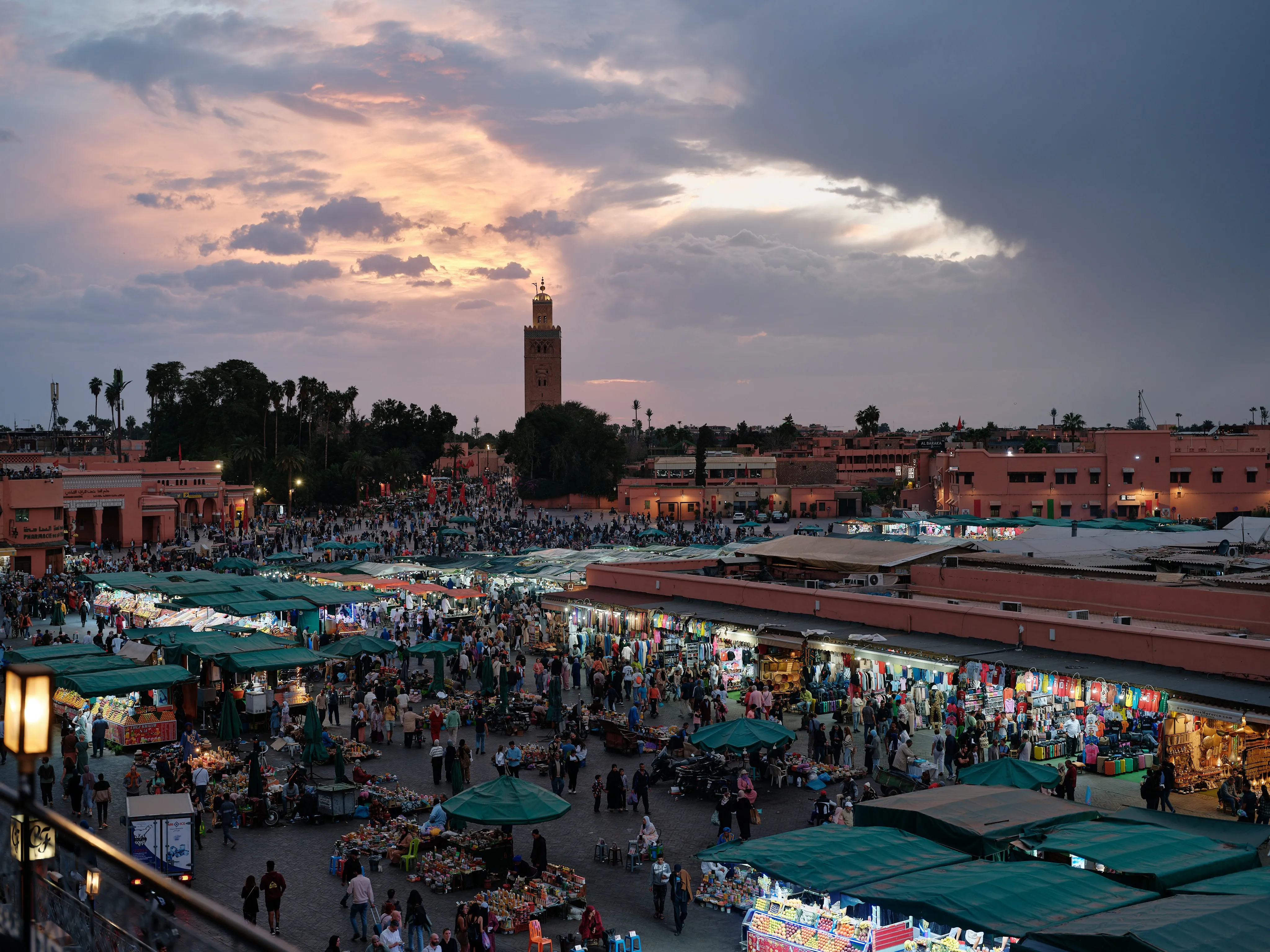
Marrakech · Morocco · UNESCO Heritage
The beating heart of Marrakech, where storytellers, musicians and cooks bring the largest open-air theatre in Africa to life every evening. Here is the complete guide to discover it, understand it and enjoy it to the fullest.
The definitive guide
Jemaa el-Fna square — also spelled Jemaa el-Fnaa, Djemaa el-Fna or Jamaa el Fna — is the main square of Marrakech and one of the most famous in the Arab world. Set at the entrance to the medina, at the crossroads of the souks, it has been a place of gathering, trade and spectacle ever since the city was founded, nearly a thousand years ago.
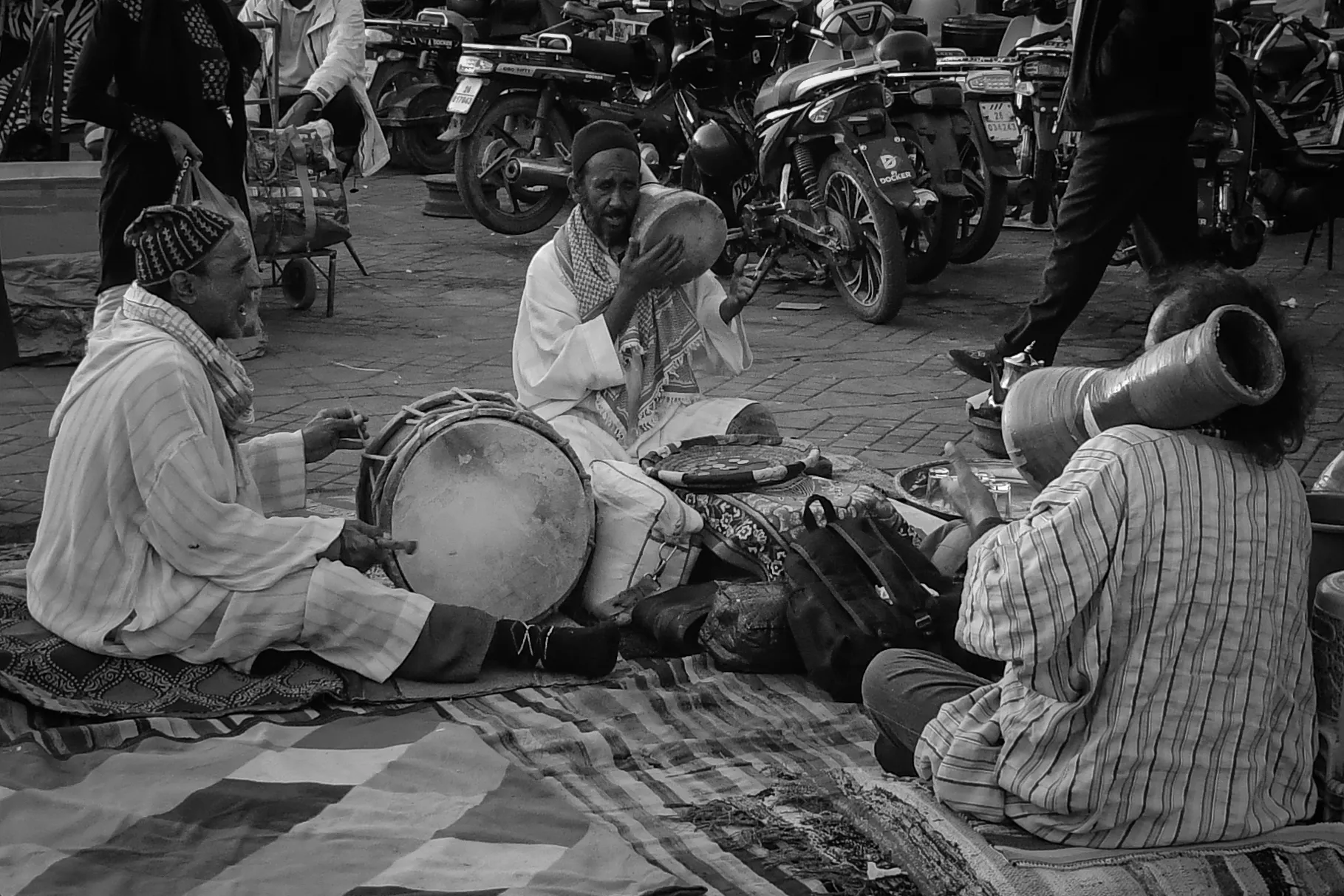
By day, it moves to a gentle rhythm: orange-juice carts, snake charmers, herbalists and water sellers in red costumes. But it is as night falls that it transforms: dozens of food stalls spring up within minutes, the smoke of grilling fills the air, and the halqa — those circles of onlookers — form around storytellers, Gnaoua musicians, dancers and acrobats. In 2001, UNESCO made this living space one of the very first "Masterpieces of the Oral and Intangible Heritage of Humanity".
This guide brings together everything you need to know: its history and the meaning of its name, what to see and do there, where and what to eat, practical information (opening hours, access, prices) and our tips for avoiding scams and enjoying the square with peace of mind.
To experience on the square
A living heritage where every circle tells a story. Here are the must-see encounters — to discover with curiosity and respect.
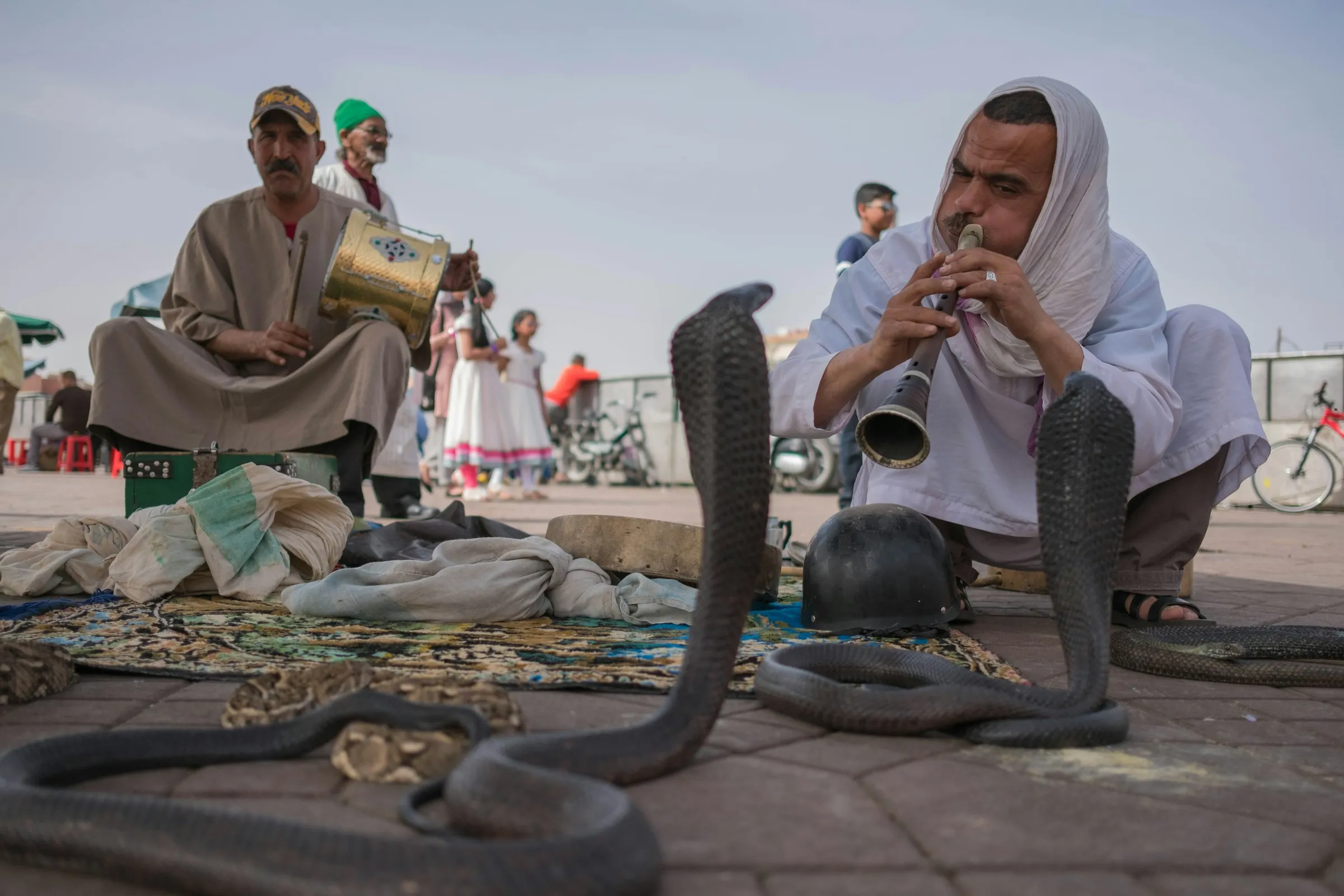
The Aïssawa and their hypnotic ghaïta — an iconic and much-debated spectacle.
See everything there is to do →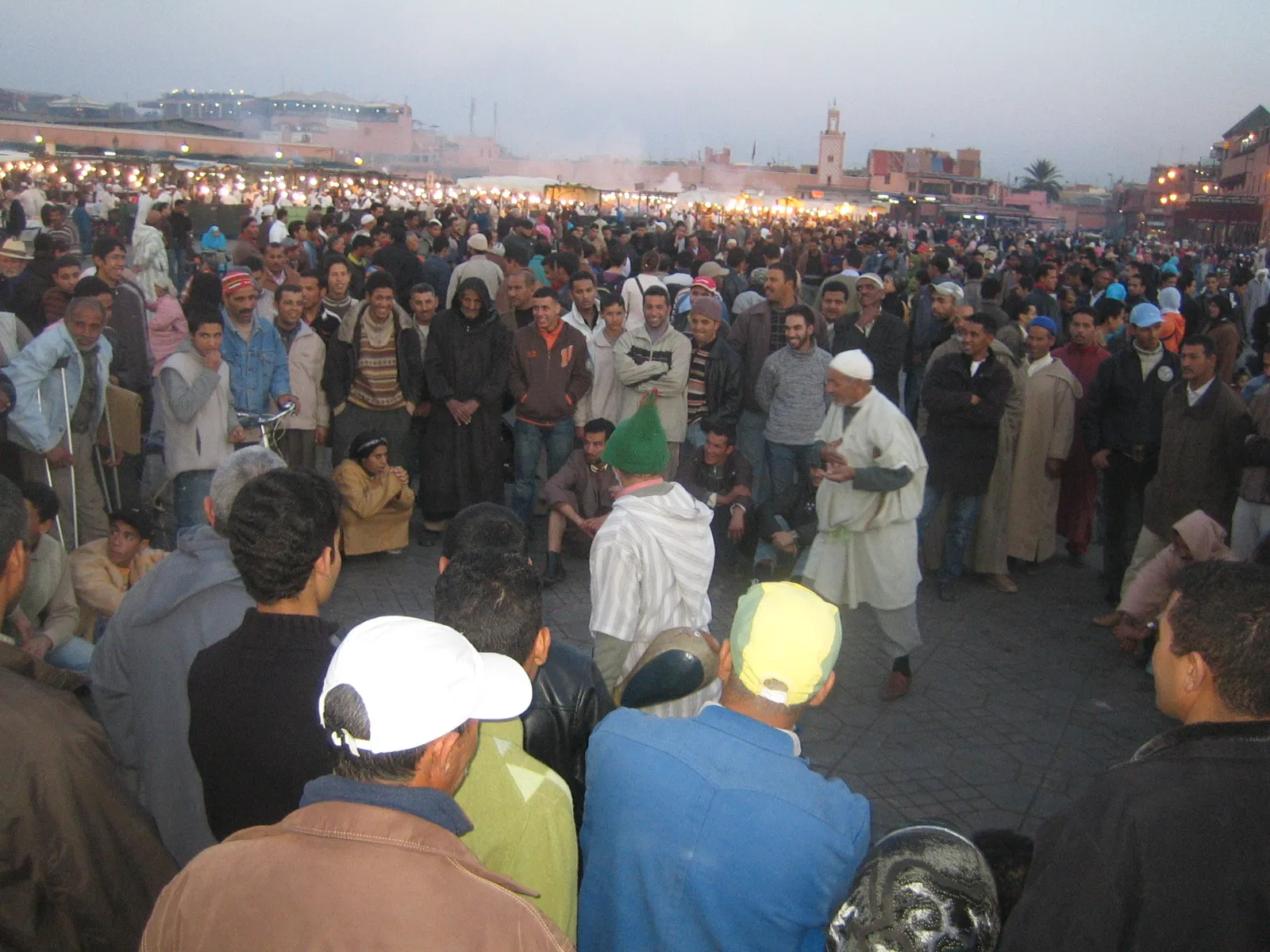
The intangible heart of the square: the circles of storytellers listed by UNESCO.
See everything there is to do →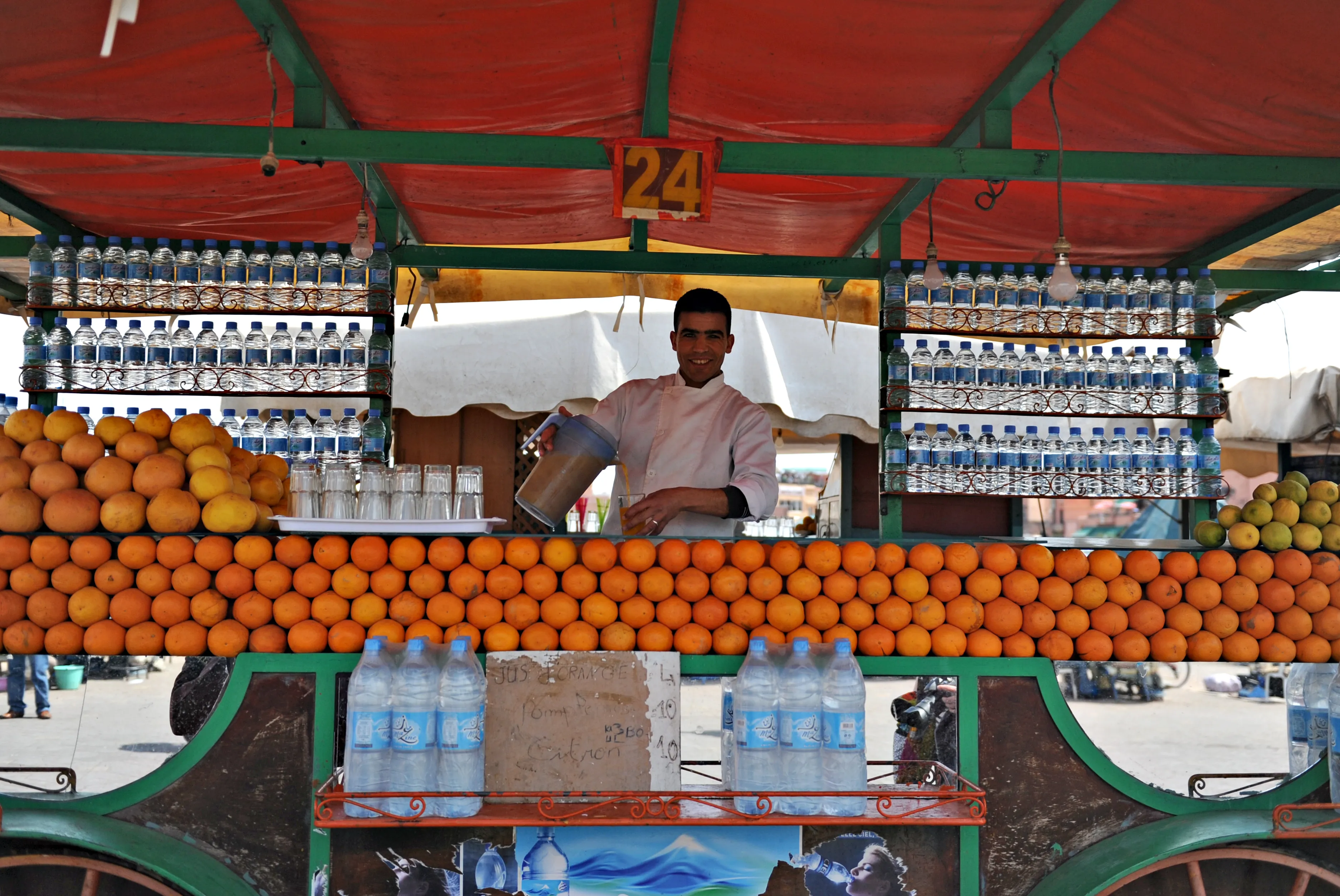
The colourful carts, on hand from morning to evening for a few dirhams.
See everything there is to do →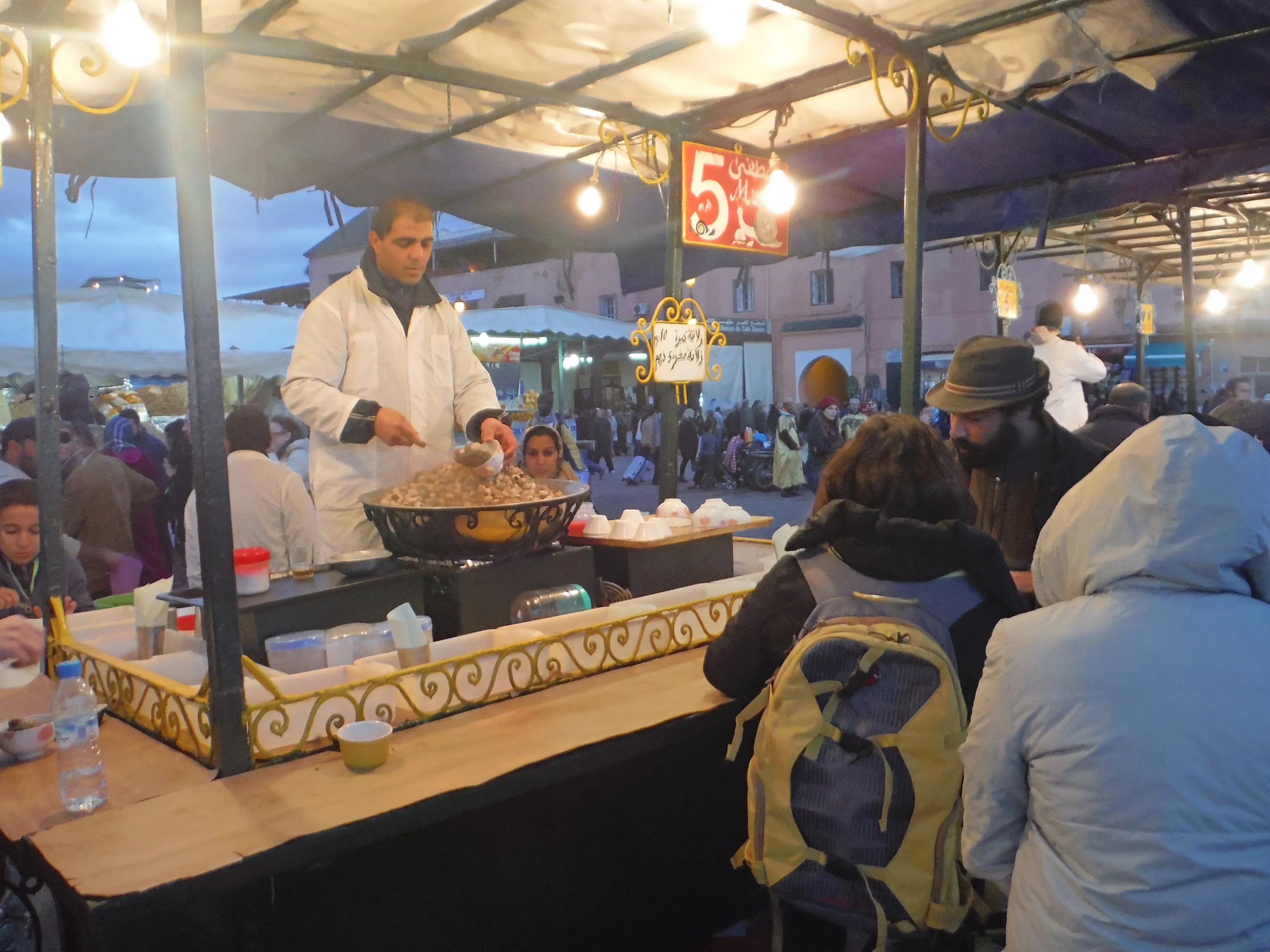
Babbouche, harira, brochettes, tanjia… the great culinary theatre of the evening.
See everything there is to do →Two faces
 ☀️ During the day
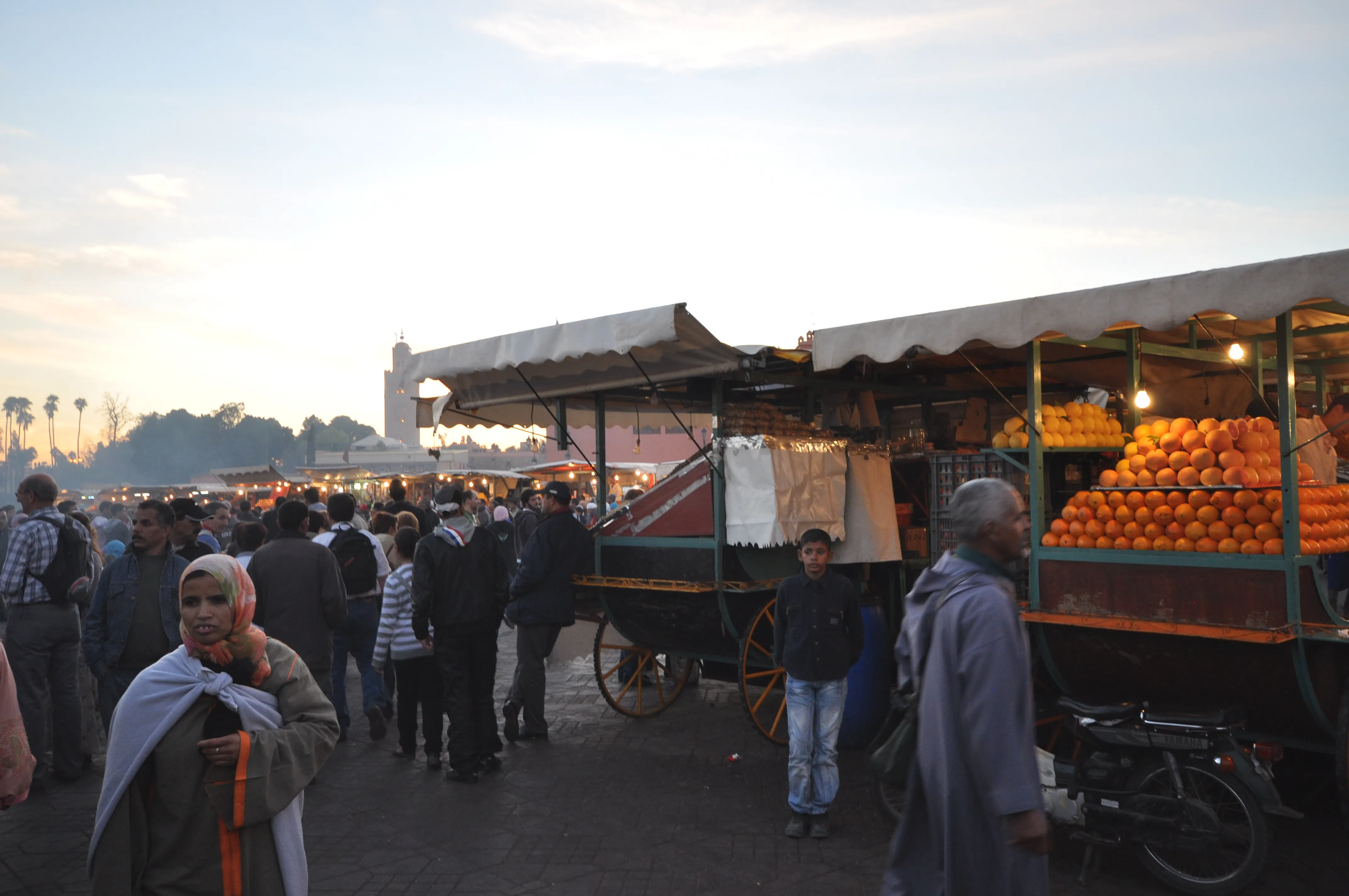
In the morning, the square wakes slowly. Orange-juice sellers set up their carts, a few charmers and animal handlers settle in, and herbalists lay out their remedies. It is the perfect time to wander, photograph the medina and head into the nearby souks.
 🌙 After dark
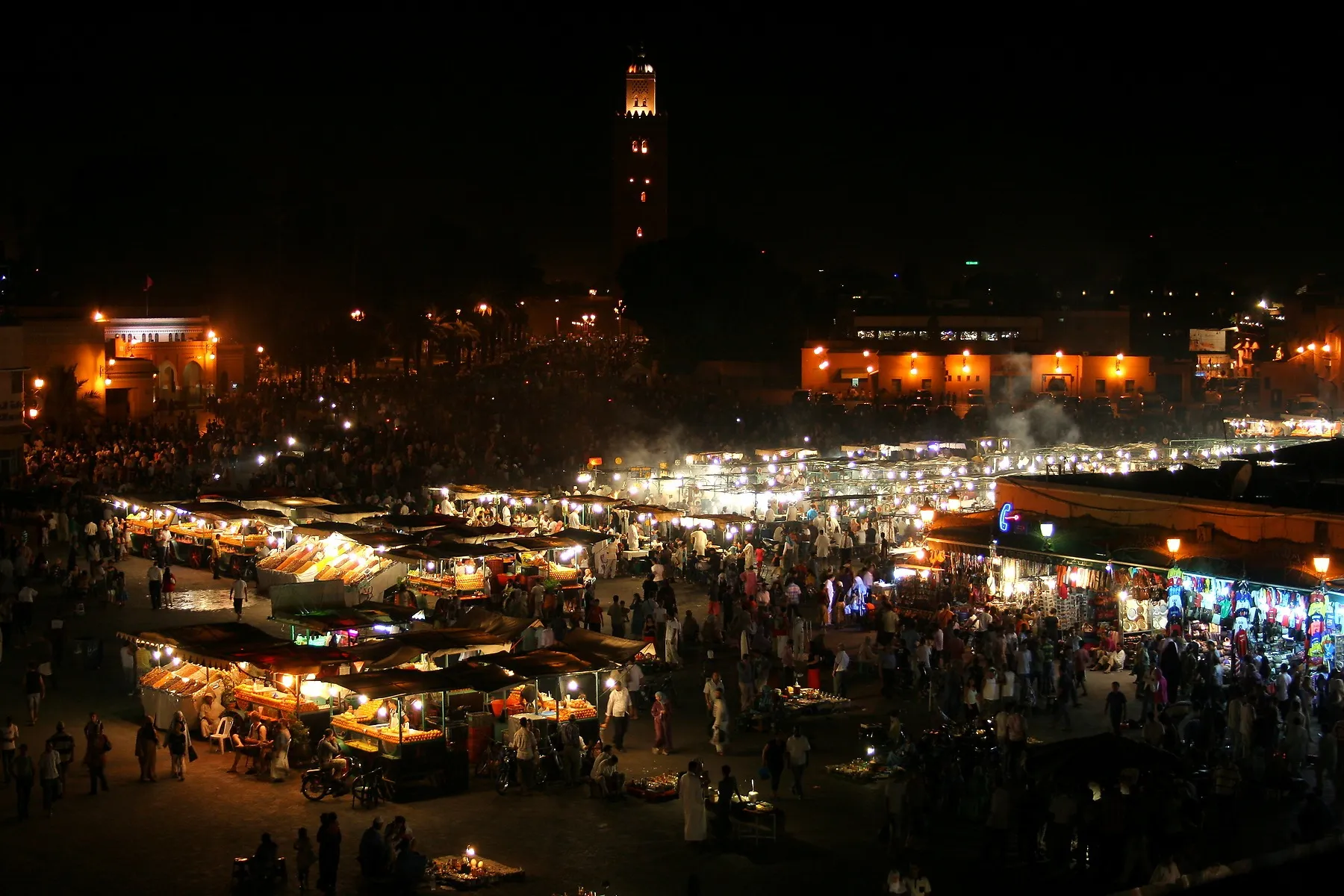
Around 5pm, everything shifts. The food stalls assemble, the lights come on, the music rises. Crowds press around the storytellers and the Gnaoua while the Koutoubia keeps watch in the distance. This is the experience you must not miss under any circumstances.
Private transport · Marrakech
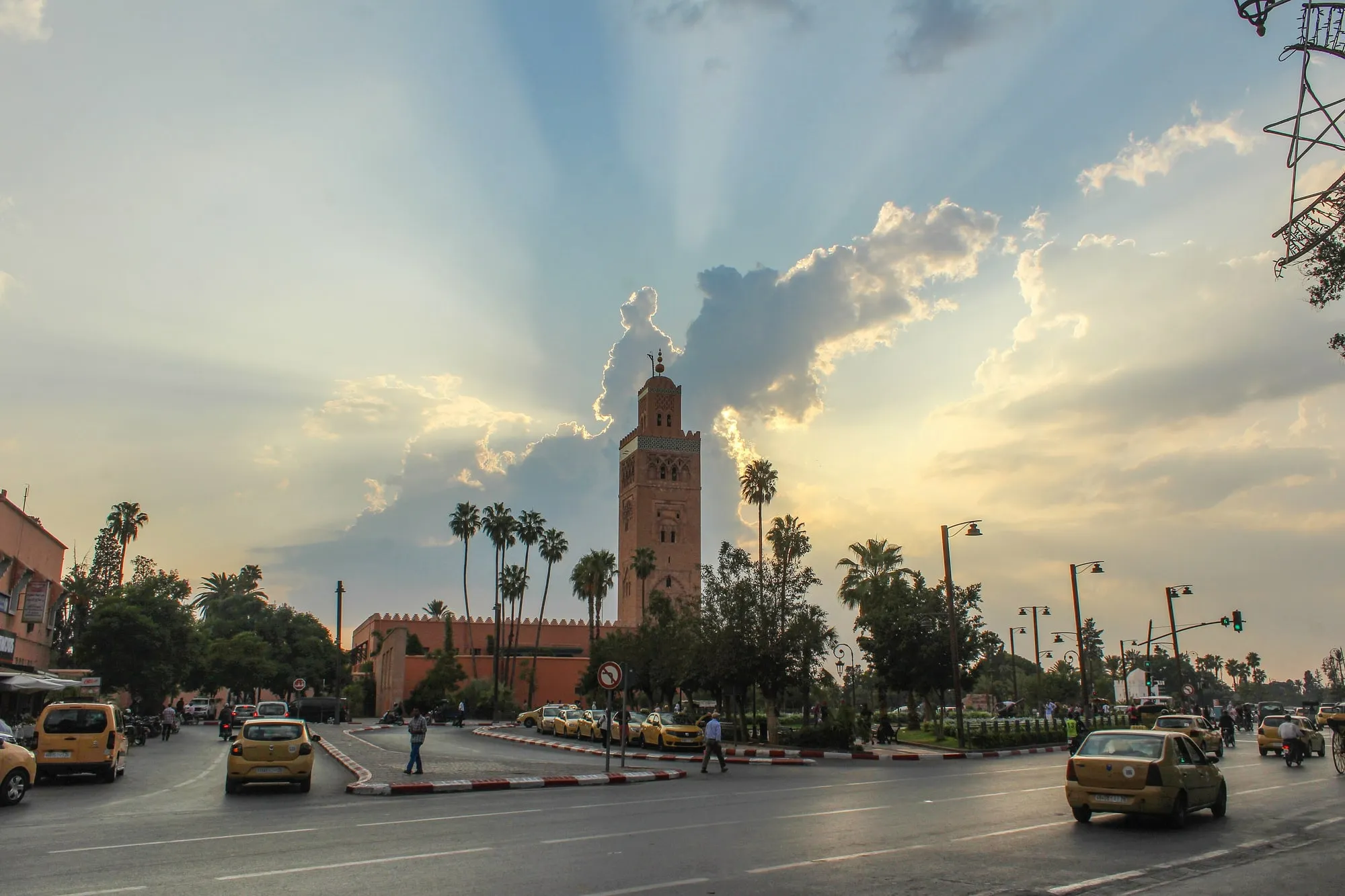
Medina, Majorelle Garden, Palmeraie, Agafay or the airport: a driver takes you wherever you want, whenever you want, in an air-conditioned vehicle. No taxi to hunt down, no fare to haggle over.
Service recommended by our editorial team: TMC Conciergerie. Unpaid link.
 Recommended by our editors
 Explore the guide
Nine centuries of history, the origins of the name and the UNESCO listing.
Read the guide → The evening stalls, the specialities to try and the rooftop terraces with a view.
Read the guide →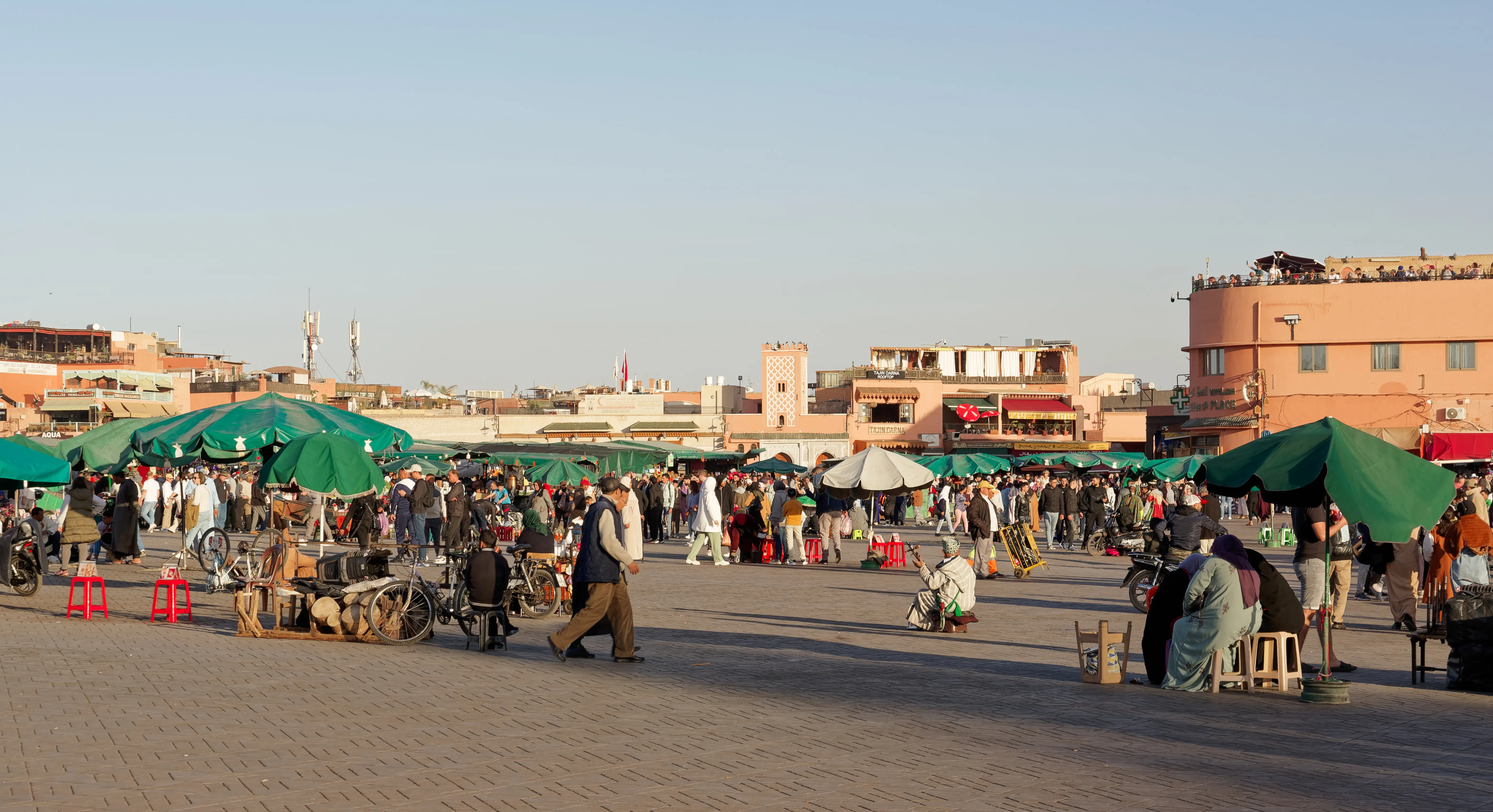
Opening hours, access from the airport, sample prices and the best time to visit.
Read the guide →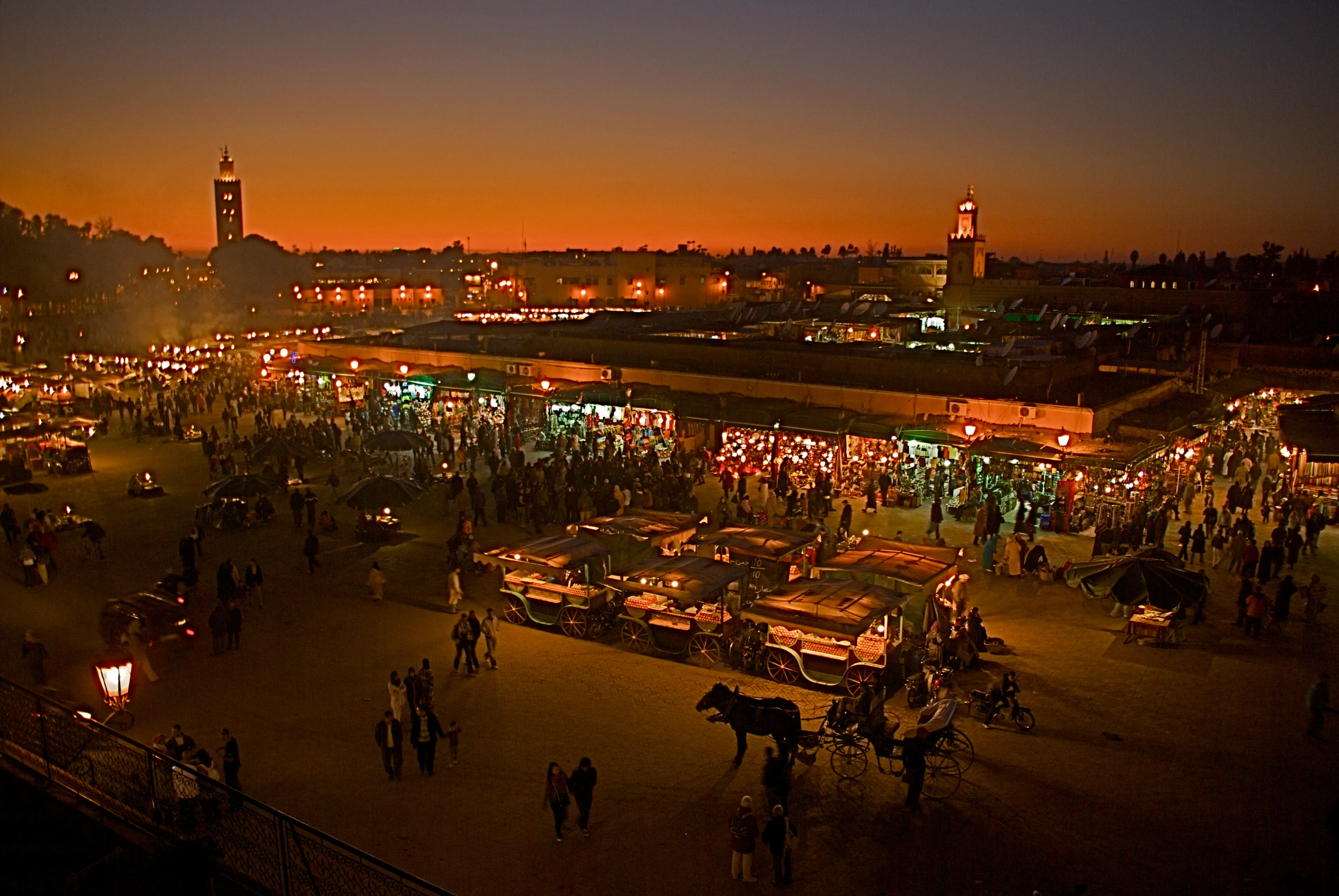
Avoid scams, haggle well, photograph the performers with respect.
Read the guide → Storytellers, snake charmers, Gnaoua musicians, henna, water sellers.
Read the guide →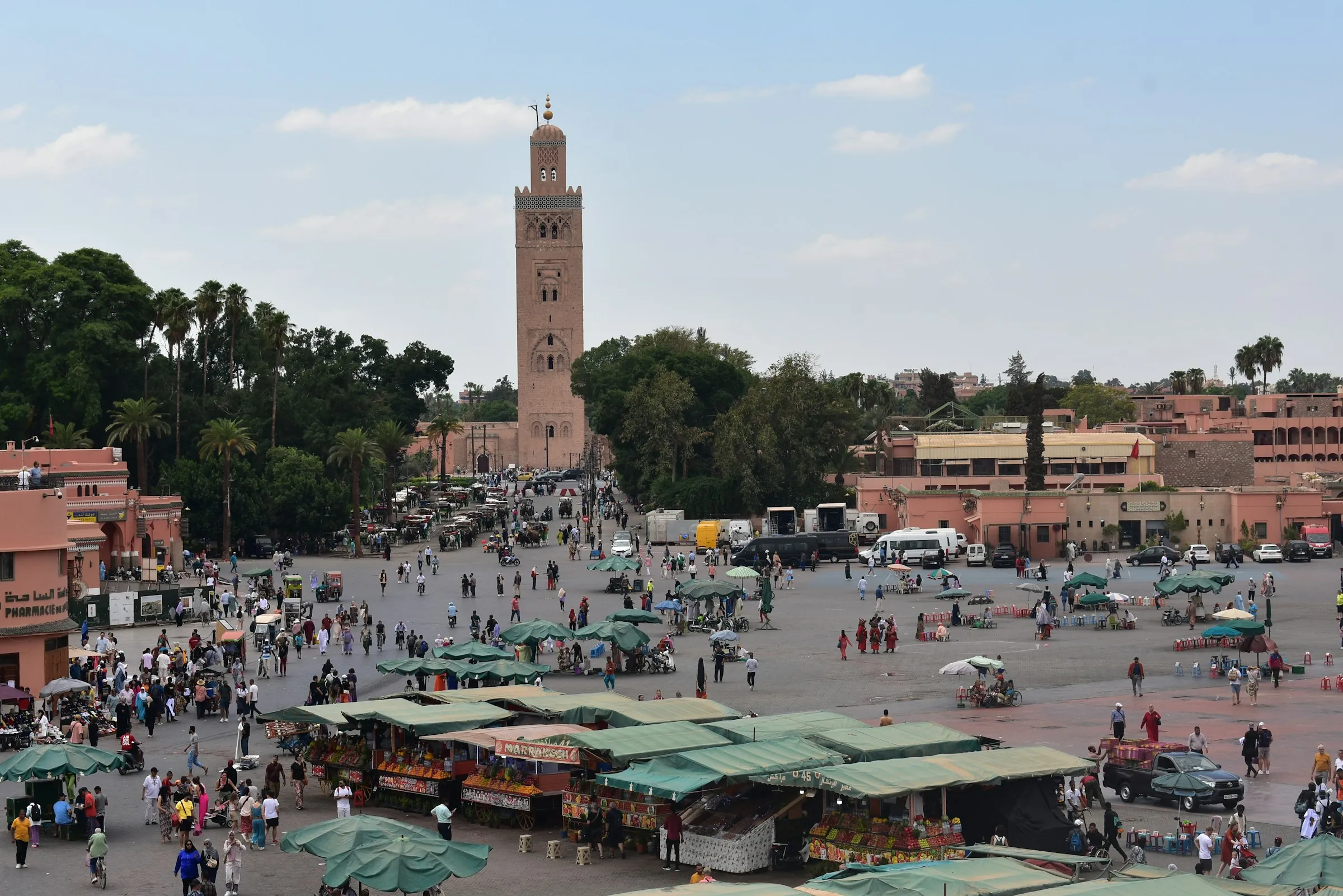
Souks, Koutoubia mosque, Bahia Palace, Saadian Tombs, Majorelle.
Read the guide →The right timing
The square changes face throughout the day. Here is when to come so you don't miss any of its daily transformation.
Calm and bright: orange juice, snake charmers, herbalists. Ideal for photographing the square without the crowds.
Around 5pm, everything comes alive: the musicians arrive, the food stalls go up, and the light gilds the minaret of the Koutoubia.
The magical moment, best experienced from a terrace: the smoke rises, the lights come on, the call to prayer echoes out.
The peak: storytellers, Gnaoua in a trance, dense crowds and dozens of food stalls late into the night.
In pictures
Real photographs of the square, by day and by night. See the credits.

The blog
Tips, insider advice and stories to prepare your visit.
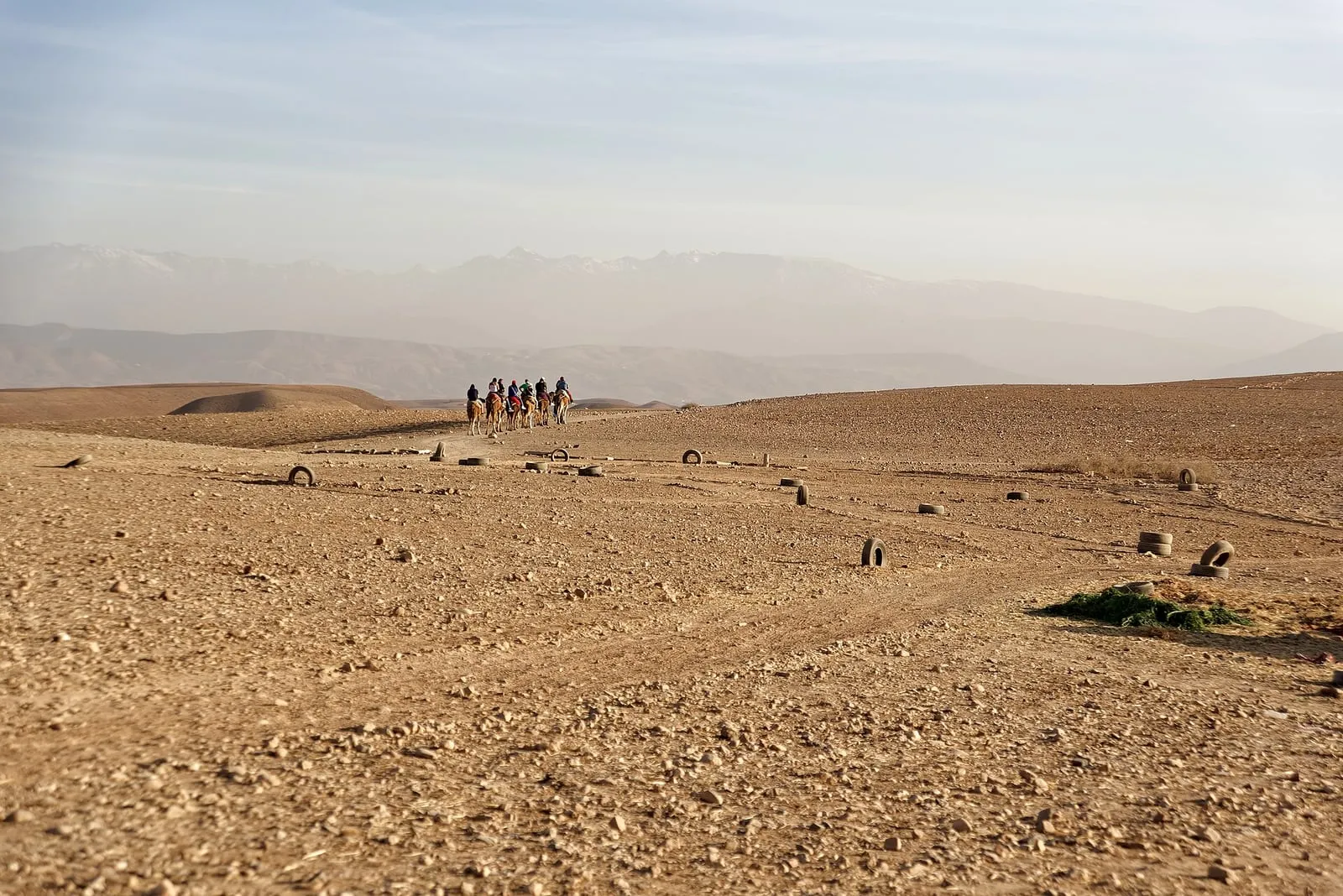 Practical info
Private driver, petit taxi, grand taxi, bus or calèche: how to get around Marrakech from Jemaa el-Fna, with the honest pros, cons and practical tips for each.
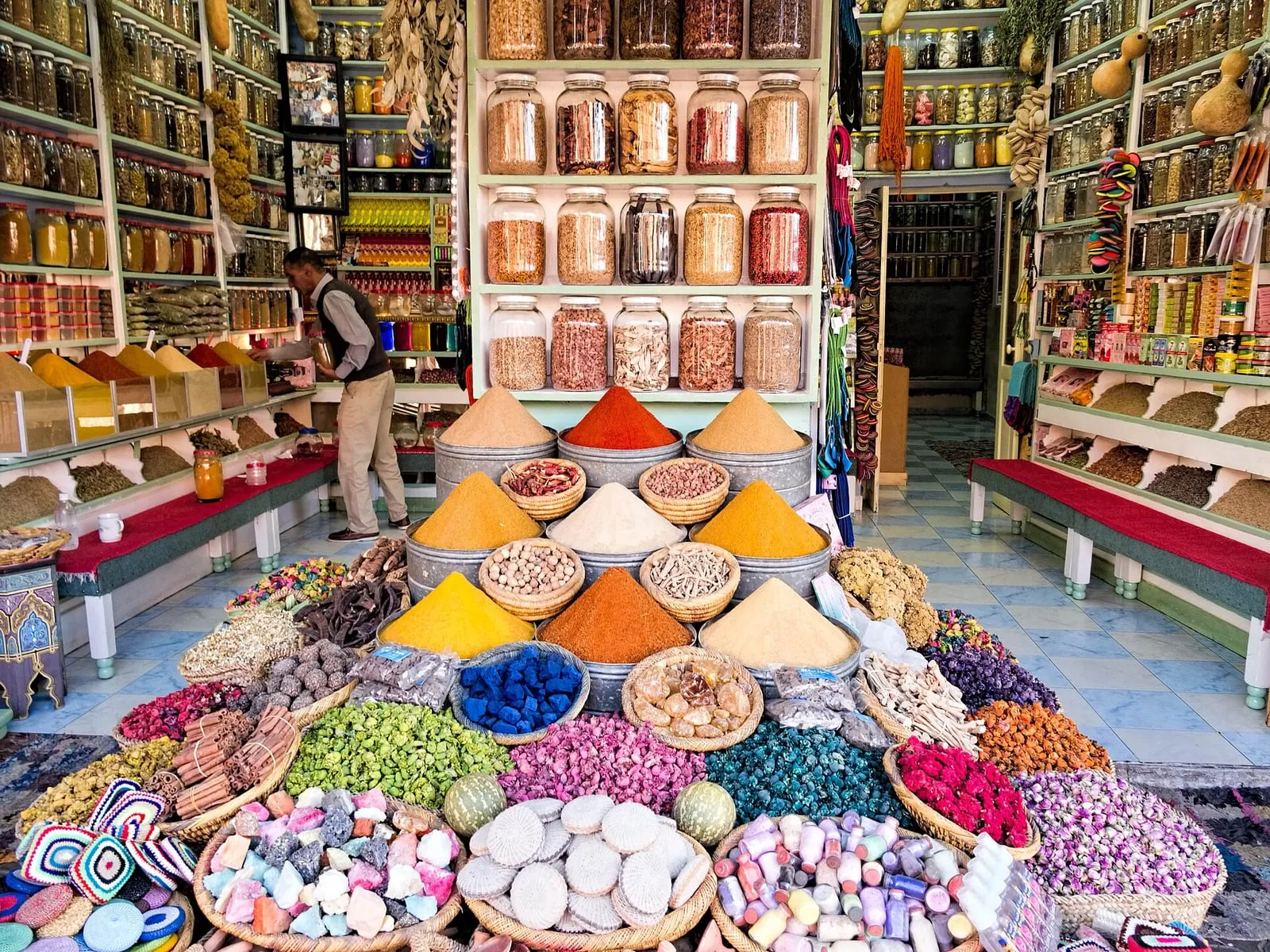 Things to do
Where to buy spices, saffron and argan oil near Jemaa el-Fna: Rahba Kedima, 2026 prices, how to spot fake saffron and avoid the ‘Berber pharmacy’ scam.
Things to doHow much is a horse carriage in Marrakech in 2026? Where to ride at Jemaa el-Fna, prices to negotiate, routes (ramparts, Menara, Palmeraie) and animal welfare.
Keep in mind
The essentials for enjoying the square with peace of mind. All our safety tips →
On the square, everything is paid in dirhams, in cash. Bring small notes.
Photo, henna, taxi: always agree on the price in advance to avoid surprises.
Photographing a performer or an animal costs money. Ask first, or frame from afar.
Shoulders and knees covered: a mark of respect that is appreciated, especially at night.
Snakes and monkeys raise concerns: many prefer not to pay for these acts.
Arrive around 5pm and stay after dark: that is when the square truly comes alive.
Where the square is
Jemaa el-Fna square lies at the south-western entrance to the Marrakech medina, at the crossroads of the souks, a few minutes' walk from the minaret of the Koutoubia. Approximate coordinates: 31.6258° N, 7.9891° W.
Bon à savoir
Yes. It is a public open-air space, open and free 24/7, with no ticket or barrier. You only pay for what you consume: a meal, a juice, a henna design or a photo with a performer (to be negotiated beforehand).
The late afternoon and then the evening. Arrive around 5pm to catch the golden light on the Koutoubia from a terrace, then experience the nighttime transformation as the stalls light up and the circles of onlookers form. Allow 2 to 3 hours.
No, it is generally safe and very busy, with a tourist police presence. The real risk is not violence but scams and hassle: surprise paid photos, forced henna, fake guides. Stay alert to pickpockets in the evening crowds.
The etymology is debated. The two main readings are "the assembly of the dead" (a reference to the public executions of old) and "the mosque of annihilation" — a grand mosque project interrupted by an epidemic and left in ruins. The mystery is part of the identity of the place.
Yes, as soon as a performer, an animal or a water seller appears in the shot. Agree on the price beforehand (often 10 to 30 MAD) or photograph from afar. A general view with no one in the foreground remains free.
The numbered stalls set up each evening are a must-do experience. Choose a very busy stall (quick turnover of food), go for well-cooked, piping-hot dishes, ask the prices before ordering and check the bill.
Marrakech-Menara airport is about 5-6 km away. Three options: the bus no. 19 (the cheapest, ~30 MAD, stop near the square), the petit taxi (insist on the meter or agree the price beforehand, with a night surcharge), or a private transfer booked in advance. Details on our practical information page.
Allow 2 to 3 hours for a full experience: arrive in the late afternoon, enjoy the sunset from a terrace, then soak up the nighttime atmosphere and dine at the stalls. A quick stroll takes 30 minutes, but you then miss the essentials.
Access is free. For an evening, budget roughly 40 to 100 MAD per person (4 to 10 €) for a meal at the stalls, plus a few dirhams for an orange juice or a tip. You can have a wonderful evening for under 10 € per person. See our price guide.
Yes, it is a popular outing for families: performances, colours, orange juice, acrobats. Hold young children by the hand in the dense evening crowds, agree on a meeting point, and keep them away from the animals (monkeys, snakes) for reasons of hygiene and ethics.
Yes, the square is very easy to visit alone. Its constant bustle and the presence of a tourist police are reassuring. Stay in the lively, well-lit areas, give a firm no to any hassle, and favour covering clothing. Many women travellers explore Marrakech without trouble.
As Morocco is a Muslim country, modest, covering clothing (shoulders and knees covered) is recommended out of respect for local customs, especially for women. Loose, lightweight clothes are also more comfortable in the Marrakech climate.
Plenty, on foot: the souks (immediate access), the Koutoubia mosque (~8 min), the Bahia Palace, the Saadian Tombs and the Ben Youssef Madrasa. The Majorelle Garden is ~3 km away by taxi. See our nearby attractions guide.
Prepare your visit with our detailed guides and let yourself be surprised by the most vibrant square in Morocco.