Tanjia marrakchia is the signature dish of Marrakech: a lamb shank (or beef) slow-confited for hours with cumin, preserved lemon, garlic, saffron and smen, all sealed inside an earthenware jar and cooked very slowly in the ashes of a hammam oven. The result is meltingly tender meat that falls off the bone, coated in a fragrant amber sauce. It is unmistakable among Moroccan dishes: neither tagine nor couscous, tanjia is a strictly Marrakchi speciality, born in the working-class quarters of the medina.
Its name in fact refers to the vessel as much as to the recipe. The tanjia (also spelled tangia) is that amphora-shaped clay jar, round-bellied and closed with kraft paper, in which the meat simmers. In Marrakech, you don’t say “I’m cooking a tanjia,” you say “I’m putting on a tanjia” — because the essential part of the work is entrusting it to the communal oven and waiting.
In this article, we tell you everything: the exact ingredients, the famous cook buried in the ashes of the hammam oven, the story of the “bachelor’s dish,” and above all where to taste it when you visit Jemaa el-Fna square.
What exactly is tanjia marrakchia?
Tanjia is a dish of meat confited in its own steam, cooked slowly at a low temperature in an earthenware vessel. Unlike the tagine, which simmers over a brazier or flame and is watched over, tanjia is cooked with little or no added water, without intervention, in the gentle, constant heat of the embers. The meat cooks in its own fat and in the aged clarified butter (smen), which gives it that characteristic melting texture and a deep, almost confit flavour.
Two elements therefore define tanjia:
- The vessel: a porous earthenware jar that lets the heat penetrate slowly and evenly.
- The cooking method: burying it in the warm ashes of a wood-fired oven, usually the one that heats the water of a hammam.
It is this combination that makes tanjia impossible to reproduce exactly in a modern kitchen. You can make an electric-oven version, honest and tasty, but the real tanjia marrakchia — the one that has simmered for twelve hours in the farnatchi — keeps an aura that nothing can replace.
The ingredients of tanjia
The beauty of tanjia lies in its simplicity. Few ingredients, but each one counts. Here is the classic composition for a family-sized jar:
| Ingredient | Role in the dish |
|---|---|
| Lamb shank or shoulder (or beef) | The base: a cut for slow cooking, rich in collagen, that turns meltingly tender |
| Garlic (whole crushed cloves) | A fundamental fragrance of tanjia |
| Cumin (kamoun) | The reigning spice, very present, almost the dish’s signature |
| Preserved lemon (beldi) | Brings the acidity and aroma so typical of Marrakchi cuisine |
| Saffron (and sometimes turmeric) | The golden colour and a delicate fragrance |
| Smen (aged clarified butter) | The “confit” signature and the silkiness of the sauce |
| Ginger, pepper, salt | Base seasoning |
| A little olive oil and water | Just enough to get the cooking started |
Some families add a ras el-hanout, a pinch of mild paprika, or even olives. But the soul of tanjia rests in the trio cumin – garlic – preserved lemon, magnified by the smen. It is a dish of terroir, not of showmanship: you don’t seek complexity, you seek depth.
Cooking in the hammam oven: the secret of tanjia
Here is what truly sets tanjia apart from every other Moroccan dish. Once the jar is filled and sealed, you don’t place it over a fire: you carry it to the farnatchi, the communal wood-fired oven that heats the water of the medina’s hammams.
The farnatchi refers to both the place and the man in charge of it. This keeper of the oven collects the jars from the neighbourhood’s residents and buries them in the hot ashes, where the temperature is gentle and steady. The tanjia cooks there for five to twelve hours, sometimes a whole night, without anyone needing to touch it. The heat of the embers, never fierce, melts the collagen of the meat and concentrates the aromas.
This bond between tanjia and the hammam is no anecdote: it is historical and practical. The ovens of the public baths burned constantly to heat the water; it would have been absurd not to make use of that spare heat. Residents dropped off their jar in the morning on their way to work and collected it in the evening, cooked to perfection. The farnatchi received a few dirhams for the service. This economy of shared heat, typical of the medina, explains why tanjia is inseparable from the old town of Marrakech and its hammams.
The story of the “bachelor’s dish”
Tanjia carries a delicious nickname: “the bachelor’s dish” (or the men’s dish). The expression is no accident. Traditionally, tanjia was prepared by men, for men — and particularly by the bachelors of Marrakech.
The reason is simple: tanjia is the easiest dish to prepare in all of Moroccan cuisine. No need to know how to cook, no monitoring, no special knack. You buy the meat from the butcher, throw the spices into the jar, carry the whole thing to the farnatchi, and nature (and the ashes) do the rest. For a labourer, a souk trader or a young man living alone, with no wife to run the stove, it was the ideal meal.
Tanjia thus became the dish of men’s outings: it was prepared for a trip to the countryside, a Friday picnic, an evening of cards and music while waiting for the jar to be ready. A convivial, manly, popular dish, a world away from the tagines slowly simmered by mothers and grandmothers. Even today, this festive, masculine dimension remains attached to tanjia, even though it is now enjoyed with the family and in restaurants.
Tanjia or tagine: don’t confuse them
Both dishes are slow-cooked, Moroccan, and meat-based — but everything else sets them apart:
| Tanjia | Tagine | |
|---|---|---|
| Vessel | Vertical, closed clay jar | Flat dish with a conical lid |
| Cooking | Buried in ashes, unattended | Over embers/low heat, watched over |
| Origin | Strictly Marrakchi | All of Morocco (and the Maghreb) |
| Who cooks | Traditionally men | Traditionally women |
| Vegetables | Little or none | Often (onions, potatoes, prunes…) |
Remember the saying that circulates in Marrakech: the tagine is the dish of the home, the tanjia is the dish of the street and the hammam oven.
Where to taste tanjia marrakchia near Jemaa el-Fna?
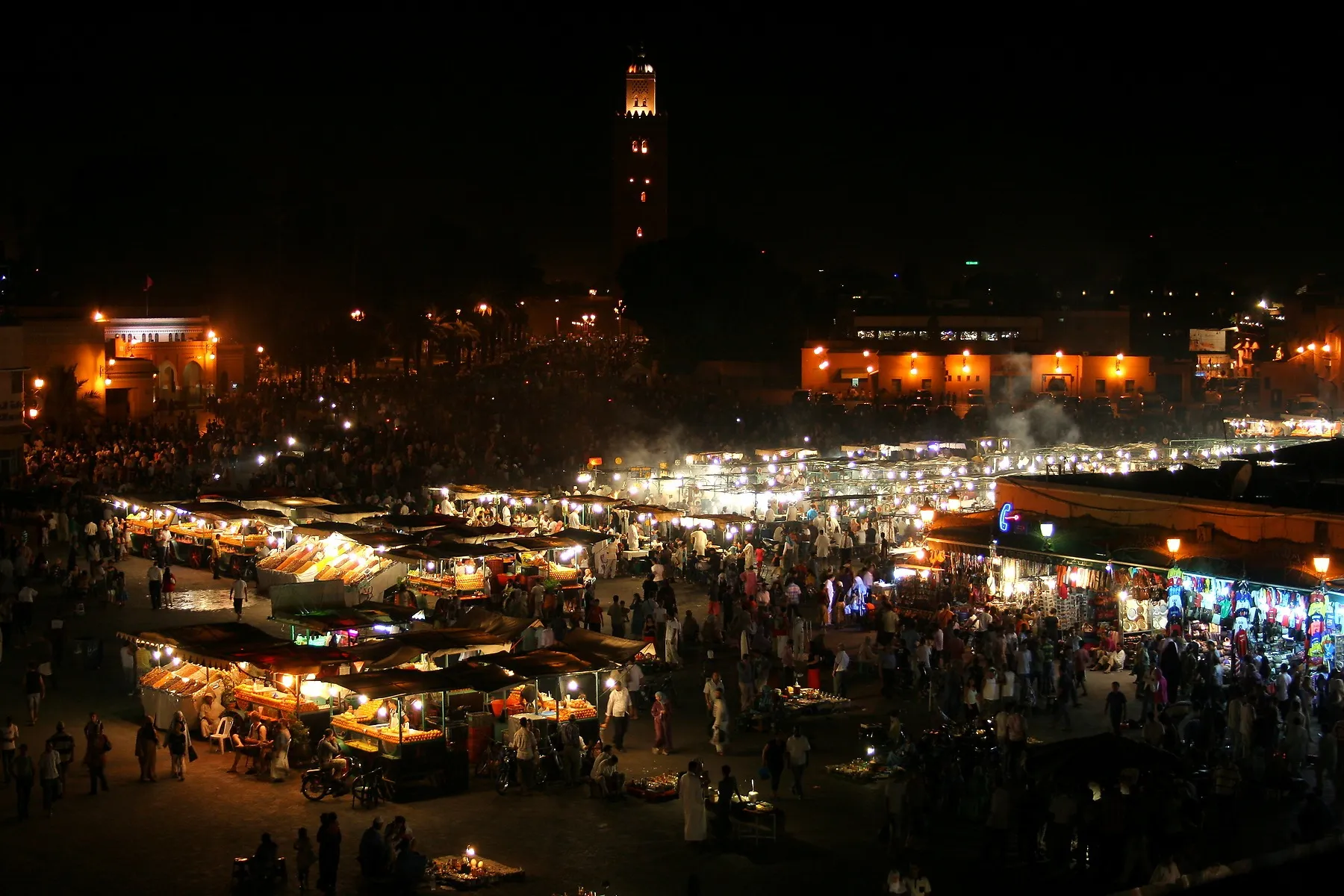
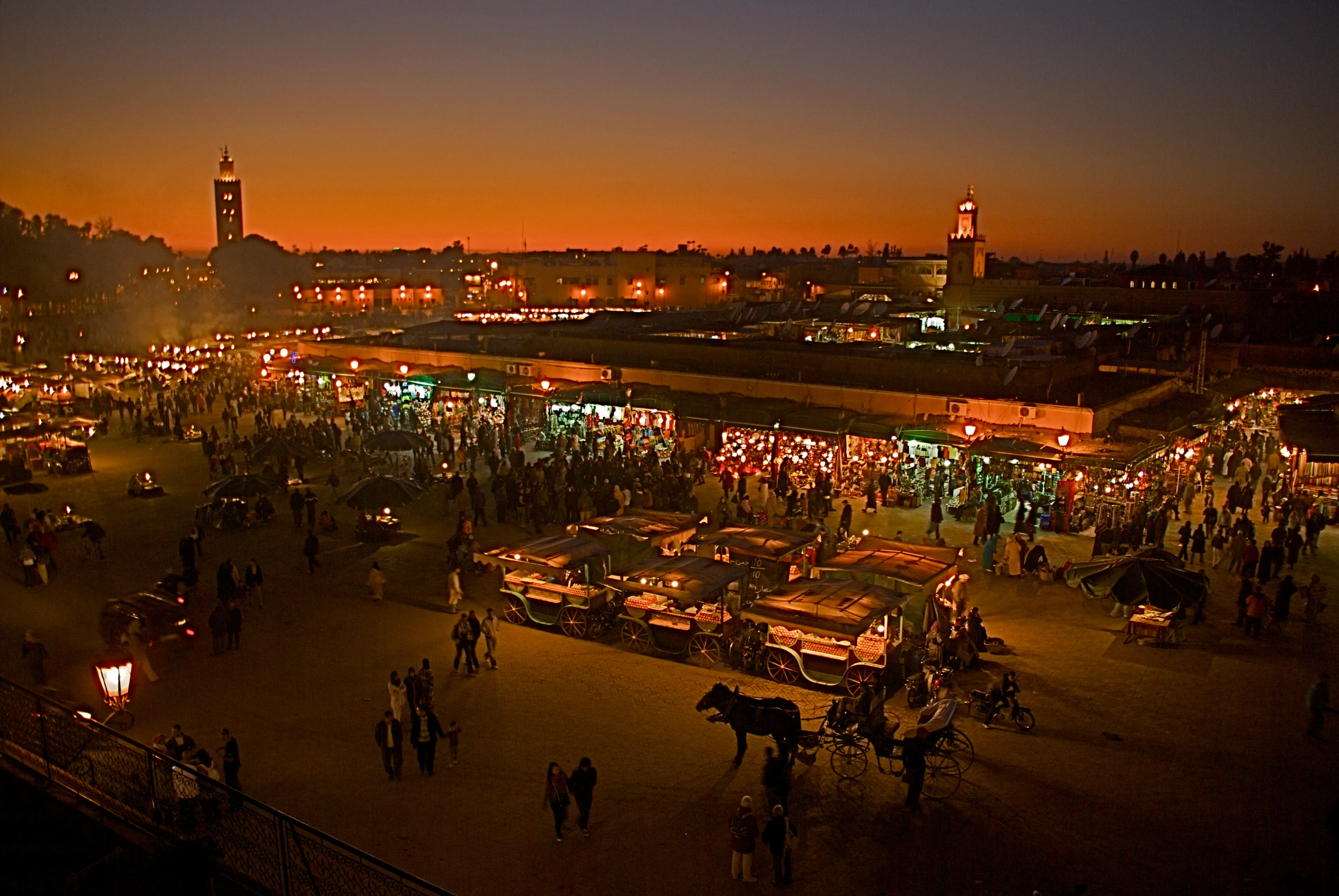
Good news: you don’t need to know a Marrakchi bachelor or track down a farnatchi to taste tanjia. Around the square, several spots serve it — though you have to know where to look, because it is not the star dish of the square’s night stalls themselves.
- In the medina’s eateries. The small, popular restaurants around Rue Riad Zitoun and the lanes behind the square often serve tanjia, usually at lunchtime. Look for the chalkboard or ask: “tanjia kayna?” (“is there any tanjia?”).
- To order, the day before. In many traditional establishments, real tanjia is ordered in advance because it needs long hours of cooking. Don’t hesitate to ask in the morning for the evening, or the day before.
- Near the souk and the méchoui. The roasters’ district (the famous méchoui souk, near the square) is a good landmark for traditional meat cooking, tanjia included.
- In Moroccan cuisine restaurants. Many terraces and heritage restaurants around Jemaa el-Fna list it on the menu, in a more refined version.
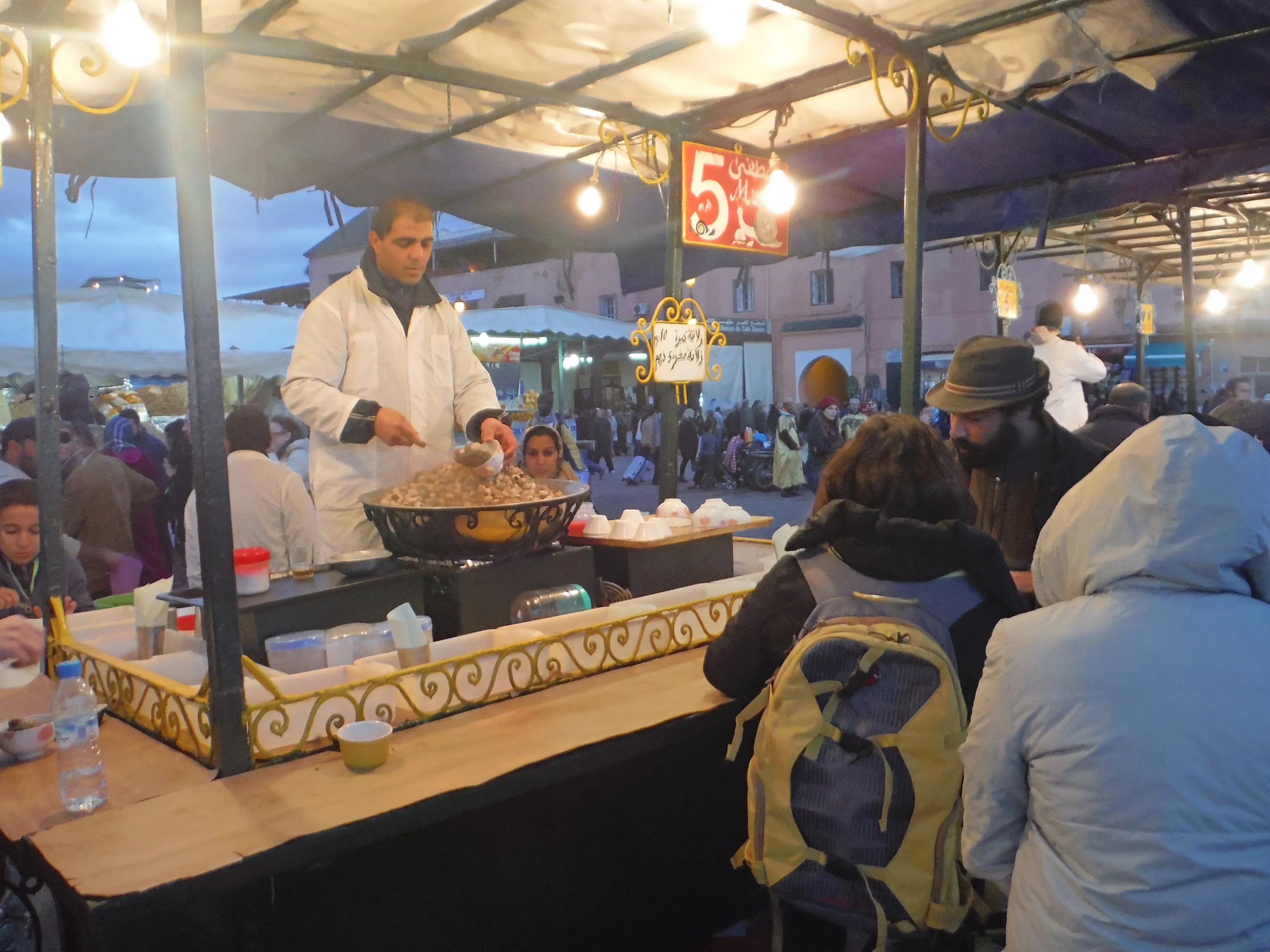
To place tanjia within the whole culinary offering of the neighbourhood — skewer stalls, harira soup, snails, fried fish — see our full guide on where to eat at Jemaa el-Fna. And if the story of these traditions interests you, it is inseparable from that of the place: discover it on our page about the history of Jemaa el-Fna, a UNESCO heritage site.
How to eat tanjia like a Marrakchi
Tanjia is eaten with bread, never with sophisticated cutlery. You break off a piece of khobz (the round Moroccan loaf), grab a piece of meltingly tender meat and coat it generously with sauce. Traditionally, you pour the contents of the jar straight into a shared dish and everyone eats with their hands, around the table.
Finish with a mint tea, and you will have had the most authentically Marrakchi gastronomic experience there is. It is not a spectacular dish to look at — it is a dish that is felt, in its tenderness and its fragrance of cumin and preserved lemon.
Frequently asked questions about tanjia marrakchia
What is the difference between tanjia and tagine?
The tagine is a dish simmered over the fire, in a flat vessel with a conical lid, cooked throughout North Africa. Tanjia is an exclusively Marrakchi speciality: the meat is sealed in a vertical clay jar and cooked slowly, buried in the ashes of a hammam oven, unattended.
Why is tanjia called “the bachelor’s dish”?
Because it was traditionally prepared by the men of Marrakech, often bachelors. Its preparation is so simple — you throw the ingredients into the jar and hand it to the communal oven — that it requires no cooking skill at all, which made it the ideal meal for single men and outings with friends.
What meat is tanjia made with?
Most often with lamb shank or shoulder, rich in collagen, which turn meltingly tender during the slow cook. It is also made with beef (shank or chuck). The key is to choose a cut for slow cooking, not a prime cut for grilling.
Can you make tanjia at home without a hammam oven?
Yes. In the absence of a farnatchi, you can cook the jar (or a sealed casserole) in a domestic oven at a low temperature, between 130 and 150 °C, for five to seven hours. The result is excellent, even if it doesn’t quite match the gentleness of the wood-oven ashes.
Where can you find the best tanjia in Marrakech?
In the popular eateries of the medina and near the méchoui souk, around Jemaa el-Fna, where it is often served at lunchtime or to order. Many traditional restaurants in the neighbourhood also list it on the menu. Remember to order it in advance, as its cooking takes long hours.
To go further: see the entry for tanjia (tangia) on Wikipedia and the reference article on Moroccan cuisine. Prices and availability shown for guidance only.