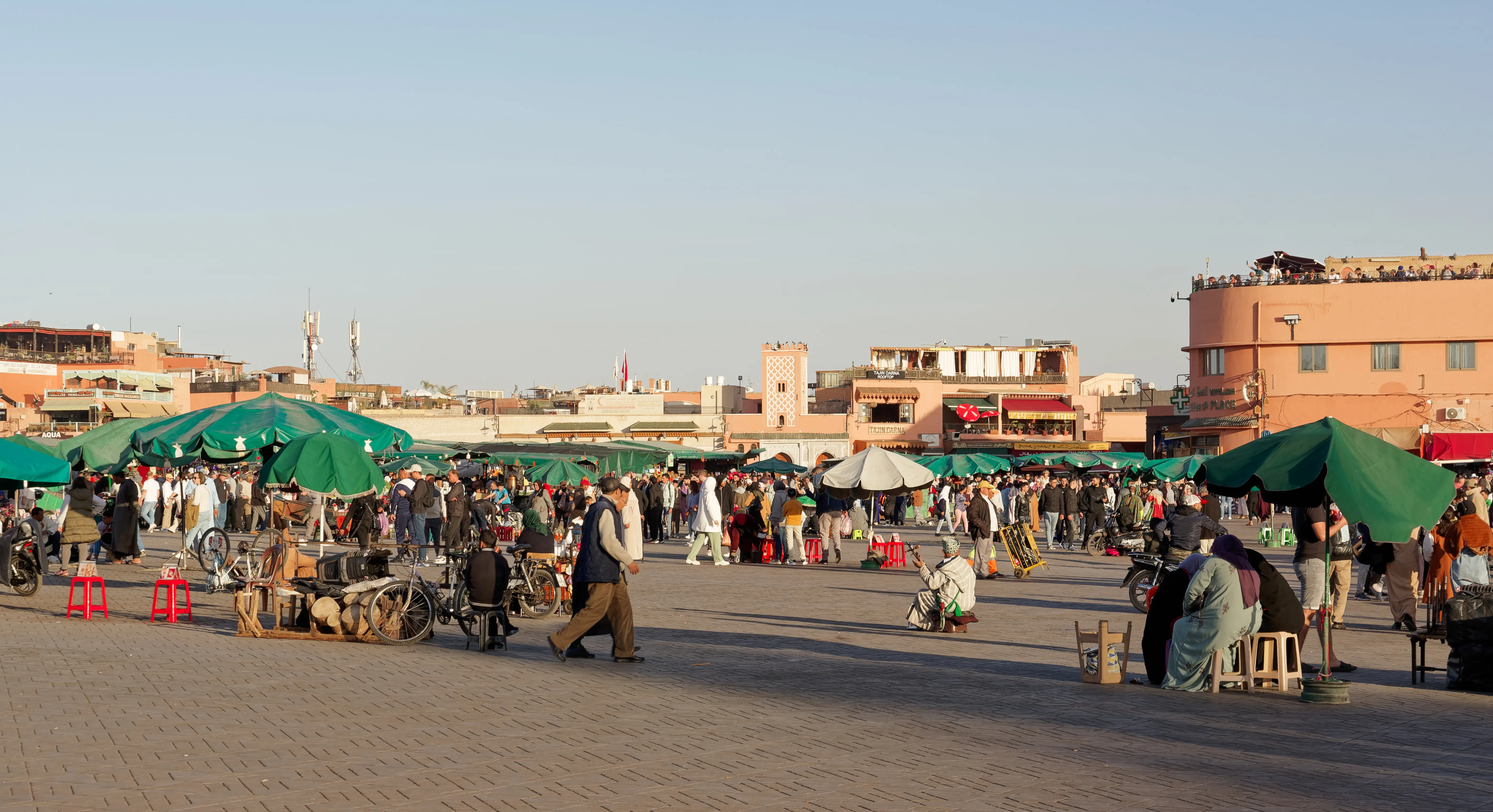
Before visiting Jemaa el-Fna, keep the essentials in mind: access to the square is completely free, it comes alive mostly in the evening, everything is paid for in cash (dirhams), and most unpleasant surprises — paid photos, forced henna, inflated prices — are avoided by agreeing on the price in advance. The beating heart of Marrakech is neither a museum nor a fenced-off site: it is a vast open space, alive and noisy, listed by UNESCO, where you wander freely among storytellers, Gnaoua musicians and food stalls.
Well prepared, an evening on the square becomes one of the great memories of a trip to Morocco. Poorly prepared, it can turn into an obstacle course between touts and petty scams. The difference comes down to a few simple habits that any traveler can adopt.
Here are 20 things to know before visiting Jemaa el-Fna: when to go, how much to budget, how to pay, how to take photos, how to sidestep the traps and leave enchanted. All prices are given as a rough guide for 2026 and may vary.
When and how to enjoy the square
1. Access is 100% free. There is no ticket, no entrance fee and no opening hours: the square is a public space that is open at all times. Strolling around, watching the performances, listening to a storyteller or the musicians costs nothing. You only pay for what you consume (food, juice, a photo, henna). This is one of the place’s great strengths: the best of the show is free.
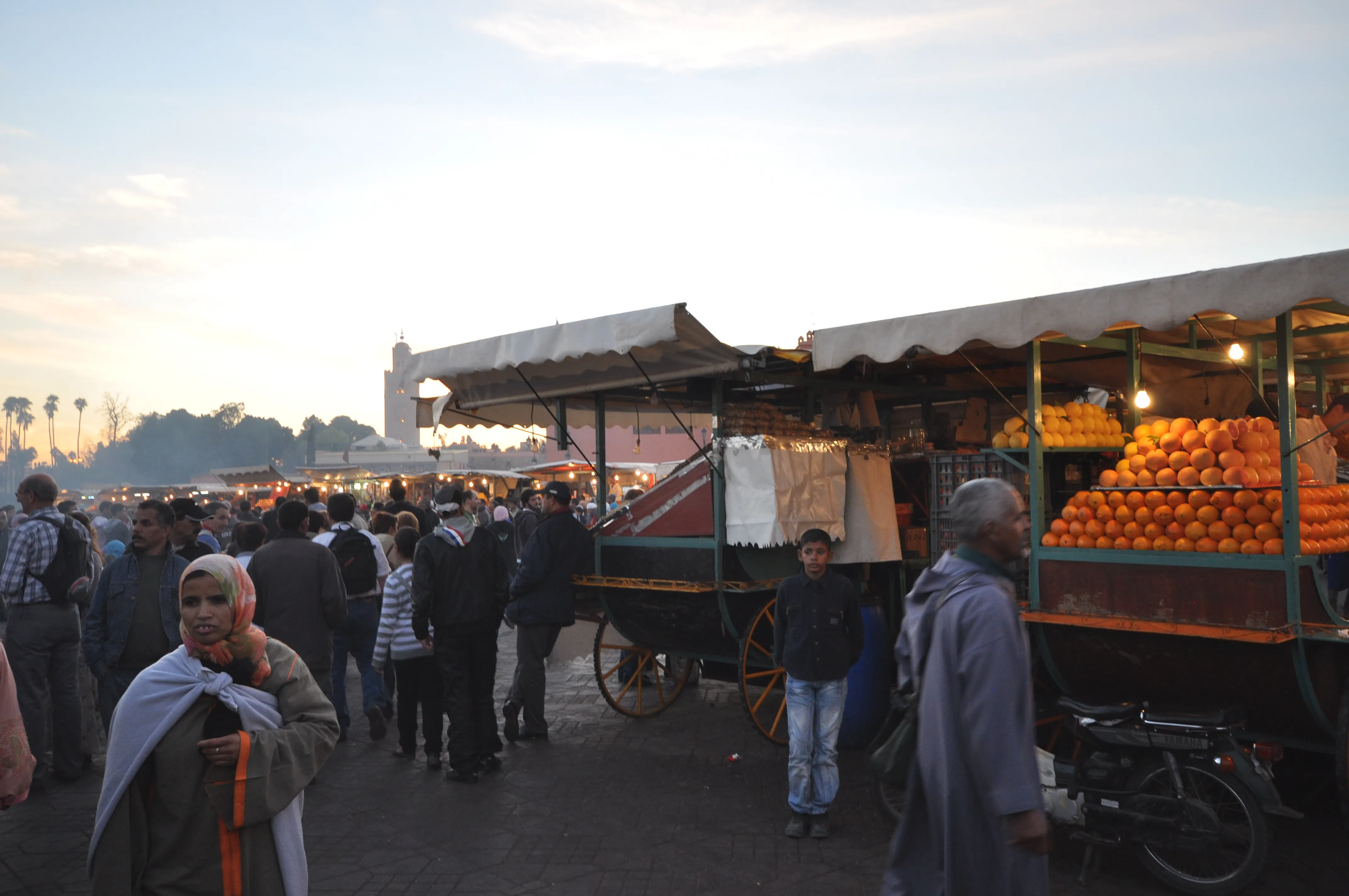
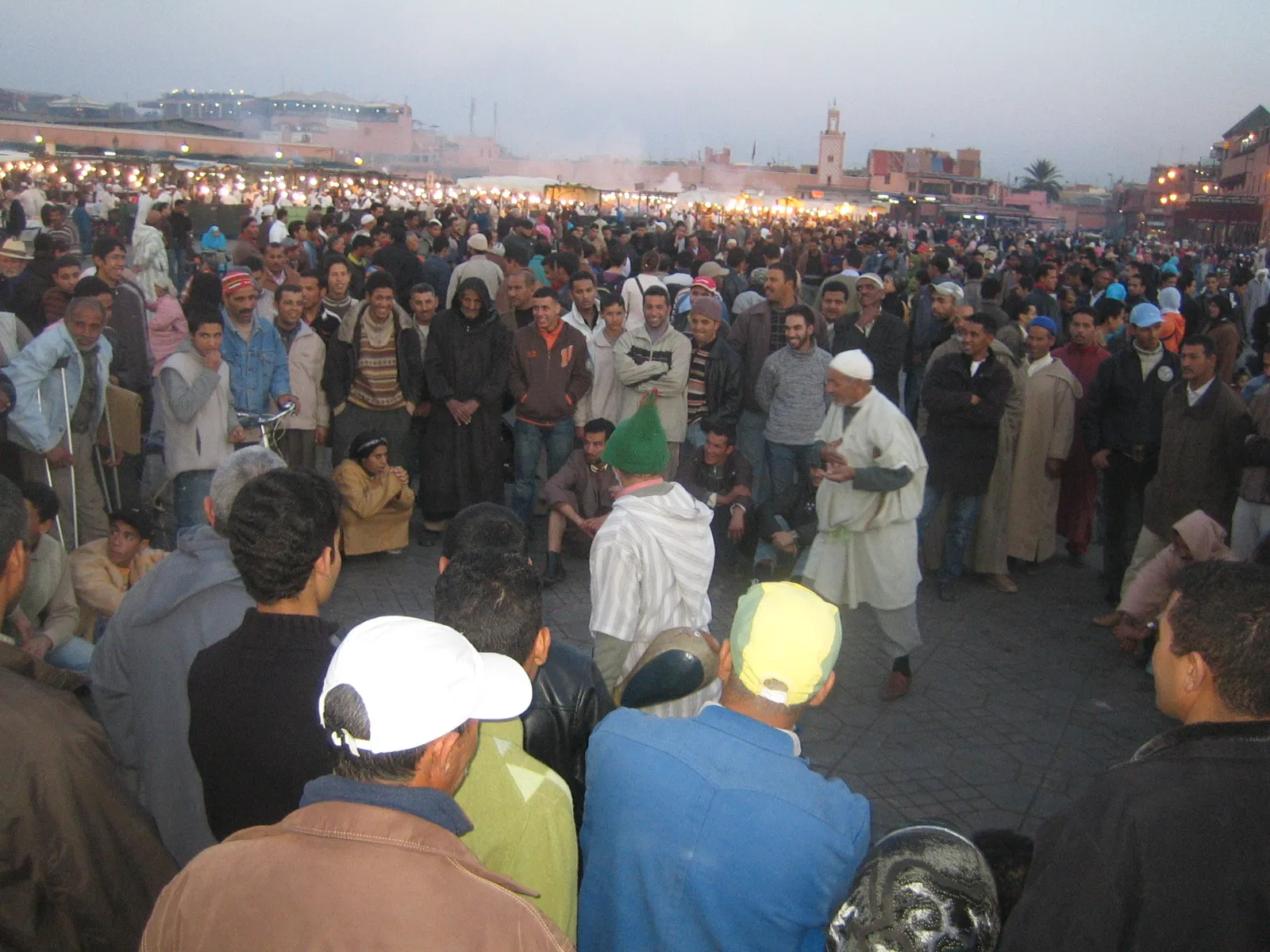
2. In the evening it’s magical; by day it’s calm. During the day, the square is relatively peaceful: a few snake charmers, henna sellers, orange juice stalls and water carriers in red costumes. The transformation happens at nightfall, when dozens of food stalls set up in a matter of minutes and the square becomes an open-air theatre. Come in the evening — that’s when it all happens.
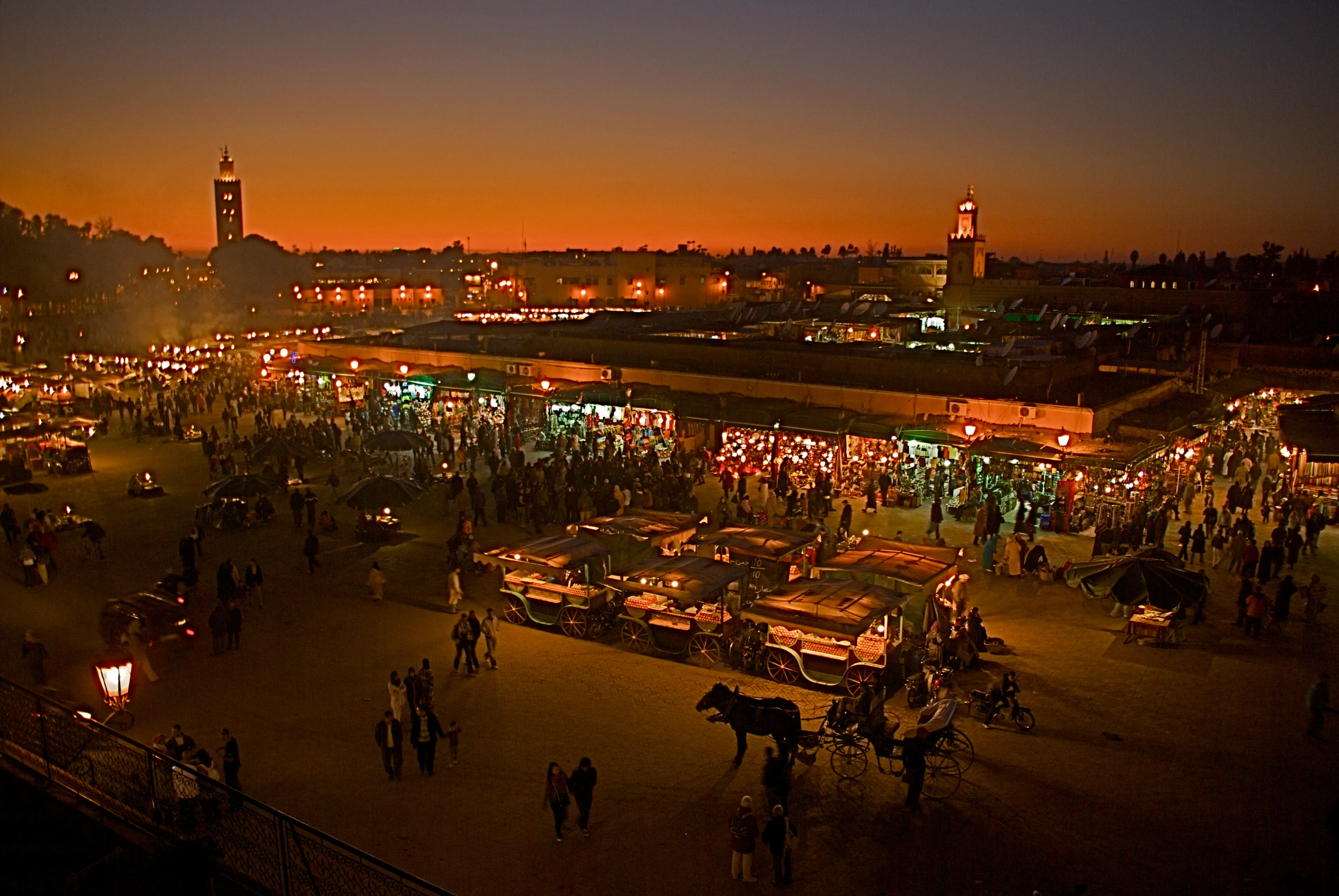
3. The best time: late afternoon. Arrive around 5–6 p.m. to catch the shift from day to night, the most photogenic moment. You enjoy the sunset, then the nighttime buzz that builds crescendo. It’s also the mildest hour in summer, when the crushing daytime heat finally eases off.
4. Allow at least two to three hours. Don’t make the mistake of passing through in twenty minutes. To grasp the spirit of the place, count on a good evening: tea on a terrace, a wander around, dinner at a stall and a pause in front of the musicians. Many travelers even come back on two different evenings, so much does the atmosphere vary.
5. Head up to a terrace for the overall view. The upper-floor cafés lining the square offer rooftops that are perfect for looking down over the spectacle. Order a mint tea or a juice, settle in at sunset and watch the square light up while the Koutoubia stands out against the orange sky. There’s often a small minimum spend, more than repaid by the view.
Money, prices and payments
6. Everything is paid in cash. Here, a bank card is useless: stalls, juice, henna, photos, petit taxi… everything runs on cash, in dirhams (MAD). Withdraw money from an ATM (there are some around the square) or change money at the airport on arrival. Never count on contactless payment on the square.
7. Always carry small change. This is the habit that saves you the most. Vendors “never” have change for a large note, which nudges you into rounding up in their favor. Keep a stash of coins and small notes (5, 10, 20 MAD), and never pull out your whole wad of cash in public.
8. Agree on the price BEFORE, every single time. This is the golden rule of Jemaa el-Fna. For a photo, henna, a dish, a juice: agree on the amount before you consume, clearly and out loud, always in dirhams. A price not agreed in advance is an open door to a nasty surprise when it’s time to pay.
9. A visit can cost very little… or a lot. You can have a wonderful evening for the equivalent of a few euros (dinner at a stall, a juice, a tea), just as you can watch the bill climb if you rack up paid photos, henna and inflated prices. For a detailed budget item by item, see our guide on how much a visit to Jemaa el-Fna costs.
10. Haggling is part of the game. At the souvenir stalls and for certain services, bargaining is normal and expected. Stay friendly, offer a price lower than the one quoted, and don’t be afraid to walk away: that’s often when you’re called back with a better rate. Food listed on a menu, on the other hand, is less negotiable.
The traps to know about
11. Photos with the animals and performers cost money. If someone puts a monkey on your shoulder or a snake around your neck “for a photo,” it’s never free: you’ll then be asked for several dozen dirhams. Likewise, photographing the musicians, charmers or acrobats implies a small contribution. Ask the price before you reach for your camera, or politely move along.
12. Watch out for forced henna (and black henna). Women offer henna tattoos, sometimes grabbing your hand to start without agreement. Settle the design and the price first — or clearly refuse. Above all, steer clear of “black henna”: laced with PPD (a chemical dye), it can cause severe allergic reactions. Authentic henna is brownish-orange, never black.
13. Know how to say “no thanks” and keep walking. Faced with stall touts and solicitations, a calm, unhesitating refusal defuses the vast majority of situations. There’s no need to be aggressive: “la, choukran” (“no, thank you”) along with a smile and a step that keeps moving works almost every time.
14. Beware of pickpockets in the crowd. The square isn’t dangerous — violence is rare there and the police presence is visible — but the evening density is ripe for pickpocketing. Keep your phone and money in a closed pocket in front of you, leave valuable jewelry and large bags at the riad, and stay alert in moments of jostling.
15. Learn to spot the classic scams. A “broken” taxi meter, a price that swells once the service is done, a self-appointed fake guide, change handed back short: the techniques are well known and easily thwarted when you anticipate them. Our full report on safety and scams at Jemaa el-Fna reviews each trap and the matching countermeasure.
Eating, finding your way, arriving
16. Eat where the Marrakchis eat. In the evening, the numbered stalls serve skewers, fried fish, harira (soup), snails (babbouche) and tanjia. A stall packed with locals is the best guarantee of quality, freshness and honest prices — steer clear, on the other hand, of those whose touts are the most insistent. Check the bill and order what’s cooked in front of you.
17. Orange juice is an affordable must. The juice carts are part of the scenery. A glass of freshly squeezed orange costs a few dirhams: ask for the posted price, insist on a juice squeezed in front of you (not a pre-mixed batch), and keep an eye on your change. It’s refreshing, cheap and iconic.
18. Dress respectfully and comfortably. Morocco is a Muslim country: without imposing a strict dress code, it’s better to cover your shoulders and knees, especially for women, out of respect and to blend into the scene. Go for closed, comfortable shoes (the square is vast and the medina is cobbled), and pack a light sweater: evenings can be cool outside of summer.
19. The square is pedestrian — plan for the last stretch. No vehicle will drop you exactly on Jemaa el-Fna: taxis and shuttles stop at the edge of the medina, from where you reach your riad on foot, possibly with a porter. Note the exact address of your accommodation (the name of the alley, the derb, and a phone number) for the final meters through the lanes.
20. From the airport, compare your options. Marrakech-Menara airport is just 5–6 km from the square. Then reckon on the no. 19 bus (~30 MAD round trip, the most economical), the petit taxi (70 to 150 MAD by day, to be negotiated or meter required) or a private transfer booked in advance (the most relaxing, ideal at night or with family). Always fix the taxi fare before loading your luggage. For official fares (day and night), the meter rule and which ride-hailing apps work, read this piece on taxis and Uber in Morocco.
The final word
Jemaa el-Fna rewards curiosity and preparation, and punishes naivety and haste. These twenty pointers really boil down to one sentence: arrive in the evening, pay cash, agree on prices in advance and keep smiling in the face of the vendors. The rest — the energy, the smell of grilled food, the music, the sunset over the Koutoubia — is something you live rather than tell. To prepare your visit from A to Z, our practical information on Jemaa el-Fna gathers opening hours, access and good habits all in one place.
Frequently asked questions
Do you have to pay to enter Jemaa el-Fna?
No, access to the square is entirely free and open at any hour. There is no ticket and no entrance fee: Jemaa el-Fna is an open public space. You only pay for what you consume on site (food, juice, henna, photos with the performers or the animals).
What is the best time to visit the square?
The evening, without a doubt. Arrive in the late afternoon (around 5–6 p.m.) to enjoy the sunset and then the nighttime buzz: food stalls, musicians, storytellers and crowds. During the day, the square is calm and far less spectacular. In summer, the evening is also the most bearable moment when it comes to the heat.
Can you pay by bank card on the square?
No, everything is settled in cash, in dirhams. Bring liquid cash and above all plenty of small change: vendors often lack change for large notes. ATMs are available around the square, and you can change money as soon as you land at the airport.
Are photos paid for at Jemaa el-Fna?
Yes, as soon as a performer, a snake charmer or a person with a monkey is involved, the photo costs money — often several dozen dirhams. Always agree on the price before taking the photo, or shoot the ambient scenes from a distance. Don’t let anyone place an animal on you “for a laugh”: it will be charged.
Is Jemaa el-Fna dangerous?
No, the square is not dangerous: violence is rare there and the police are present. The real risks are pickpockets in the crowd and petty scams (inflated prices, forced henna, paid photos, taxis). Keep your belongings close to you, agree on prices in advance and check our safety report to avoid them.
How do you get to Jemaa el-Fna from Marrakech airport?
Marrakech-Menara airport is only 5–6 km away. Three options: the no. 19 bus (~30 MAD round trip), the petit taxi (70 to 150 MAD by day, more expensive at night) or a private transfer booked in advance. Always fix the taxi price before getting in and keep in mind that the square is pedestrian: the last few meters are done on foot.