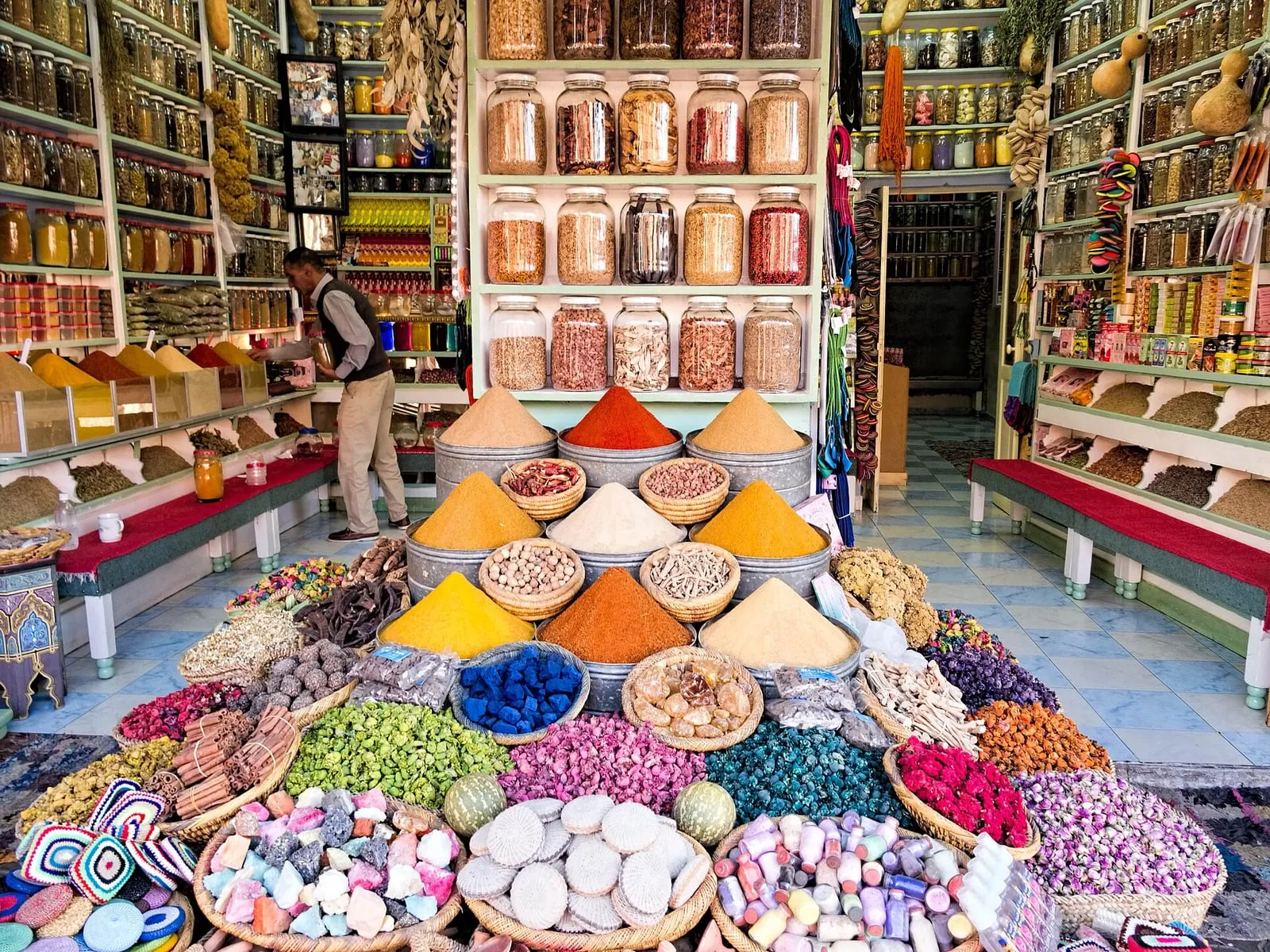
To buy spices and herbal products near Jemaa el-Fna, the best place is Rahba Kedima square, about a 10-minute walk north of the main square via Rue Semmarine. Here you will find ras el hanout, saffron, cumin, argan oil, black soap, ghassoul clay and kohl. As a rough guide for 2026, expect to pay 20 to 40 MAD per 100 g of ras el hanout and 25 to 60 MAD per gram of good-quality saffron — anything much cheaper should set alarm bells ringing.
The main trap isn’t the spice itself but the theatre around it: the notorious “Berber pharmacy”, where a helpful stranger leads you in for a demonstration followed by a high-pressure sale at inflated prices. This guide gives you benchmark prices, simple tests to tell real saffron and genuine argan oil from fakes, and the habits that will see you leave with good products without being ripped off.
In short
- Where: Rahba Kedima square (the spice souk), north of Jemaa el-Fna; a few stalls also in the souks and at the Mellah market.
- The essentials: ras el hanout, Taliouine saffron, cumin, argan oil, black soap (beldi), ghassoul, orange blossom water.
- Indicative 2026 prices: ras el hanout 20-40 MAD/100 g, saffron 25-60 MAD/g, pure argan oil 80-200 MAD per 100 ml depending on quality and where you buy.
- Trap no. 1: the “Berber pharmacy” or “last-day cooperative” you get steered towards — you owe nobody anything.
- Golden rule: smell, taste, ask for the price by weight before anything is weighed, and compare two or three stalls.
Where to find the herbalists and the spice souk
Jemaa el-Fna itself is mostly about food stalls, juice stands and street performers; herbalists do turn up there from time to time, with small displays of roots, dried plants and traditional beauty products. For a real choice, though, you need to head into the souks.
Rahba Kedima, the spice square
From Jemaa el-Fna, take Rue Semmarine (the main entrance to the souks, on the north side of the square), then follow the signs or ask for “Rahba Kedima”. After about ten minutes’ walk, the alley opens onto a small rectangular square lined with stalls: this is Rahba Kedima, literally “the old square”. Spice sellers display pyramids of cumin, paprika and turmeric, baskets of dried rosebuds, and jars of herbs and ointments.
It is one of the most photogenic spots in the medina, and one of the most practical for comparing prices, since the shops stand shoulder to shoulder. Several café terraces overlook the square — ideal for watching the action before you buy. If it is your first time in the souks, our guide to the souks around Jemaa el-Fna will help you find your way through the maze.
Other places to shop
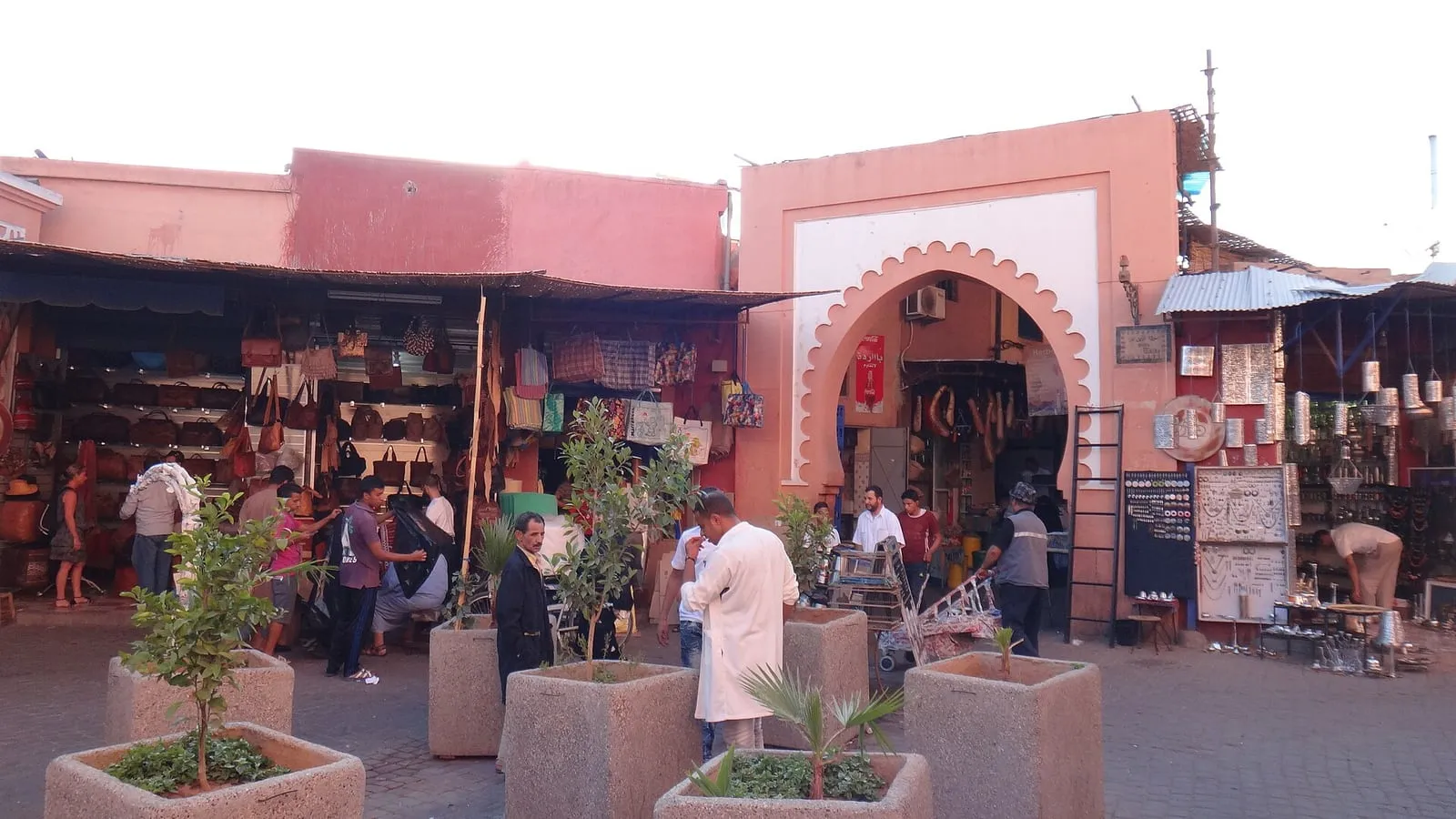
- The Mellah spice market, in the old Jewish quarter near the Bahia Palace: a more local covered market, often slightly cheaper, but also the area where you are most likely to meet touts steering visitors towards “Berber pharmacies”.
- Stalls in the souks (Souk Attarine, around Rue Semmarine): handy if you are already wandering, though the choice is more limited.
- Supermarkets in Gueliz (outside the medina): less charm, but marked prices that make a useful benchmark before you haggle in the medina.
What to bring home: a guide to spices and traditional products
Here are the products that are genuinely worth the trip, along with what you need to know to choose them well.
| Product | What it’s for | Indicative 2026 price | Smart move |
|---|---|---|---|
| Ras el hanout | Blend for tagines, couscous, game | 20-40 MAD / 100 g | Ask what’s in it, smell the blend |
| Saffron | Tagines, rice, pastries, tanjia | 25-60 MAD / g | Do the water test (see below) |
| Cumin, paprika, turmeric | Everyday cooking | 10-25 MAD / 100 g | Go for whole spices or have them ground in front of you |
| Argan oil | Cosmetic (unroasted) or culinary (roasted) | 80-200 MAD / 100 ml | Insist on “100% argan”, smell the oil |
| Black soap (beldi) | Hammam scrub | 10-30 MAD | Brown paste, olive scent, no chemical perfume |
| Ghassoul | Cleansing clay for hair and skin | 10-30 MAD | Brown chunks or fine powder, no additives |
| Orange blossom / rose water | Pastries, skincare | 15-40 MAD | Check the label (distillate, not flavouring) |
| Amlou | Almond, argan and honey spread | 40-80 MAD per jar | Taste before you buy |
Indicative prices noted in the medina; they may vary with the season, the quality and your haggling skills.
Ras el hanout, the “head of the shop”
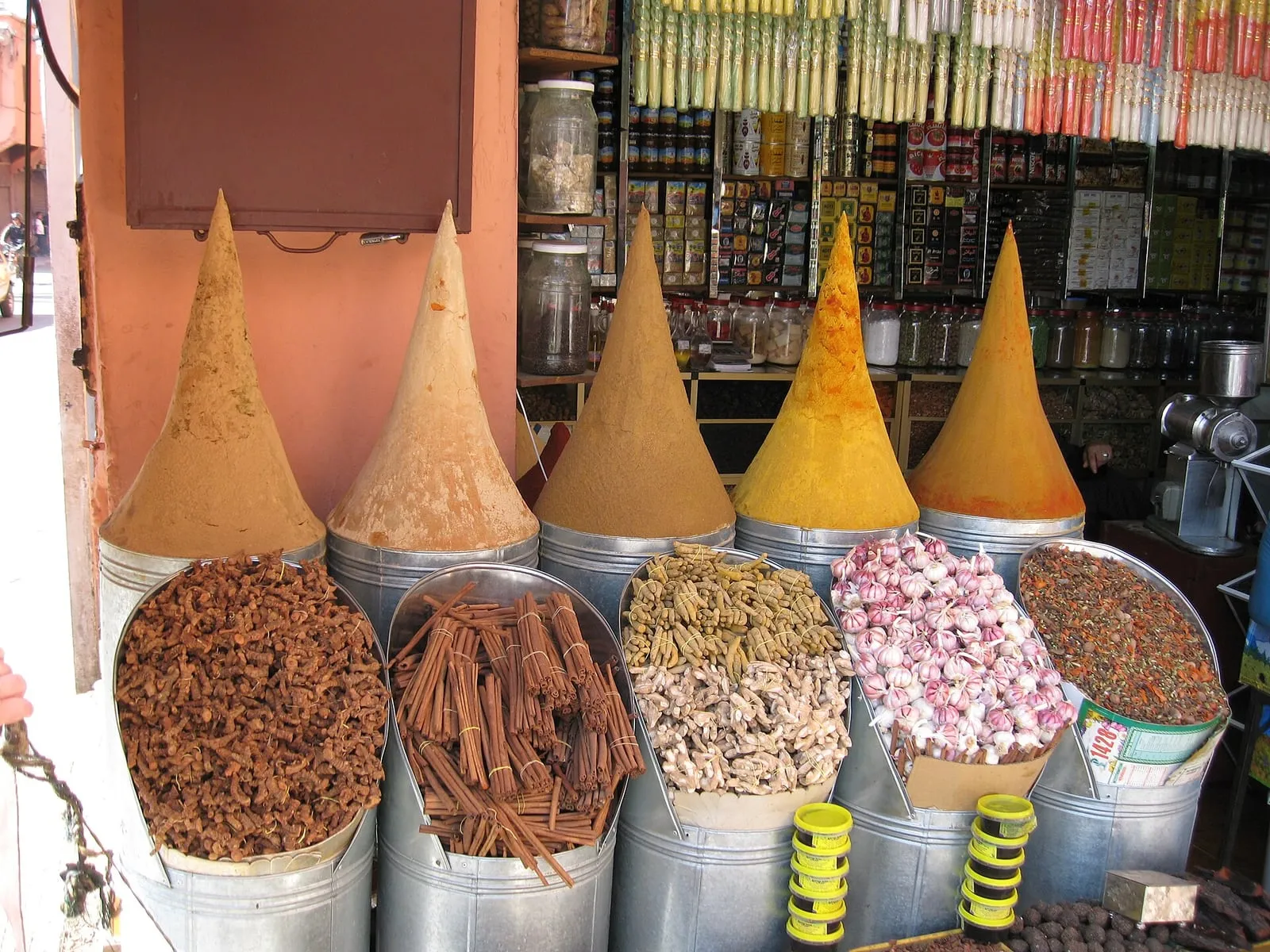
Ras el hanout literally means “head of the shop”: it is each spice merchant’s signature blend, made with the best of what they sell. Depending on the recipe, it can bring together twenty or more spices — cumin, coriander, cinnamon, ginger, turmeric, various peppers, cardamom, nutmeg, sometimes rosebuds. So there is no single ras el hanout, but dozens of them.
Ask to smell several blends: a good ras el hanout has a warm, complex, assertive aroma. A dull, very yellow mix with little scent is often mostly turmeric and salt. It is the perfect spice for recreating a tanjia marrakchia or a tagine at home.
How to recognise real saffron
Saffron is the most expensive spice in the world, and therefore the most imitated. Morocco produces a highly regarded saffron, particularly around Taliouine in the Souss region. Real saffron consists of the dried stigmas of a crocus flower: deep red threads that flare slightly into a trumpet shape at one end.
The most common fakes are safflower petals, corn silk or dyed threads. Three simple tests:
- The water test: drop a thread into a glass of lukewarm water. Real saffron slowly releases a golden-yellow colour, and the thread stays red and intact. Fake saffron turns the water red or orange immediately, and the thread fades or falls apart.
- The shape: a real stigma looks like a tiny flared trumpet; safflower looks like thin, irregular little petals.
- The price: saffron at a few dirhams a gram is bound to be fake. Quality comes at a price, even at the source.
How to make sure your argan oil is pure
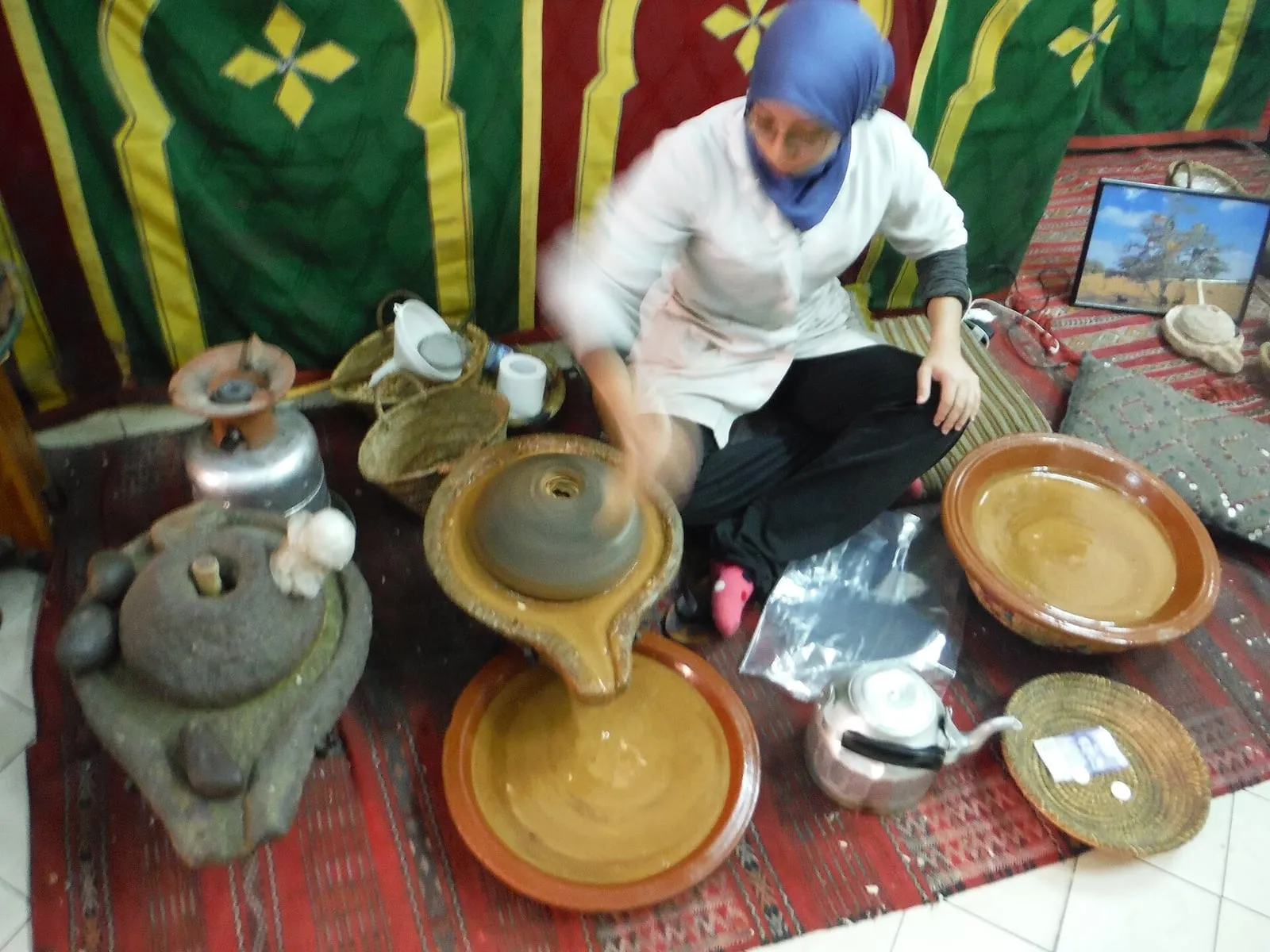
Argan oil is pressed from the kernels of the fruit of the argan tree, which grows naturally only in south-western Morocco. Production is slow: it takes several dozen kilos of fruit to obtain a single litre of oil, often through manual work carried out by women’s cooperatives. The know-how surrounding the argan tree is in fact inscribed on UNESCO’s list of Intangible Cultural Heritage.
There are two kinds, which should not be confused:
- Cosmetic oil: unroasted kernels, pale gold colour, very faint smell. For skin and hair.
- Culinary oil: roasted kernels, darker colour, pronounced toasted-hazelnut aroma. For dressing dishes and making amlou.
To avoid diluted oil (often cut with sunflower oil):
- insist on the words “100% argan oil” and, ideally, a label showing the origin or the cooperative;
- smell it: an oil with no smell at all and a very runny texture is suspect, while a rancid smell means the oil is old;
- steer clear of suspiciously low prices and large open plastic bottles;
- compare with the price of a branded bottle in a supermarket: that is your realistic floor.
The “Berber pharmacy”: the trap you need to know about
This is one of the most widespread set-ups in Marrakech, and it specifically targets visitors interested in spices. The script is almost always the same:
- A friendly stranger strikes up a conversation near the square or in the lanes of the Mellah and tells you that “today is the last day of the Berber market” or that the cooperative only opens once a week.
- He leads you, “asking nothing in return”, to a shop presented as a Berber pharmacy or a traditional herbalist’s.
- An “herbalist”, sometimes in a white coat, has you smell and touch dozens of products, each with spectacular medicinal benefits.
- Then comes the sale: complimentary tea, a warm atmosphere, then prices well above the market rate and pressure that is hard to resist. Your impromptu guide pockets a commission.
This routine is one of the most common scams around Jemaa el-Fna; simply knowing about them is usually enough to avoid them. More broadly, our safety and scams guide sets out the right reflexes on the square.
How to haggle with a spice seller
Haggling is part of the game, but it works differently at a spice stall than with a carpet dealer:
- Always ask for the price by weight (“how much for 100 grams?”) before the product is weighed and bagged. Once the bag is filled, it is harder to say no.
- State the quantity you want: 50 or 100 g is enough for most spices, which lose their aroma over time.
- Buy everything at the same stall: you will find it easier to get a good overall price.
- Keep smiling and stay firm: a “thank you, I’ll think about it” often brings the price down.
For techniques and benchmark price ranges, see our article on the art of haggling at Jemaa el-Fna and our guide to prices at Jemaa el-Fna.
Traditional remedies: what to know before you buy
Moroccan herbalists (achab) also sell plants and preparations presented as remedies: nigella seeds, blends for colds, roots, resins for burning. This folk knowledge is part of the country’s heritage, and many of the products are essentially aromatics or pleasant cosmetics.
Two products call for particular caution:
- Traditional kohl: this eye cosmetic is often made from galena, a lead ore. Health authorities advise against this type of kohl, especially for children. Choose a labelled, regulated cosmetic kohl instead.
- “Black” henna: it often contains PPD, a substance that can cause severe skin allergies. Everything is explained in our guide to henna at Jemaa el-Fna.
Taking spices home on the plane
Dried spices, black soap and ghassoul travel very well in checked luggage, in tightly sealed bags (double-bag them to stop the smell spreading through your suitcase). For argan oil and orange blossom water, remember the cabin liquids rule (containers of 100 ml maximum): anything larger should go in the hold, well wrapped.
Customs rules vary depending on your destination country: check the limits on plant and food products before you leave.
Frequently asked questions
Where can I buy spices near Jemaa el-Fna square?
The best choice is at Rahba Kedima square, the spice souk, about a 10-minute walk north of Jemaa el-Fna via Rue Semmarine. The stalls are clustered together, which makes it easy to compare prices and quality.
How much does saffron cost in Marrakech?
As a rough guide for 2026, good-quality saffron costs around 25 to 60 MAD per gram in the medina. Saffron sold for a few dirhams a gram is almost certainly a fake (safflower or dyed threads).
What is the “Berber pharmacy” in Marrakech?
It is a shop that a tout leads visitors to on the pretext of a “last day of the Berber market”. After a product demonstration, you are offered prices far above the market rate, and the tout earns a commission. You are never obliged to buy.
How can I tell if argan oil is genuine?
Insist on the words “100% argan oil”, smell it (it should neither be completely odourless nor smell rancid) and be wary of very low prices. Unroasted cosmetic oil has a faint smell; roasted culinary oil smells of toasted hazelnuts.
What does ras el hanout mean?
Ras el hanout means “head of the shop”: it is each spice merchant’s signature blend, which can combine twenty or more spices. Every herbalist has their own recipe.
Can I bring spices home from Morocco in my suitcase?
Yes, dried spices travel well in checked luggage in sealed, double-wrapped bags. For liquids such as argan oil, respect the 100 ml cabin limit or pack them in the hold, and check your country’s customs rules.
Rahba Kedima pairs perfectly with exploring the area around Jemaa el-Fna: the souks, the Ben Youssef Madrasa and the palaces are just minutes away. Then head back to the square at sunset, when the evening food stalls are setting up.