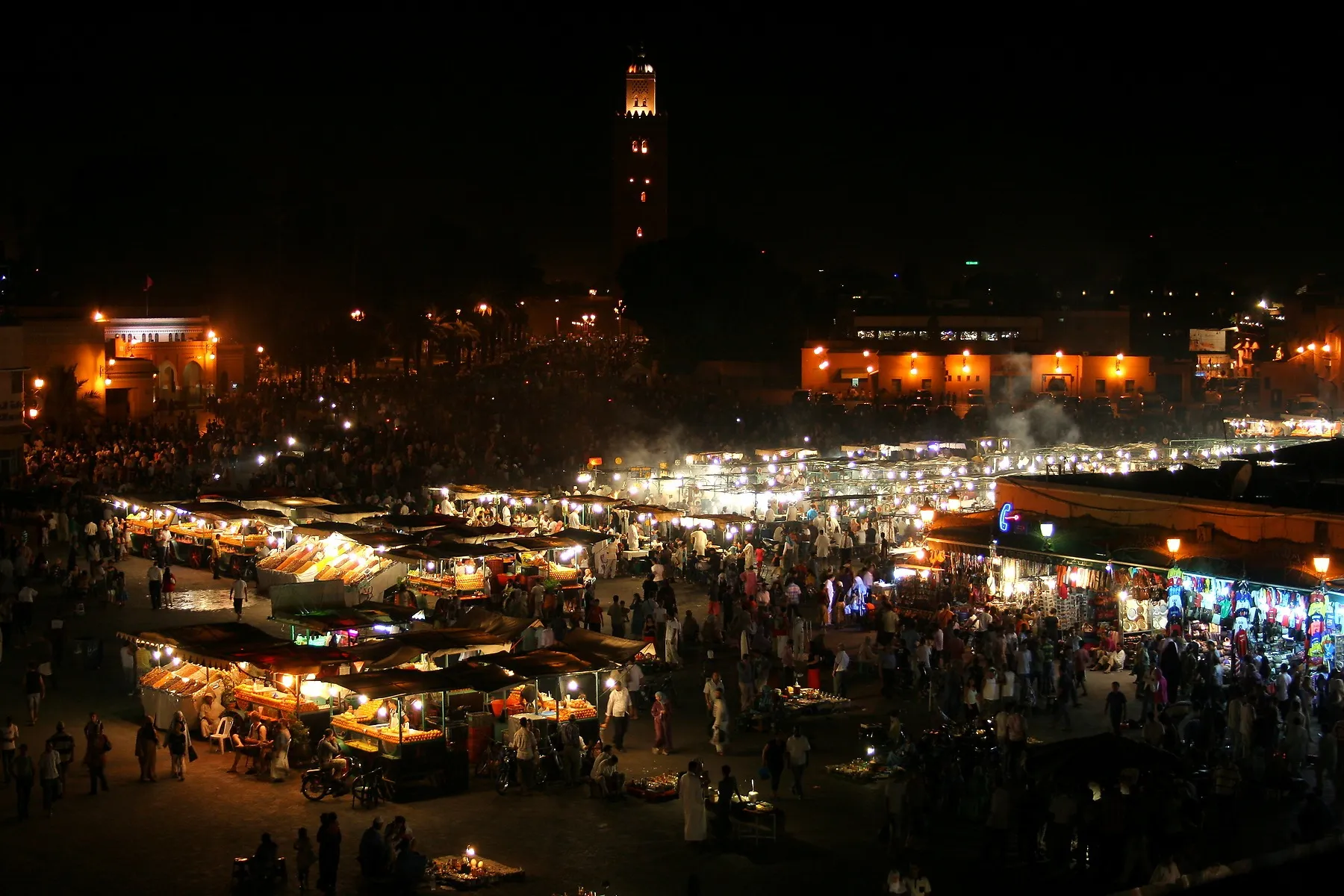
Harira is the iconic soup of Jemaa el-Fna: a thick, fragrant purée made from tomato, lentils, chickpeas, fresh herbs and spices, served piping hot in small bowls of earthenware or porcelain for just a few dirhams. As soon as night falls, dozens of numbered stalls set up their huge steaming pots across the square, and the aroma of ginger, coriander and tomato paste mingles with that of the grills. For many visitors, it is the first authentic taste of Morocco.
While harira is inseparable from Ramadan — it is the dish that breaks the fast every evening across the country — it is in fact enjoyed all year round on Jemaa el-Fna. Comforting, nourishing and cheap, it makes a meal in itself or the perfect starter before the skewers. In this food-lover’s guide, we tell you exactly what’s in it, where to drink it on the square, how much it costs and what to pair it with so you can enjoy the experience like a true Marrakchi.
What exactly is harira?
Harira is a typically Moroccan meal-in-a-bowl soup, at once thick, tangy and richly spiced. Its name is said to come from the Arabic harir (“silk”), a nod to its velvety, silky texture once thickened. It is the consistency that sets it apart from a simple broth: harira coats the spoon, almost creamy, yet never heavy.
Its core ingredients form a framework recognisable all across Morocco:
- A tomato base: fresh tomato purée and paste, giving it that signature red-orange colour and tang.
- Legumes: chickpeas and lentils, which lend body and nutritional value.
- Fresh herbs: coriander, parsley and celery, finely chopped, for aroma.
- Warm spices: ginger, turmeric, pepper, saffron (or food colouring), sometimes a hint of cinnamon.
- A thickener, the tedouira: a mixture of flour (or starch) slaked in water, stirred in constantly at the end of cooking. This is what gives harira its silky smoothness.
Depending on the region and the family, cooks add fine vermicelli (angel hair) or a handful of rice, a little meat (lamb or beef) cut into tiny cubes, and sometimes a squeeze of lemon juice or a beaten egg at the end of cooking. On the Jemaa el-Fna stalls, the version served is most often economical and generous with legumes, the meat being discreet or absent — good news for vegetarians (see below).
The dish’s exact origins remain debated: it is credited with both Berber and Andalusian roots, and its present form has long been documented in the cuisine of the Maghreb. To dig deeper into its history and regional variations, the encyclopaedic entry on harira on Wikipedia is a good starting point.
Harira, star of Ramadan… served all year round
It’s impossible to talk about harira without mentioning Ramadan. Every evening of the holy month, at sunset, Moroccan families break the fast (the ftour or iftar) around a bowl of steaming harira. It is the ritual dish par excellence, the one that rehydrates, warms and satisfies after a long day without food or drink.
But contrary to what many visitors imagine, harira is not reserved for Ramadan. On Jemaa el-Fna it is served all year round, from the hottest summer evenings to the cool nights of a Marrakech winter. It is even especially appreciated in the cool of the evening, when the temperature drops sharply once the sun has set. Marrakchis happily drink a bowl as a snack, a starter or a light dinner, in any season.
If you visit the square during the holy month, be aware that the atmosphere changes profoundly: the stalls only come to life after the fast is broken, in a unique buzz of sharing. We cover all of this in our article on Jemaa el-Fna during Ramadan.
Where and how to enjoy harira on the square
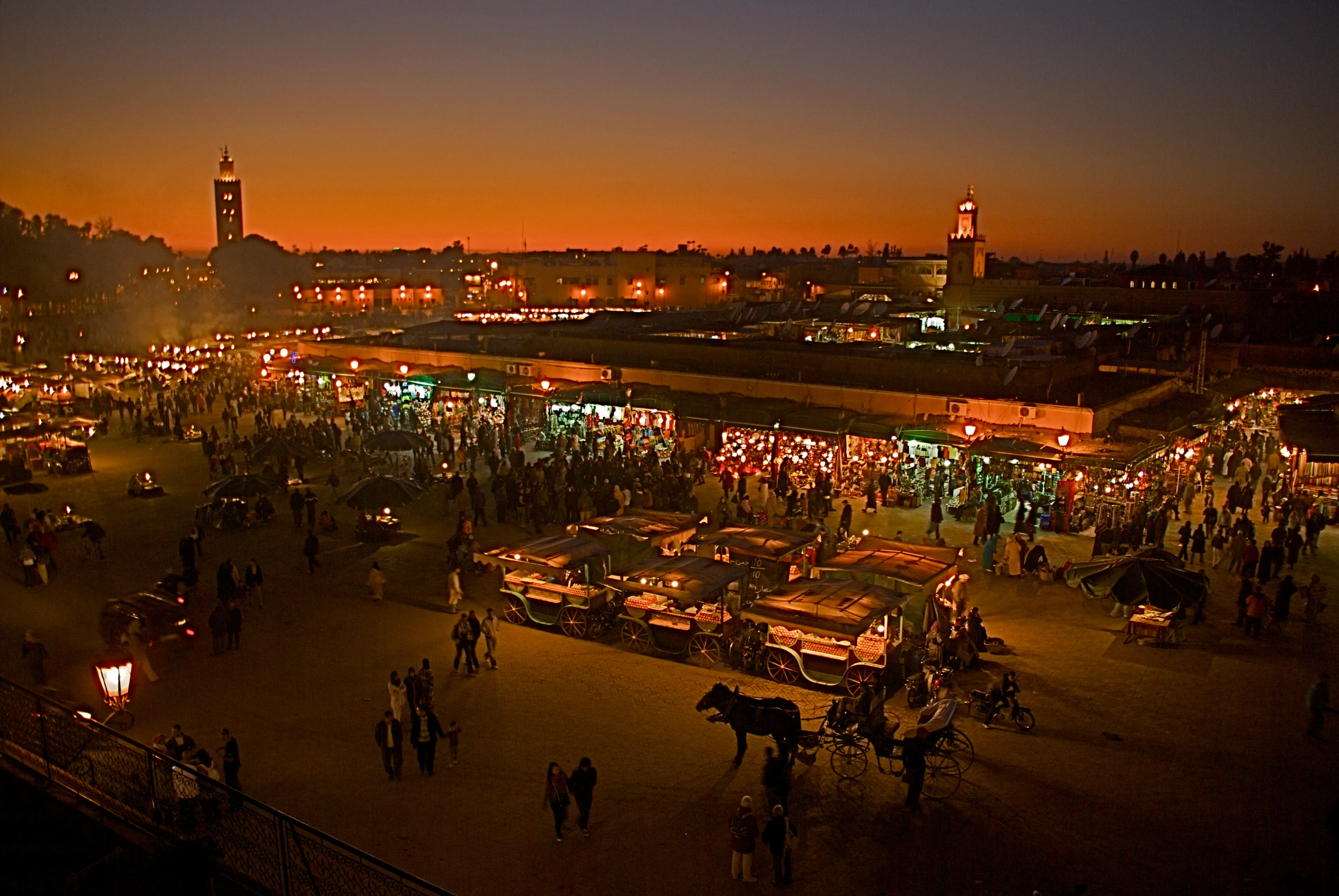
By late afternoon, the eastern half of Jemaa el-Fna fills with numbered food stalls, each with its large pot of harira kept hot. It is there, seated on a wooden bench right on the square, elbow to elbow with the locals, that the soup truly comes into its own.
Here is how to make the most of the experience:
- Look for the pots surrounded by locals. A stall where Marrakchis queue for a bowl of harira is always a sign of freshness and a fair price.
- Order “a bowl of harira” — bol dyal l’harira — and let the vendor serve it to you with a ladle. It is often drunk straight from the bowl, in small sips, or with a spoon.
- Pair it with dates or chebakia, available on the spot or at the neighbouring stalls. The contrast between the tangy soup and the sweetness of honey is a quintessentially Moroccan delight.
- Add a squeeze of lemon if it’s offered: a few drops wake up the spices.
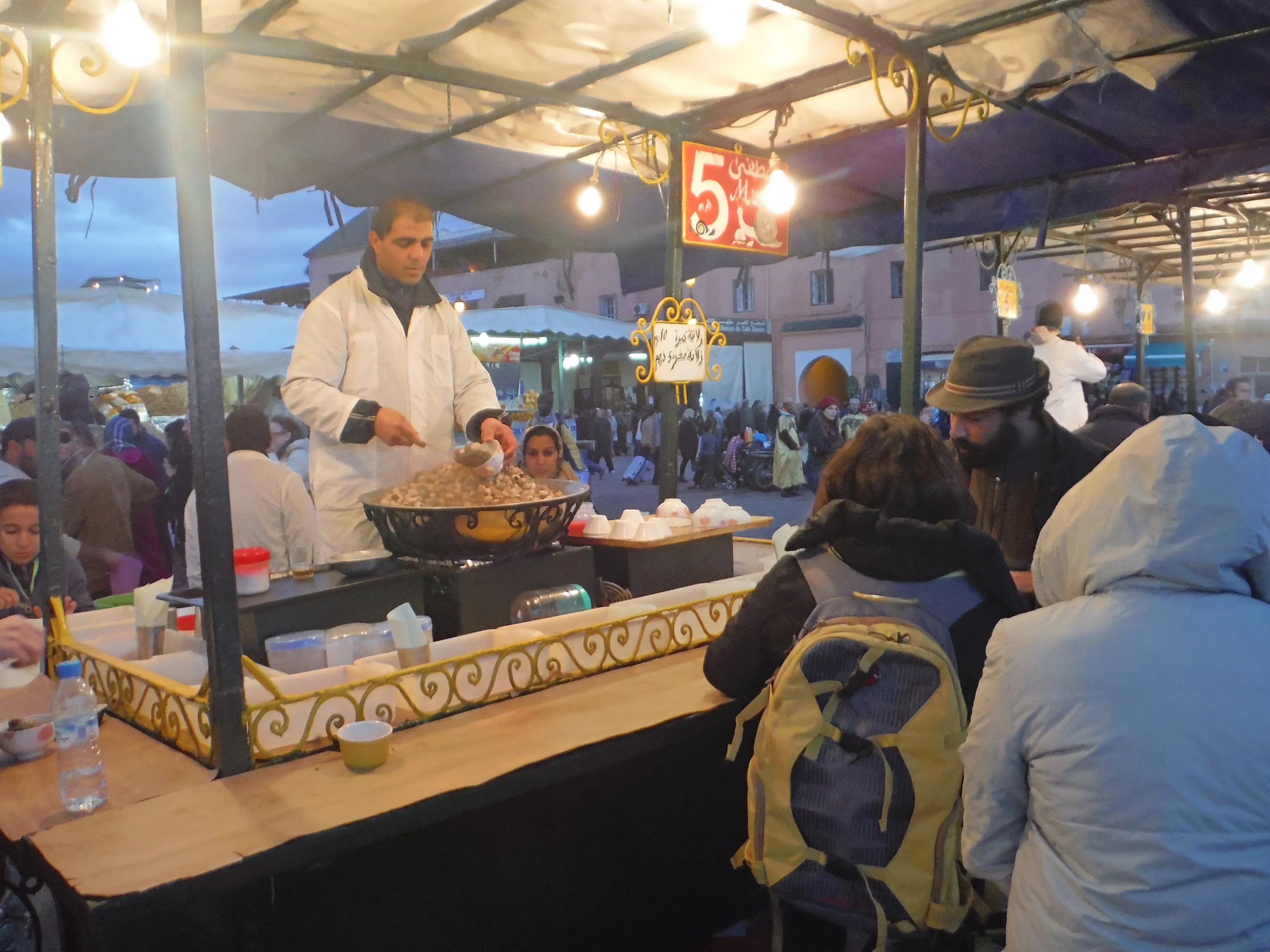
Right next to the harira, you will almost always find the snail soup (babbouche), the square’s other great liquid classic — the two pots often sit side by side on the same cart. For a complete overview of the specialities to taste, dive into our guide to the top street food of Jemaa el-Fna.
How much does a bowl of harira cost?
It’s one of the most affordable pleasures in all of Marrakech. A bowl of harira usually costs between 5 and 15 dirhams (around €0.50 to €1.50) at the stalls on the square. That’s a tiny price for a complete, legume-rich and filling dish.
| Item | Indicative price (MAD) | ≈ € |
|---|---|---|
| Bowl of harira | 5 – 15 MAD | €0.50 – €1.50 |
| Harira + dates or chebakia | 10 – 20 MAD | €1 – €2 |
| Full meal at a stall (with harira) | 40 – 100 MAD | €4 – €10 |
For a detailed breakdown of all the prices on the square — meals, juices, henna, photos — see our dedicated article: how much a visit to Jemaa el-Fna costs.
The must-have sides
Harira is almost never drunk on its own. The great Moroccan classic calls for it to be paired with sweets that balance its tang:
- Dates: sweet and soft, they provide quick energy (hence their central role at the breaking of the fast). You bite into one between two sips of soup.
- Chebakia: this flower-shaped pastry, fried then coated in honey and sesame seeds, is harira’s king companion, especially during Ramadan. Crunchy and scented with orange blossom water, it melts in the mouth.
- The hard-boiled egg, often dusted with cumin and salt, for a more substantial version.
- Moroccan bread (khobz), ideal for mopping up the bottom of the bowl.
This pairing of the spicy-savoury and the sweet-honeyed is one of the signatures of Moroccan cuisine. At Jemaa el-Fna, everything comes together in one place: a bowl of harira, two dates, a chebakia, and you have a full dinner for less than €2.
A perfect dish for vegetarians?
Good news: the harira served at the stalls is often vegetarian or nearly so, the meat being discreet or even absent for cost reasons. Its base of tomato, lentils and chickpeas makes it a dish naturally rich in plant protein. Still, do say bla lham (“without meat”) if you want to be sure, as some recipes contain a meat stock.
It is one of the rare hot, complete and safe options for vegetarian travellers on the square. We even devote a full guide to it: eating vegetarian at Jemaa el-Fna.
In summary
Harira sums up the whole spirit of Jemaa el-Fna: humble, generous, fragrant and accessible to all. Whether it’s breaking the fast during Ramadan or simply warming up on a winter evening, this bowl of red soup with lentils and chickpeas tells, all on its own, centuries of Moroccan cooking. Sit down on a bench, order a bowl for a few dirhams, add a date and a chebakia, and let the square do the rest.
To plan your food-loving evening, find all our addresses and tips in the guide to where to eat at Jemaa el-Fna.
Frequently asked questions
What is harira?
Harira is a thick Moroccan soup made from tomato, lentils, chickpeas, fresh herbs (coriander, parsley, celery) and spices (ginger, turmeric, pepper). Thickened with flour for a velvety texture, it is served piping hot and makes a proper meal in a bowl.
How much does a bowl of harira cost at Jemaa el-Fna?
Expect around 5 to 15 dirhams (€0.50 to €1.50) a bowl at the stalls on the square. It’s one of the cheapest dishes in Marrakech. Always ask the price before ordering and refuse any unwanted extras.
Is harira only eaten during Ramadan?
No. While harira is the ritual dish for breaking the fast during Ramadan, it is served all year round at Jemaa el-Fna. Marrakchis drink it in every season, especially in the evening when the temperature drops.
What do you pair harira with?
Traditionally with dates, chebakia (a honey and sesame pastry), a hard-boiled egg and a piece of bread. This sweet-and-savoury mix is the classic Moroccan way to enjoy the soup.
Is harira suitable for vegetarians?
Often yes, as it is built on legumes (lentils, chickpeas) and a tomato base. Meat, when present, is used in small amounts. Say bla lham (“without meat”) to be sure of a 100% vegetarian version.