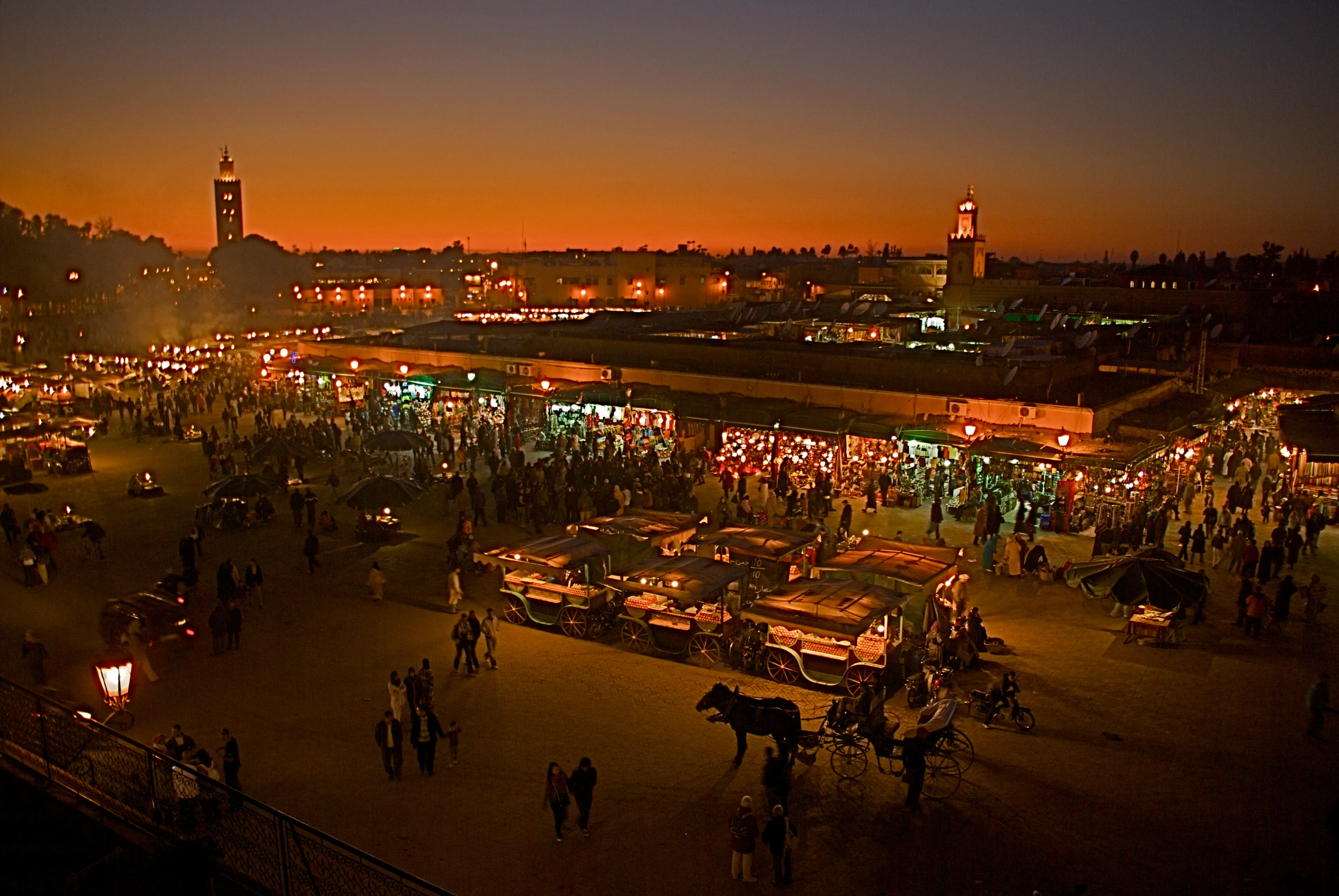
During Ramadan, Jemaa el-Fna does not fall silent: it simply resets its clock. By day, the square is calm, almost drowsy, most food stalls stay shut and the pace turns hushed. Then, at the moment of ftour (the breaking of the fast, at sunset), everything shifts at once: the braziers are lit, the harira steams, and the square comes alive for an evening that stretches deep into the night. It is the same place as always, but lived in reverse.
In practical terms, if you visit Marrakech during the holy month, you need to flip your habits: forget the lively lunch on the square, and save your energy for the evening, which becomes the true heart of the day. It is also one of the most authentic and moving times to discover Jemaa el-Fna, provided you come as a respectful visitor.
Ramadan is a month of fasting from dawn to sunset observed by the vast majority of Moroccans. In 2027, it is expected to begin around 8 February and end around 9 March, with the exact date set by the sighting of the moon, announced by the Moroccan Ministry of Endowments and Islamic Affairs (so the dates may shift by a day). Here, section by section, is what really changes on the square and how to make the most of it.
Jemaa el-Fna by Day During Ramadan: a Square in Slow Motion
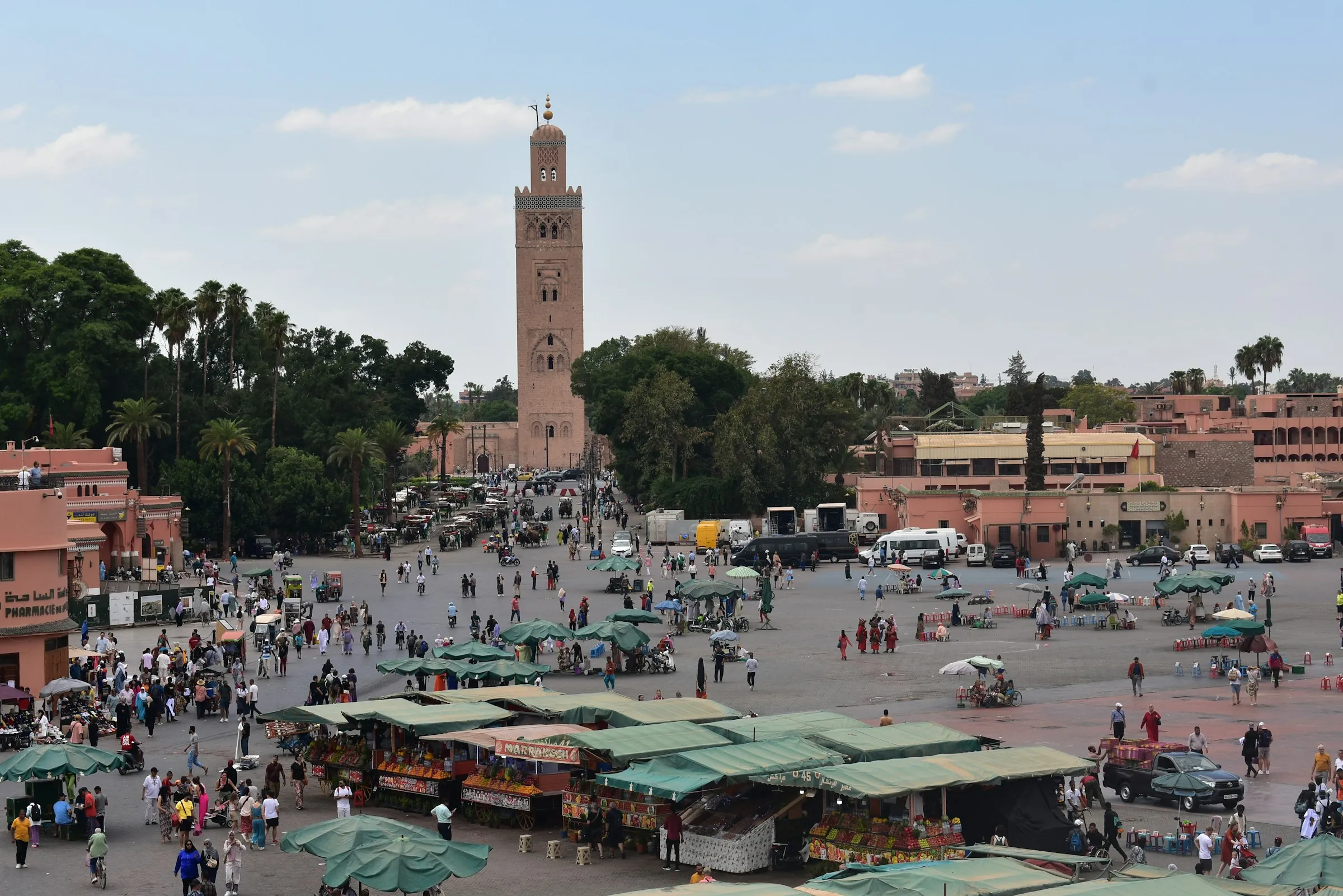
Do not expect the usual buzz in the middle of the day. Because residents are fasting, the square’s energy drops noticeably between morning and afternoon. Many food stalls do not open, musicians and performers are fewer, and the mood becomes more contemplative.
You will still come across a few daytime figures: orange juice sellers, costumed water carriers, horse-drawn carriages, a few snake charmers during the milder hours. But the intensity is subdued. In the afternoon, as the hour of ftour approaches, a distinctive atmosphere settles in: spirits are a little worn by the fast, traffic picks up as everyone heads home to prepare the meal, and a kind of feverish anticipation rises across the whole city.
Ftour: the Magical Moment When the Square Shifts
Ftour (also called iftar) is the breaking of the fast, taken exactly at sunset, at the call to the Maghrib prayer. It is the most powerful moment of Ramadan, and on Jemaa el-Fna it produces a striking spectacle.
A few minutes before the hour, a strange calm takes over the square: the cafés fill up, the tables are set, and everyone waits, a bowl of harira and a few dates in front of them. Then the muezzin’s call rings out from the minaret of the Koutoubia, and the whole city stops to eat in a single, shared gesture. After streets that seemed emptied, the square then fills up gradually, and the energy rises hour by hour.
The meal that breaks the fast is almost always made up of the same iconic elements:
- Harira: the emblematic Ramadan soup, made with tomato, chickpeas, lentils, coriander and sometimes meat. It is the signature dish of the ftour.
- Dates: traditionally, the fast is broken with an odd number of dates, often three.
- Chebakia: a flower-shaped pastry, fried and then coated in honey and sesame, inseparable from the holy month.
- Milk, hard-boiled eggs and fresh orange juice: classic accompaniments to the meal.
The Nighttime Atmosphere of Ramadan: the Square Barely Sleeps
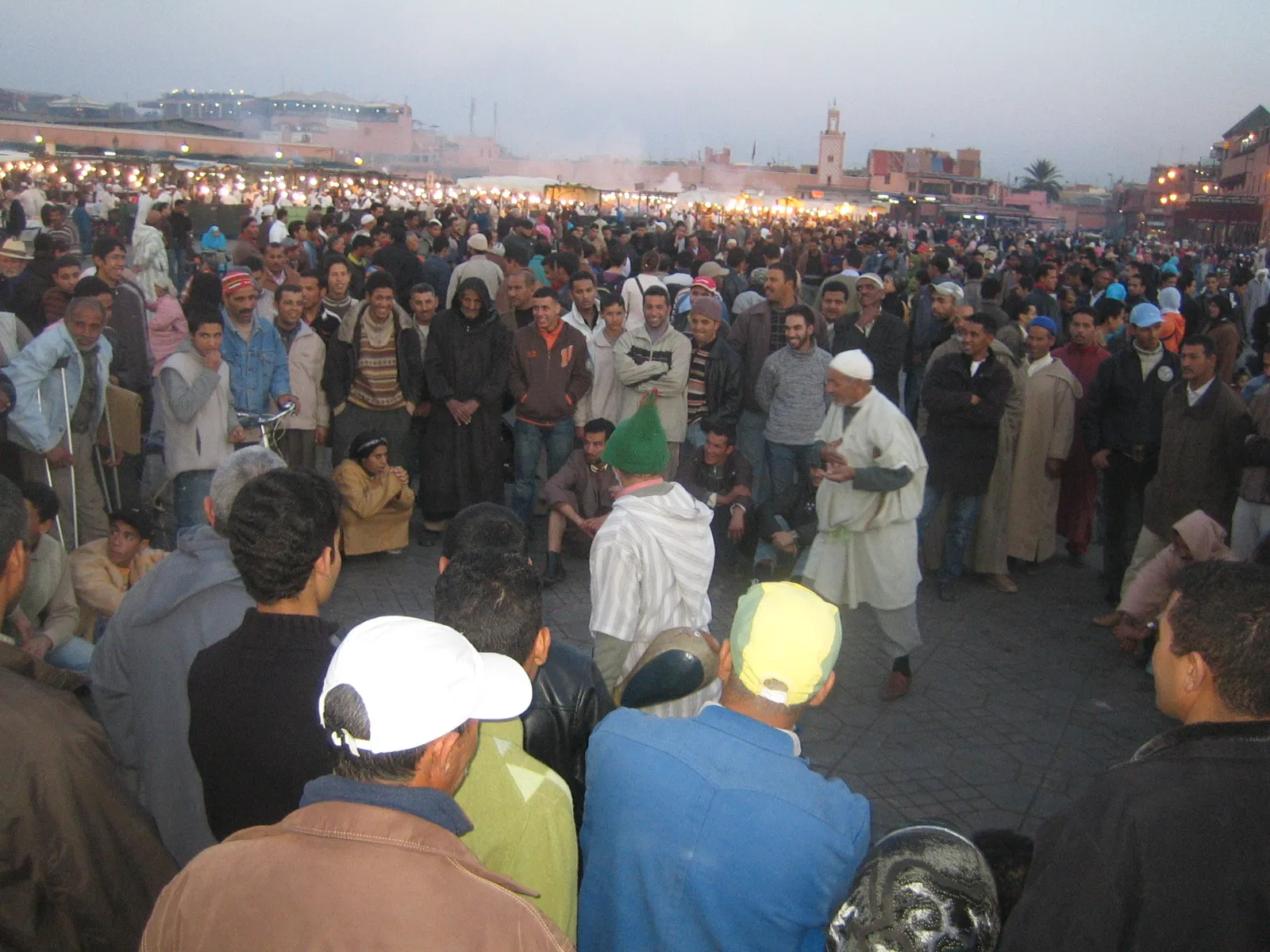
This is where Ramadan reveals its most fascinating face on Jemaa el-Fna. Once ftour is over, the people of Marrakech come back out in force, this time well-fed and full of energy. The evening, which normally winds down around midnight, stretches here until the small hours.
The food stalls reopen, the smoke of the grills once again drifts across the square, the circles of musicians (the famous halqa) form again, and families come to dine and stroll late. The atmosphere is joyful, down-to-earth, deeply convivial. Many sleep only a few hours before the s’hour, the last meal taken before dawn, which shifts all of social life toward the night.
One thing worth knowing: during Ramadan, the spirit of sharing is especially palpable. It is not unusual for strangers to invite you to break the fast with them, a bowl of soup and some dates in hand. It is one of the most authentic moments you can experience in Marrakech. To understand everything about the square’s nighttime transformation (outside Ramadan too), read our dedicated guide to Jemaa el-Fna in the evening.
What Closes and What Stays Open
The question comes up often: can you eat and drink normally as a tourist? The answer is yes, but with some nuances.
As Marrakech is Morocco’s most touristic city, a good number of restaurants, riads, shops and cafés stay open during Ramadan, especially in high-traffic areas. Many restaurants in the Guéliz district and many establishments in the medina keep serving travellers during the day, often indoors or on a more discreet terrace.
On the square itself, however:
- The evening food stalls open only after ftour, not at midday.
- Some cafés and terraces around the square remain accessible during the day, but may keep reduced hours.
- The rhythms change: everything is concentrated on the evening and night.
To know exactly where and what to eat on the square in normal times, our guide where to eat at Jemaa el-Fna remains a good starting point; during Ramadan, simply apply its advice… once evening comes.
Respecting the Fast: the Etiquette to Follow
Travelling during Ramadan is neither forbidden nor complicated, but a few thoughtful gestures make all the difference and are much appreciated by locals.
- Avoid eating, drinking or smoking conspicuously in public during the day. No one will ask you to fast, but consuming discreetly (in a restaurant, your riad, a designated space) is a basic sign of respect.
- Dress modestly, as is recommended in Marrakech anyway.
- Be patient in the afternoon: staff and shopkeepers may be tired at the end of the fast.
- Do not take close-up photos of people without their consent, especially during the intimate moment of ftour.
- Respond warmly if you are invited to share the breaking of the fast: it is an honour, and an unforgettable memory.
These simple gestures transform your stay and open up a Moroccan hospitality even more generous than usual. To prepare the rest of your visit (transport, hours, money, safety), see our practical information on Jemaa el-Fna.
Should You Visit Marrakech During Ramadan?
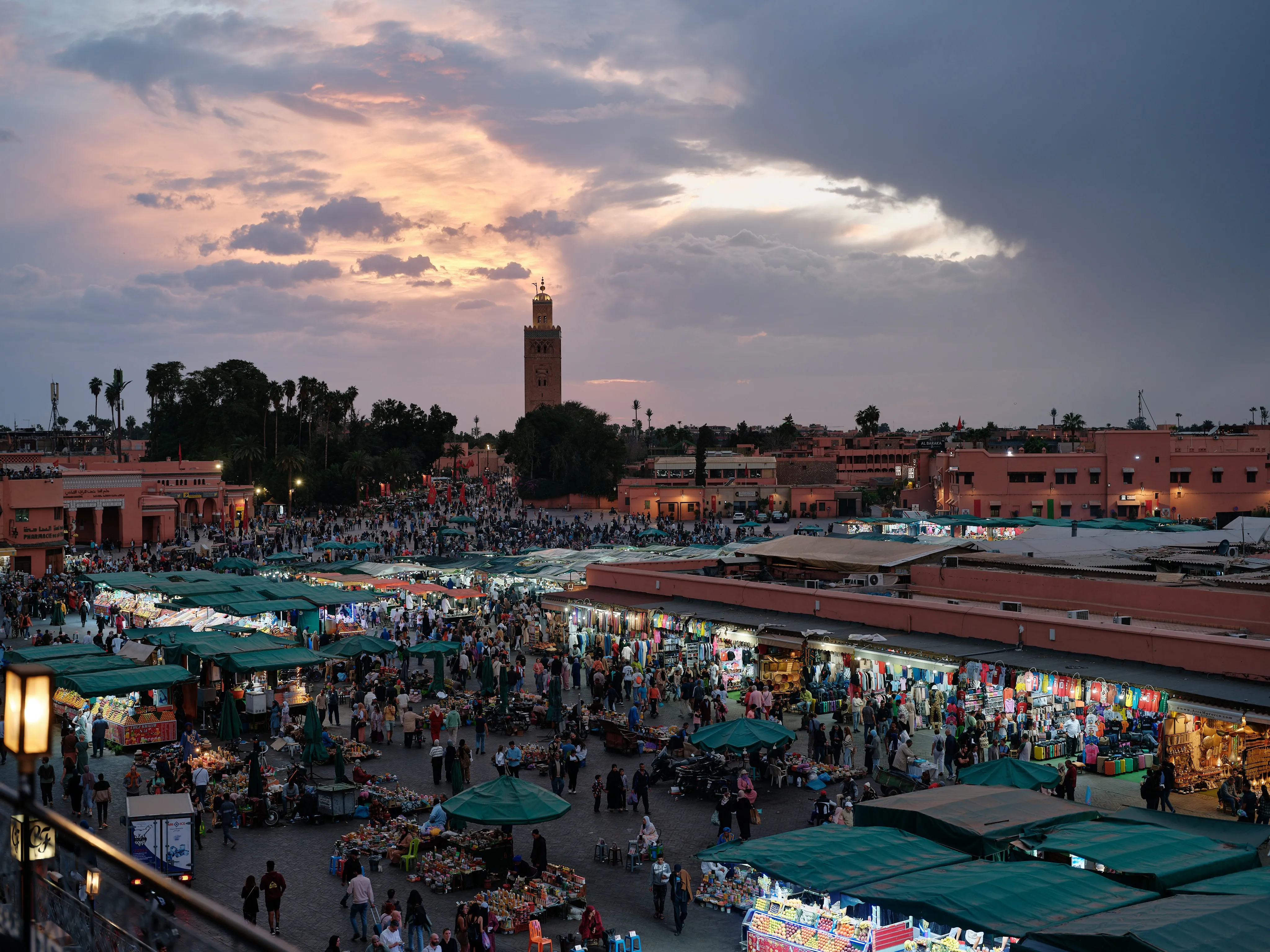
If you are looking for the liveliest square at midday, this is not the best time. But if you want to experience a rare and intense cultural experience, Ramadan is a privileged moment. The evenings are magical, the spirit of sharing is unique, and you discover a side of Morocco that most visitors never see.
You simply have to accept the rules of the game: sleep in a little later, save your energy for the evening, and let yourself be carried by the city’s reversed rhythm. Jemaa el-Fna’s listing by UNESCO as part of the intangible cultural heritage of humanity takes on its full meaning during the holy month, when oral tradition and popular conviviality express themselves to the fullest. To dig deeper into the context of the fasting month in Morocco, the Ramadan entry in the Larousse encyclopedia offers a good reference point.
Frequently Asked Questions
Can you eat on Jemaa el-Fna during Ramadan?
Yes, but mainly in the evening. During the day, most of the square’s food stalls are closed; they open after ftour (sunset). Cafés around the square and restaurants in the Guéliz district do, however, serve tourists during the day, often indoors.
What time does the square come alive during Ramadan?
The activity really begins after the breaking of the fast, at sunset (the Maghrib hour). The square then fills up gradually and the nighttime atmosphere lasts very late, often well past midnight.
Do I have to fast as a tourist?
No. There is no obligation on non-Muslim visitors. Out of respect, simply avoid eating, drinking or smoking conspicuously in public during the day, and prefer to consume in designated places (restaurant, riad, discreet terrace).
When does Ramadan 2027 take place in Marrakech?
Ramadan 2027 is expected to begin around 8 February and end around 9 March, with Eid al-Fitr falling around 10 March. These dates depend on the official sighting of the moon and may shift by a day.
What is the harira served at ftour?
It is the emblematic soup of the Moroccan ftour, made with tomato, chickpeas, lentils, coriander and sometimes meat. It is eaten at the moment of breaking the fast, along with dates and chebakia.
Is the square safer or quieter during Ramadan?
The daytime is calmer and more peaceful. In the evening, the crowd is dense but the atmosphere stays family-friendly and convivial. The usual precautions (watch your belongings, mind solicitations) still apply, as they do all year round.