Henna at Jemaa el-Fna is a living tradition: every evening, dozens of neqqachate (henna artists) offer to adorn hands and feet with plant-dye designs. Expect to pay 50 to 150 dirhams for a small design after bargaining, always insist on natural brown-orange henna, and steer well clear of “black henna” — often laced with paraphenylenediamine (PPD), a powerful allergen that can trigger severe skin reactions and lasting scars.
That’s the essential takeaway. Here, in detail, is how to enjoy the experience with peace of mind: what the designs look like, what you should pay, how to bargain, how to spot forced henna, and above all how to recognise and avoid dangerous black henna.
Who are the neqqachate of Jemaa el-Fna?
The neqqacha (plural neqqachate) is the henna artisan. Seated on a low stool, a syringe or a cone full of paste in hand, she draws designs on the skin that turn brown-orange as they dry. It is a traditionally female craft, passed down from mother to daughter, that in Morocco accompanies the big occasions: weddings, religious festivals, births.
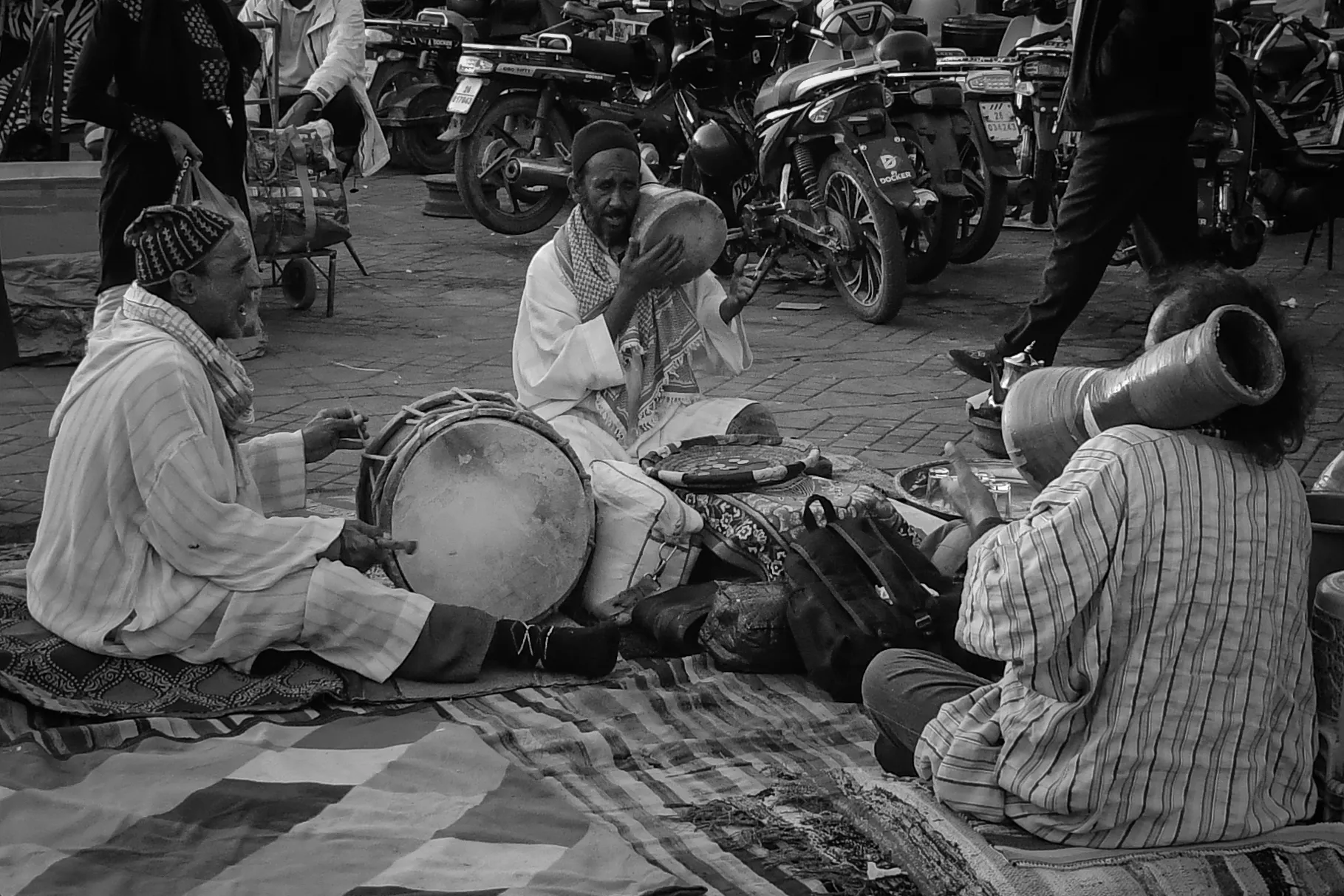
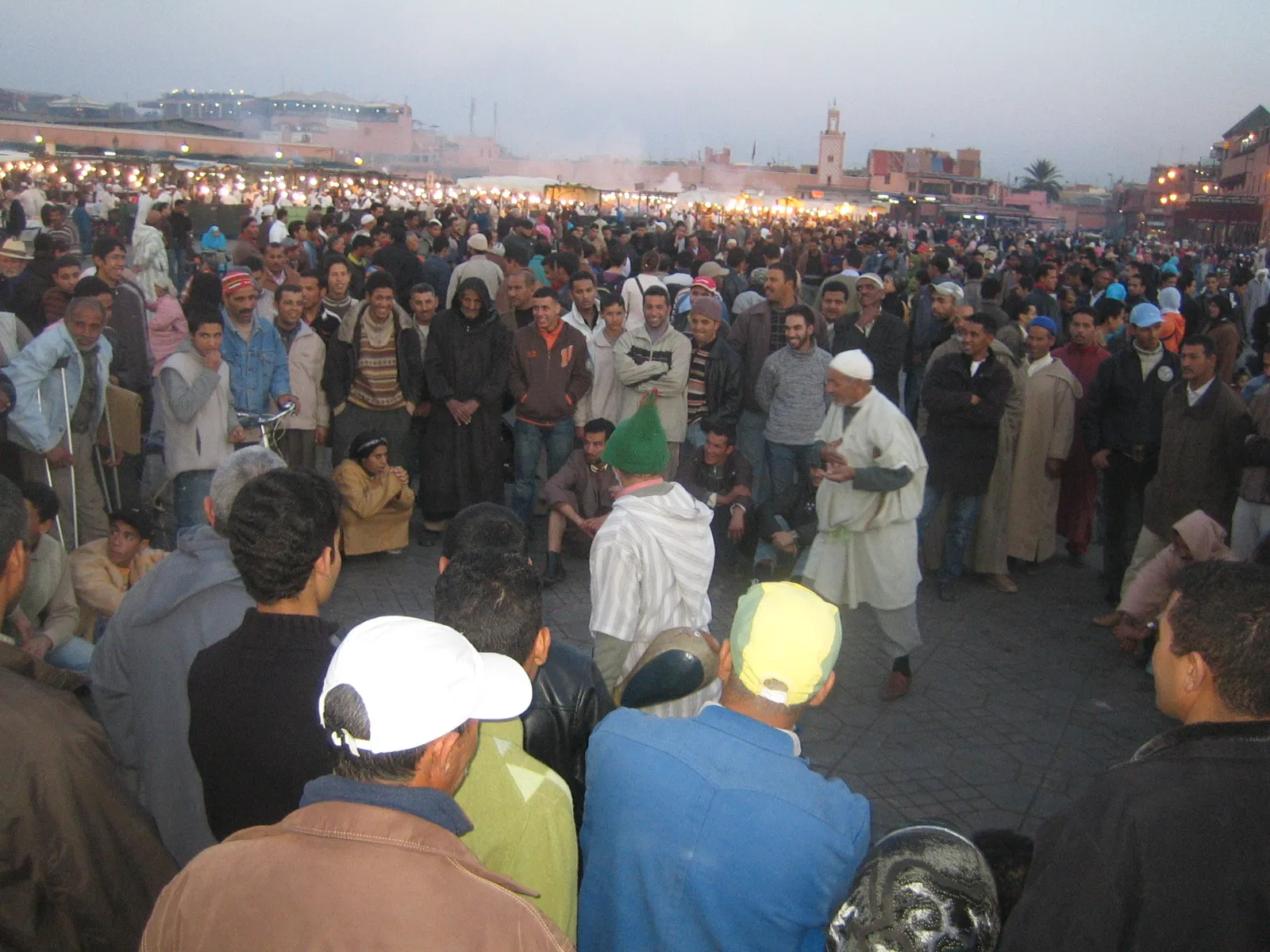
On the square, henna is part of the cultural heritage just like the storytellers, the Gnaoua musicians or the snake charmers. The ritual has, however, been heavily adapted to tourism: quick designs, “special tourist” prices and, unfortunately, a few abusive practices to watch out for.
Which henna designs should you choose?
There are two main families of designs, and it helps to know what you’re asking for before you hold out your hand.
- The Moroccan style (geometric): lines, triangles, diamonds and grids inspired by carpets and Berber tattoos. Clean and graphic.
- The Indo-Arabic style (floral): flowers, arabesques, swirls and paisleys that cover the hand and wrist. Denser and more decorative, it is the style most requested by visitors.
You can also choose the coverage: a simple design on the back of the hand, a pattern that runs up to the wrist, or a more elaborate composition across the palm and fingers. The larger the area and the more detailed the design, the higher the price — which is why it is so important to settle everything before the first drop touches your skin.
How much does henna cost at Jemaa el-Fna?
There is no official rate: the price is negotiated. The amounts below are indicative and reflect what a savvy visitor can reasonably expect to pay after a discussion.
| Type of design | Indicative price (after bargaining) |
|---|---|
| Small simple design (back of the hand) | 30–60 MAD |
| Medium design (hand + wrist) | 60–120 MAD |
| Large detailed design (whole hand, fingers) | 120–250 MAD |
| Elaborate composition (both hands, forearms) | from 250 MAD |
The first price quoted will often be 3 to 5 times higher: you’ll easily be told 300, 500, even 800 dirhams for a design you’ll get for 80 MAD. That’s the normal game of Marrakech bargaining — no aggression needed on your side.
Our rules for not overpaying:
- Fix the price AND the coverage in advance, out loud and clearly (“this design, on this hand, how much?”).
- Be wary of “per design” rates that turn into “per finger” or “per flower” once the work has started.
- Have the exact change ready: pulling out a 200 MAD note for a 60 MAD henna is an invitation to keep the change.
- If the tone rises or the price changes, stop and calmly repeat the agreed rate, in front of witnesses.
The forced henna scam: how to avoid it
This is one of the best-known traps on the square. A neqqacha grabs your hand with a “gift!”, “free, just to try!” or places a flower on your palm before you’ve even answered. Once the henna is applied, the “gift” turns into a hefty bill — 200, 300, sometimes 500 dirhams — demanded loudly to make you uncomfortable in front of the crowd.
The simple defences:
- Keep your hands close to you and never hold out your arm spontaneously.
- Keep walking with a firm, smiling “no thank you”; don’t stop to discuss.
- Nothing is ever free: the word “gift” is bait here.
- If henna has already been applied without your agreement, you are not obliged to pay an unreasonable sum: wipe it off immediately, stay calm, offer a small symbolic amount and move away toward a busy area.
We cover this trap and nine others in our guide to the 10 scams of Jemaa el-Fna square.
Black henna: the health warning you absolutely must know
This is the most important point in this article, far beyond a question of money. “Black henna” does not exist in nature. True henna, made from the dried leaves of Lawsonia inermis, produces a brown-orange to red-brown shade, never black, and takes several hours to darken.
To get an intense, fast black that “catches” a tourist’s eye better, some add paraphenylenediamine (PPD) to the paste — a dye known locally in its raw form as takaout. PPD is a powerful contact allergen, banned for direct application on the skin in the European Union precisely because of this risk.
How to recognise risky henna:
- It is advertised as “black” or promises a very dark colour immediately.
- It dries and darkens within minutes instead of several hours.
- The paste has a chemical/pungent smell (close to a solvent) rather than a herbal, plant-like scent.
- The final colour tends toward bluish black rather than brown-orange.
How to protect yourself:
- Explicitly insist on natural henna and refuse any offer of “black henna”.
- If you notice redness, itching or swelling in the days that follow, see a doctor or dermatologist without delay; do not scratch.
- Be especially careful with children and anyone already allergic to hair dyes.
For more, the Belgian Federal Agency for the Safety of the Food Chain and public health warns against these temporary tattoos on its page dedicated to henna and PPD, and the encyclopedia details the toxicity of paraphenylenediamine.
Natural henna: what to expect normally
Healthy henna behaves in a recognisable way, and that’s your best benchmark:
- The paste is green to brown, with a plant-like smell.
- After application, you need to let it dry for 1 to 3 hours; you can then scrape off the crust.
- The colour is at first light orange, then darkens naturally over 24 to 48 hours toward brown-orange.
- The design lasts one to three weeks and fades gradually, never peeling painfully.
If you’re promised a black, instant result, it isn’t pure henna — that’s the alarm signal.
Our practical tips before you say yes
- Choose an established neqqacha, with a real stand and a photo book, rather than someone who approaches you while you walk.
- Negotiate price and coverage beforehand, have exact change ready, and keep smiling: bargaining is part of the fun.
- Test the colour: ask to see the paste, smell it, refuse any “black”.
- If you have sensitive skin, consider passing: no souvenir is worth a lasting allergic reaction.
Henna remains a lovely experience when you approach it informed. To plan the rest of your visit, see our guide on what to do at Jemaa el-Fna and our full feature on safety and scams on the square.
Frequently asked questions
How much does henna cost at Jemaa el-Fna?
Expect 30 to 60 MAD for a small design, 60 to 120 MAD for a medium hand-and-wrist design, and 120 to 250 MAD for a large detailed design — these prices apply after bargaining. The first rate quoted is often three to five times higher.
Is black henna dangerous?
Yes. “Black henna” often contains paraphenylenediamine (PPD), a powerful allergen that can cause severe eczema, lasting scars and a lifelong allergy. Natural henna, by contrast, is brown-orange and safe for most people. If you have a reaction, see a doctor.
How do you recognise real natural henna?
It is brown-orange (never black), dries slowly (1 to 3 hours), has a plant-like smell and darkens gradually over one to two days. A henna that promises an intense, instant black, with a chemical smell, should be avoided.
How long does henna last?
Natural henna lasts one to three weeks depending on the part of the body and the number of washes. The colour fades gradually, without peeling.
How do you avoid forced henna?
Keep your hands close to you, never hold out your arm, and answer “no thank you” while continuing to walk. Never trust the word “gift” or “free”: it almost always precedes a demand for a high payment.
Is henna at Jemaa el-Fna suitable for children?
Caution is essential: children’s skin is more sensitive and PPD reactions are more serious in them. If you agree to it, absolutely insist on natural henna and watch the skin over the following days.