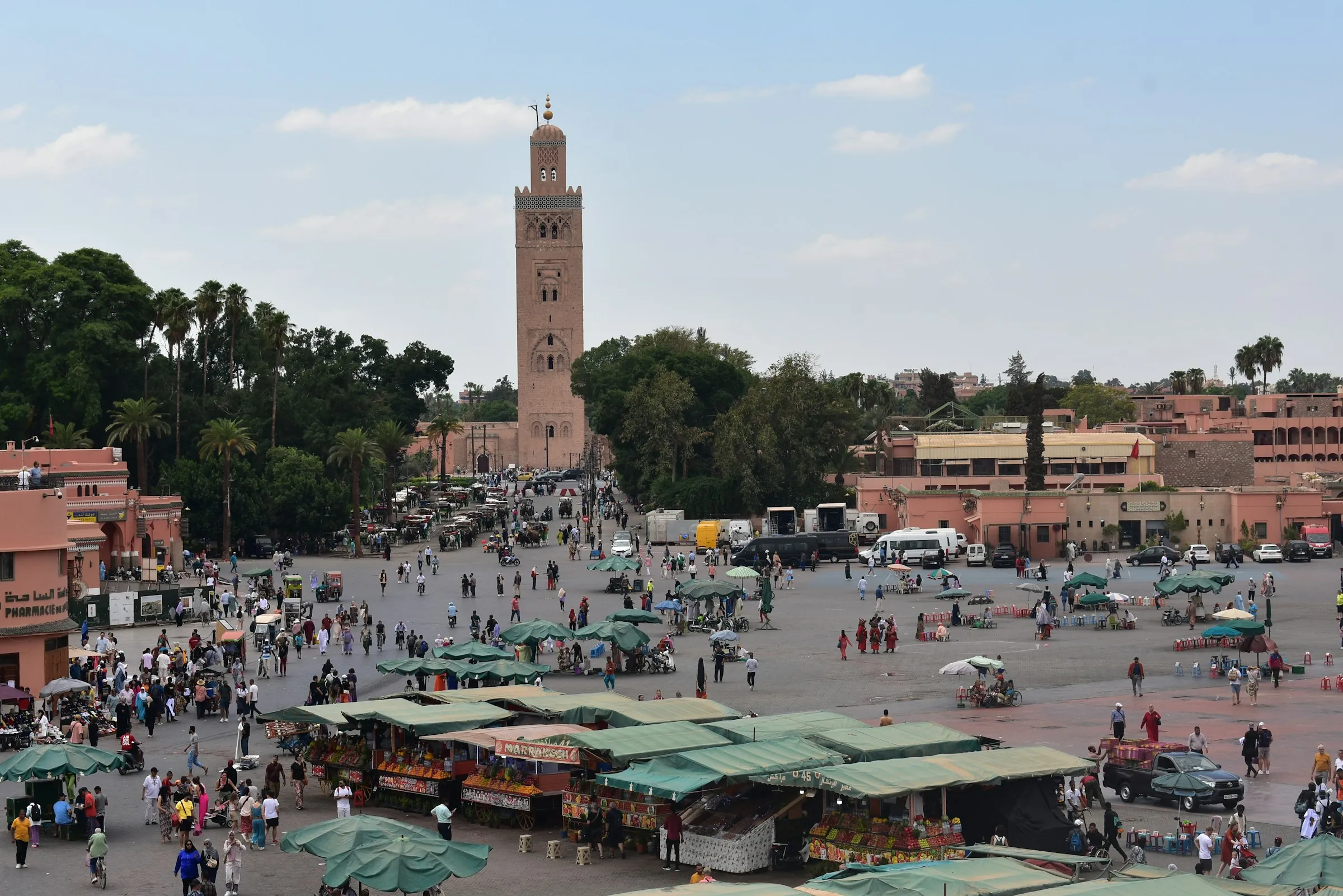
Jemaa el-Fna Square is one of Morocco’s most fascinating places — but also one of the most crowded with tourists, which draws its share of petty scams. Rest assured: nothing dangerous. These are almost always pushy solicitations after your wallet, not your safety. Knowing them in advance lets you defuse them in a second and enjoy the square with a light heart.
Here are the ten most common traps, ranked from most frequent to rarest, each with a simple and effective countermove.
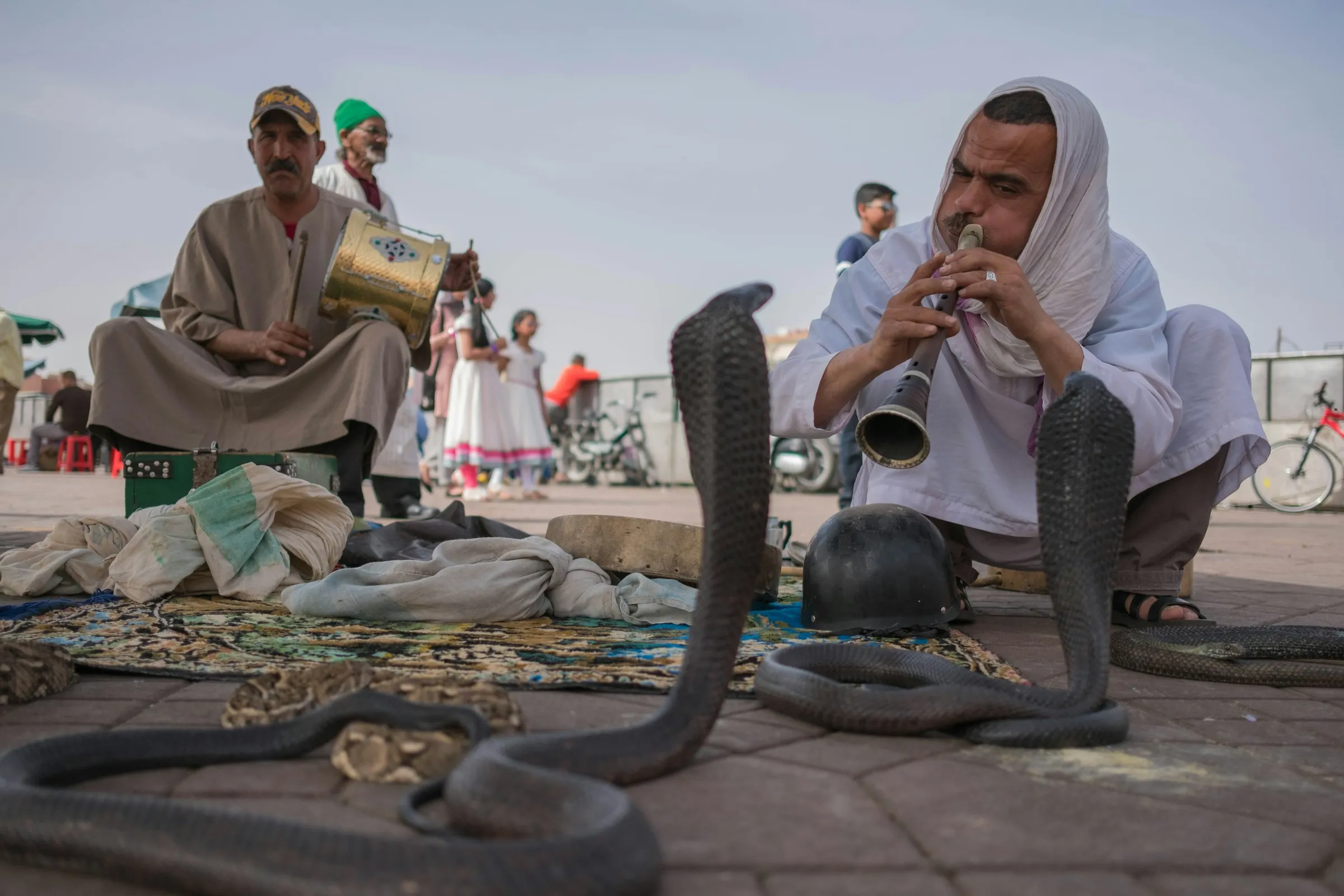
1. The surprise paid photo (animals and water sellers)
This is the number-one scam. A handler drops a monkey onto your shoulder, a charmer wraps a snake around your neck, or a water seller (the famous Guerrab in a red costume) strikes a pose right in front of you. You take the photo — or someone takes it for you — and they immediately demand 100 to 300 dirhams.
The countermove: never let an animal be placed on you without agreeing first. If you do want the photo, set the price beforehand (10 to 30 MAD is reasonable). Otherwise, a firm and smiling “no, thank you” is enough — and photograph from a distance.
2. Forced henna
A henna artist (neqqacha) grabs your hand and starts a design — “a gift, free!” — before you even answer. Once the henna is applied, she demands 200 to 500 dirhams, raising her voice to make you uncomfortable in front of the crowd.
The countermove: keep your hands close to you, never hold out your arm, and keep walking with a clear “no thank you.” If you’d like real henna, negotiate the price and the design in advance, and insist on natural henna (brownish-orange): “black henna” often contains paraphenylenediamine (PPD), an allergen that can trigger serious skin reactions.
3. The fake guide “the square is closed”
A very friendly stranger approaches you: “This street is closed,” “the square is the other way,” or “there’s a Berber festival, let me show you.” He walks you along… all the way to a shop, a tannery or a bazaar where he earns a commission — then asks for a tip for his services.
The countermove: never follow a spontaneous “guide.” The square and the souks are perfectly easy to explore on your own. For a real guide, book through your riad or choose an official badged guide.
4. The inflated bill at food stalls
At the evening food stalls, some touts quote vague prices, add “complimentary” dishes (bread, olives, sauces) then charge for them, or inflate the total at the end of the meal.
The countermove: choose a stall packed with Moroccans (a sign of quality and fair prices), ask the price of each dish before ordering, politely refuse anything you didn’t ask for, and check the bill.
5. The “gift” that isn’t one
A vendor slips a keychain, a bracelet or a little trinket into your hand — “a gift, welcome to Morocco!” As soon as you accept it, he demands money and refuses to take it back.
The countermove: don’t take anything from a vendor’s hand. If it’s already done, firmly hand the item back and walk away.
6. The “wrong” change
In the rush of a stall or a taxi, they hand you change for a smaller note than the one you gave, or a few dirhams short.
The countermove: say out loud the value of the note you’re handing over (“I’m giving you 200”), and count your change before leaving. Keep small change on hand to avoid large notes.
7. The taxi with no meter
The petit taxis (beige in Marrakech) “forget” the meter and announce an inflated price at the end of the ride, especially at night or from the airport.
The countermove: insist on the meter (“meter, please”) or agree on the price before getting in. A ride across town usually costs a few dozen dirhams; ask your riad about the usual rates.
8. The musician or performer who “gives” you their act
A musician plays a few notes while looking at you, or slips an instrument into your hands for a photo, then demands a hefty payment.
The countermove: enjoying a street performance deserves a small tip (2 to 10 MAD) — that’s normal and fair. But give what you think is right, not the sum demanded under pressure. Keep some change in an easy-to-reach pocket.
9. Pickpockets in the crowd
At night, the density of the crowd around the halqa (the circles of spectators) is ideal ground for pickpocketing.
The countermove: wear your bag closed and in front of you, keep your phone and money in a front pocket, and don’t pull out big wads of cash in public.
10. The “great exchange rate” or fake notes
Someone offers to change your euros at a “special friend” rate, or hands you a fake note in the change.
The countermove: change your money at an official exchange office or withdraw from an ATM. Learn to recognize the dirham notes (20, 50, 100, 200 MAD).
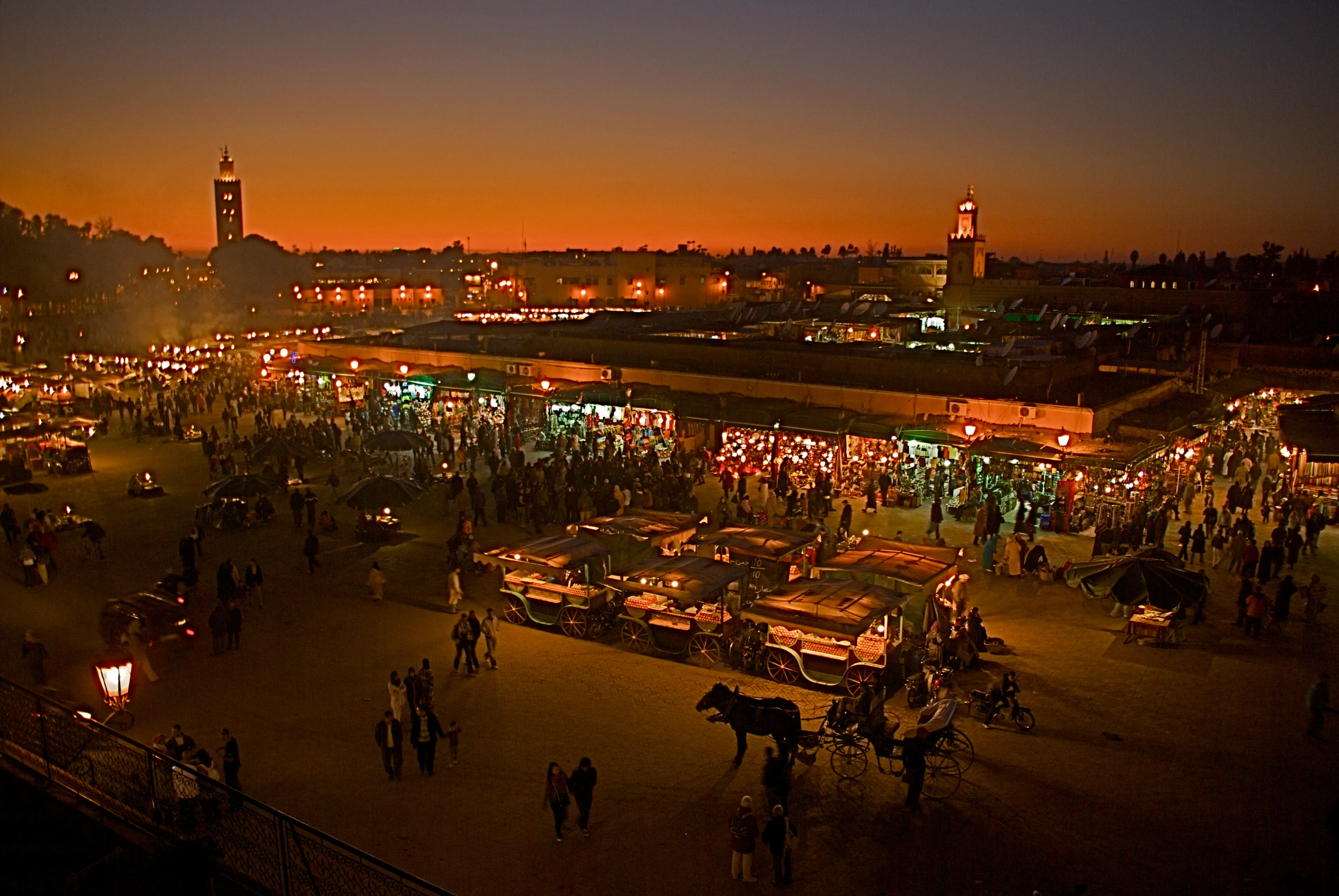
Recap: the anti-scam reflex in 3 rules
2. Agree on the price first. For any service, set the amount in advance — it defuses 90% of disputes.
3. A smiling "no thank you," without stopping, remains your best weapon. Most solicitations stop immediately.
Keep in mind that the vast majority of Marrakchis are warm and honest, and that these practices come from a minority concentrated in the heavily touristy areas. With these reflexes, Jemaa el-Fna Square becomes once again what it truly is: one of the most extraordinary living spectacles in the world.
To calmly plan the rest of your visit, check out our tips and safety page as well as the practical information (opening hours, access, indicative prices).