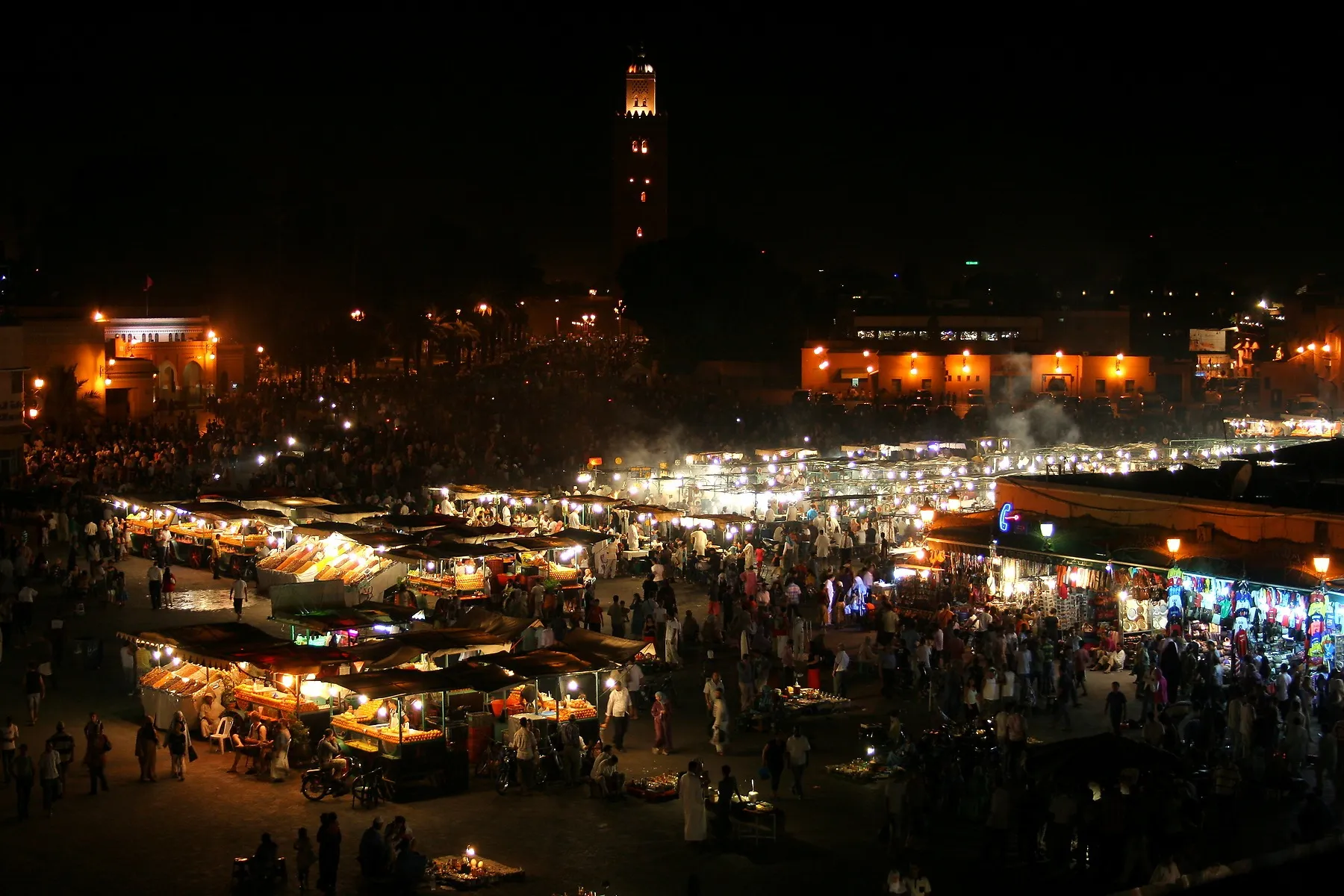
The best time to visit Jemaa el-Fna plays out on two scales: the hour of the day and the season of the year. In terms of timing, the great gathering is the late afternoon sliding into the evening: arrive about an hour before sunset, experience the square’s transformation at dusk, then stay for the nighttime atmosphere. In terms of the calendar, the best periods are spring (March to May) and autumn (September to November), when Marrakech offers mild days and pleasant evenings.
In one sentence: for a successful first visit, aim for a spring or autumn evening, arrive around 5–6 pm depending on the season, and plan to have dinner on the spot. This way you’ll avoid the square’s two main pitfalls — the crushing summer heat in the middle of the day and the chilly winter evenings — while enjoying the moment when the esplanade is at its very best.
This article is a practical, decision-oriented summary: which hour to choose depending on what you want to see, which season to favour, how to dodge the peaks of crowds and heat, and when the square is best avoided instead. For all the logistical details (access, opening times, money), keep our Jemaa el-Fna practical info page close at hand.
What time should you visit Jemaa el-Fna?
The square is not the same depending on the hour. It lives through three main moods in a single day, and the secret is to string together the late afternoon and the evening rather than coming at high noon.
Morning and midday: quiet but less spectacular
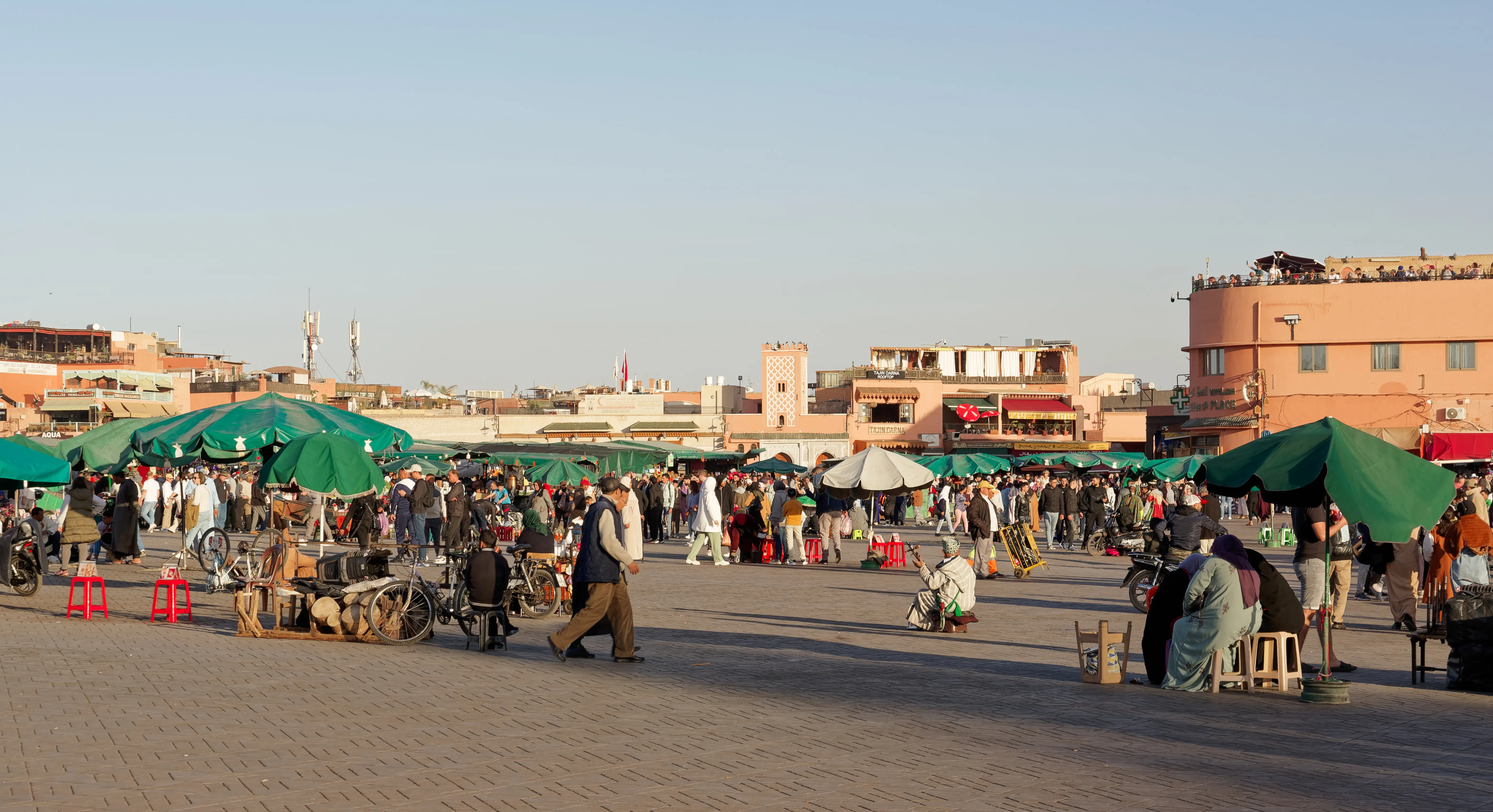
In the morning, Jemaa el-Fna is calm and open. You’ll come across orange juice sellers setting up, a few snake charmers, herbalists and water carriers. It’s a good slot if you’re looking for peace and quiet, if you’re travelling with young children, or if you want to photograph the square almost empty. On the other hand, the great show hasn’t started yet: few musicians, no food stalls, a laid-back energy.
In the middle of the day, especially from April to September, the sun beats down hard on this shadeless esplanade. It’s the least pleasant moment: heat, harsh light, little activity. It’s better then to take refuge in the covered souks or on a sheltered terrace.
Late afternoon and sunset: THE magical moment
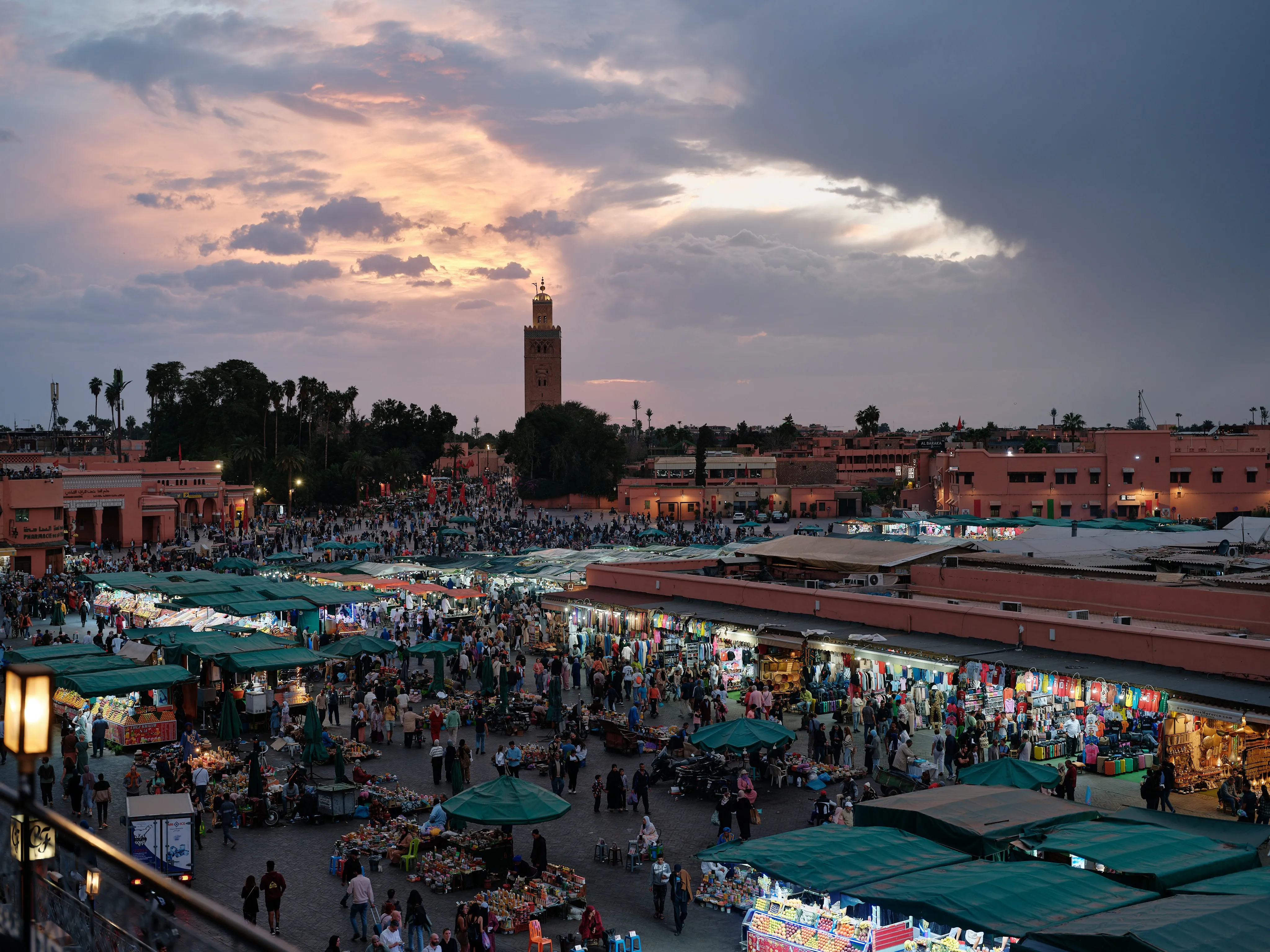
This is the king of time slots. About an hour before sunset, the light turns golden, the ochre façades catch fire and the square begins its transformation. The numbered food stalls go up in a matter of minutes, the lamps come on, the first smoke from the grills rises and the crowd pours in. Witnessing this day-to-night shift means understanding first-hand why Jemaa el-Fna is a masterpiece of the oral and intangible heritage of humanity according to UNESCO.
To miss nothing of this twilight shift — where to stand, the alignment with the Koutoubia, photo tips — read our dedicated guide to the sunset over Jemaa el-Fna.
Evening and night: the square’s high point
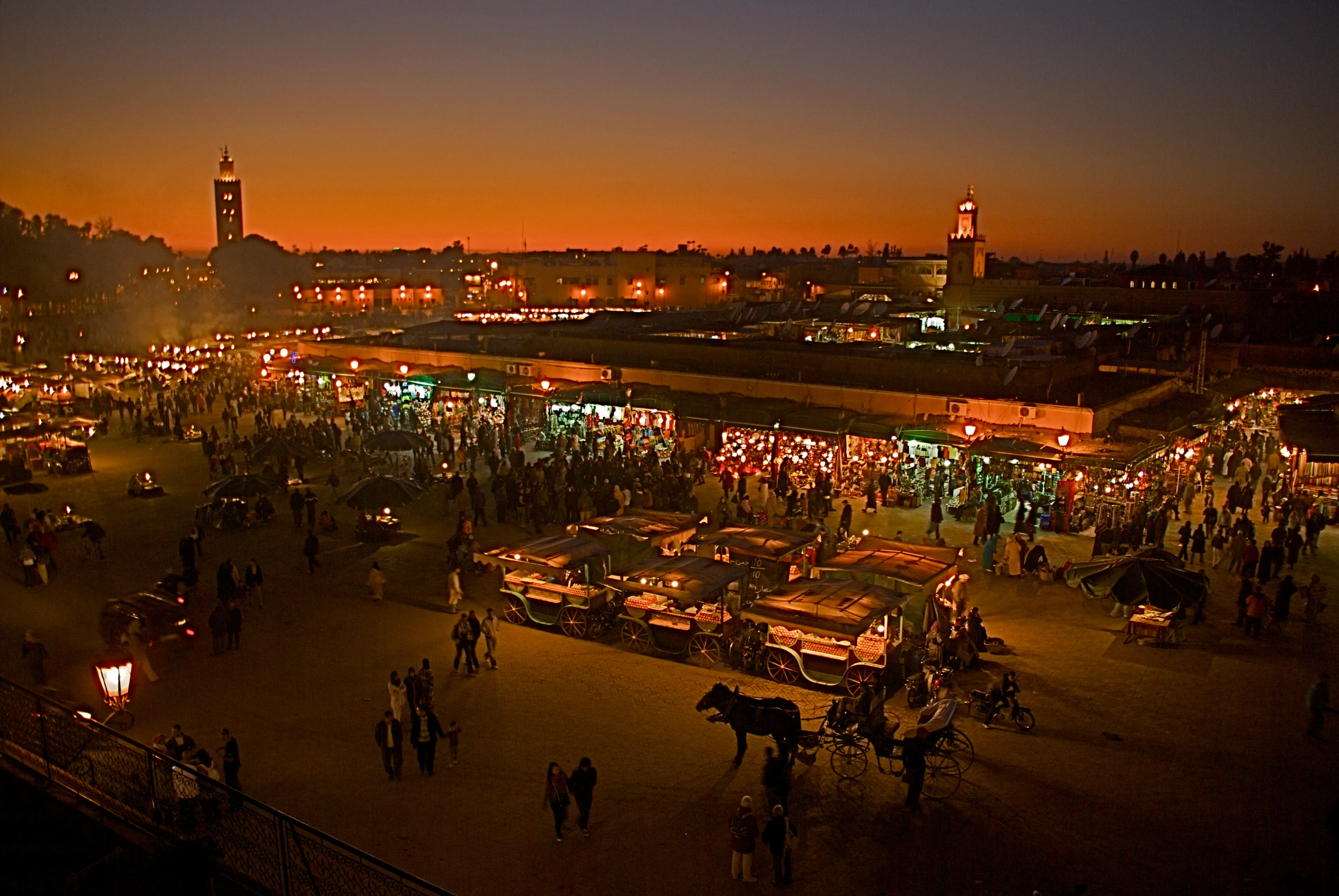
Once night has fallen, Jemaa el-Fna reaches its full swing: circles of storytellers, Gnaoua music, acrobats, dozens of food stalls serving skewers, tanjia, harira and snails, and an ocean of lights. It’s the most intense and most iconic experience. Depending on the season, the peak falls between 8 pm and midnight.
Our advice: head up to a terrace before sunset for the panorama, then come back down to have dinner in the crowd once night falls. That way you combine the overall view and the immersion. It’s all detailed in our guide to Jemaa el-Fna in the evening and at night.
What is the best season to visit Jemaa el-Fna?
Marrakech has a semi-arid climate with very hot summers and winters that are mild by day but cool in the evening. Since Jemaa el-Fna is experienced mainly outdoors and in the evening, the season radically changes the comfort of the visit. The two ideal windows are spring and autumn.
Spring (March to May): the ideal period
This is the best season by every measure. The days are sunny and mild (often 20 to 28 °C), the evenings pleasant without being cold, and the surrounding countryside is green. The only downside: it’s also a peak tourist season, so the square and the terraces are busier, especially around the spring holidays.
Autumn (September to November): the near-perfect
Autumn rivals spring. The great summer heat subsides, the days stay bright and warm, and the evenings are mild. October is often the perfect month: ideal climate, crowds slightly lighter than in spring. It’s our number-one recommendation for a comfortable first discovery.
Summer (June to August): hot, to be managed
Summer is the season to tame. Temperatures regularly exceed 38–40 °C during the day, which makes the square barely practicable from 12 pm to 5 pm. But the summer evenings stay warm and very lively, with late sunsets (around 8 pm) and an atmosphere in full swing until late. The summer strategy: forget the daytime, bet everything on the evening, stay hydrated and keep to the shade in the afternoon.
Winter (December to February): mild by day, cool in the evening
The Marrakech winter is pleasant during the day (often 18 to 20 °C in the sun) but the evenings turn cool, sometimes around 6–8 °C, which comes as a surprise on a terrace. Night falls early (around 6 pm), so the atmosphere gets going sooner. It’s a good season for tight budgets and lovers of calm, provided you bring a warm jacket for the evening.
Season-by-season summary table
Here’s a summary to help you decide at a glance. Temperatures are indicative (daytime averages) and should be confirmed with the current forecast.
| Season | Daytime climate | Evening on the square | Crowds | Verdict |
|---|---|---|---|---|
| Spring (Mar–May) | Mild, 20–28 °C, sunny | Pleasant, mild | High | Ideal — the best period |
| Autumn (Sep–Nov) | Warm then mild, 24–30 °C | Mild and lively | Medium to high | Excellent — October leads |
| Summer (Jun–Aug) | Very hot, 35–40 °C+ | Hot, very lively, late | Heavy (holidays) | To manage: evening only |
| Winter (Dec–Feb) | Mild in the sun, 18–20 °C | Cool to cold, 6–10 °C | Lighter | Fine — bring a jacket |
How to avoid the peaks of crowds and heat?
The square is a free public space, open at all times: so you can play with the hour and the day to dodge the densest or most trying moments.
- Against the heat (April–September): avoid the 12 pm–5 pm stretch in full sun. Save the square for the late afternoon and evening, wear a hat, stay hydrated (the orange juices are perfect for that) and enjoy the shaded terraces in the afternoon.
- Against the crowds: weekend evenings (Friday and Saturday) and school holidays are the busiest. For a lively but more breathable atmosphere, favour a weekday evening.
- To photograph in peace: come early in the morning, when the square is almost empty and the light is soft. The contrast with the evening buzz is striking.
- For maximum energy: on the contrary, aim for 9–11 pm in high season: it’s the peak of activity, but also the densest.
Is there a time to avoid?
Few moments are really to be shunned, but some are less favourable. High noon in summer is the worst slot: intense heat, a sparse square, little activity. Rainy days (mainly November to March, rare but possible) reduce the crowds and cut short the open-air show. Finally, if you’re after the great nighttime theatre, the morning is bound to disappoint, since most of the shows unfold at nightfall.
To check climate trends before booking, you can consult reference data on the Marrakech climate, for example the Marrakech climate page on Wikipedia. It confirms very hot, dry summers and mild winters, exactly the profile that guides the choice of season.
Frequently asked questions
What is the best time of day to visit Jemaa el-Fna?
The late afternoon shifting into the evening. Arrive about an hour before sunset: you witness the square’s transformation, the lighting of the lamps and the atmosphere building up, then you stay for dinner and the nighttime show.
What is the best season to come to Jemaa el-Fna?
Spring (March to May) and autumn (September to November), with a preference for October and April. The climate is mild by day and pleasant in the evening. Summer is very hot (best kept to the evenings) and winter is cool once night has fallen.
Can you visit Jemaa el-Fna in the middle of summer despite the heat?
Yes, provided you organise around the evening. Avoid the square from noon to 5 pm, stay in the shade in the afternoon, keep hydrated, then enjoy the evening: in summer, the square is very lively late, with sunsets around 8 pm.
Should you avoid the weekend at Jemaa el-Fna?
Not necessarily, but Friday and Saturday evenings are the busiest, as are the school holidays. For a lively but less dense atmosphere, favour a weekday evening.
How long should you stay on the square?
Allow at least 1.5 to 2 hours to string together the golden light, the blue hour and dinner. For a full exploration of the district (souks, terraces, Koutoubia), reckon on more like half a day. The organisational details are on our practical info page.
Is Jemaa el-Fna open every day?
Yes. It’s a public open-air square, accessible at all times and free of charge. The activity, however, follows a daily rhythm: discreet in the morning, it peaks from sunset until late into the night, all year round.