The water seller, known as the guerrab (or guerrba) in Morocco, is that scarlet figure you simply cannot miss on Jemaa el-Fna square: a man draped in bright red, crowned with a wide hat trailing multicoloured pompoms, harnessed to a goatskin flask and jingling with copper cups hung across his chest. He rings a bell, smiles, and poses for the camera. He is one of the most reproduced images of Moroccan folklore, a living postcard of Marrakech.
But behind the flamboyant costume lies a trade that was once vital. For centuries, before running water, the guerrab quenched the thirst of passers-by, souk merchants and locals alike, carrying well water in his flask and serving it fresh in his metal cups. Today his role has changed completely: he barely sells water anymore, he sells his image. He has become a keeper of memory, a symbol that people photograph in exchange for a few dirhams.
This guide tells the story of the guerrab, decodes every piece of his legendary costume, explains his past and present role, and tells you how to photograph him properly, respecting both the man and the tradition.
What is a guerrab, Morocco’s water seller?
The guerrab is a roaming water carrier and seller, a traditional figure of Moroccan cities and of Marrakech in particular. The word comes from the Arabic guerba (or guirba), which refers to his skin flask: the man is literally “the one with the flask.” He is also called a water carrier, a profession found, in various forms, across many ancient cultures around the Mediterranean and the Arab world.
His original mission was simple and essential: to bring fresh, drinkable water where it was not readily available. In a hot city like Marrakech, where running water only arrived late, the guerrab was an indispensable link in daily life. He drew the water, carried it on his back and handed it out as he wandered through the alleys and squares.
An ancient history: from vital service to tourist icon
The trade of the water carrier is very old in Morocco. For generations, the guerrab roamed the souks and squares, bringing his energy, his good humour and his refreshing water for the wellbeing of passers-by and merchants. He was one of the pillars of urban life: without him, water was not easily accessible in the heart of the medina.
Everything changed with the arrival of running water and later bottled water. Habits shifted: people no longer depended on a man and his flask for a drink. Gradually, the guerrab’s practical function disappeared. The trade could have died out completely… but it reinvented itself.
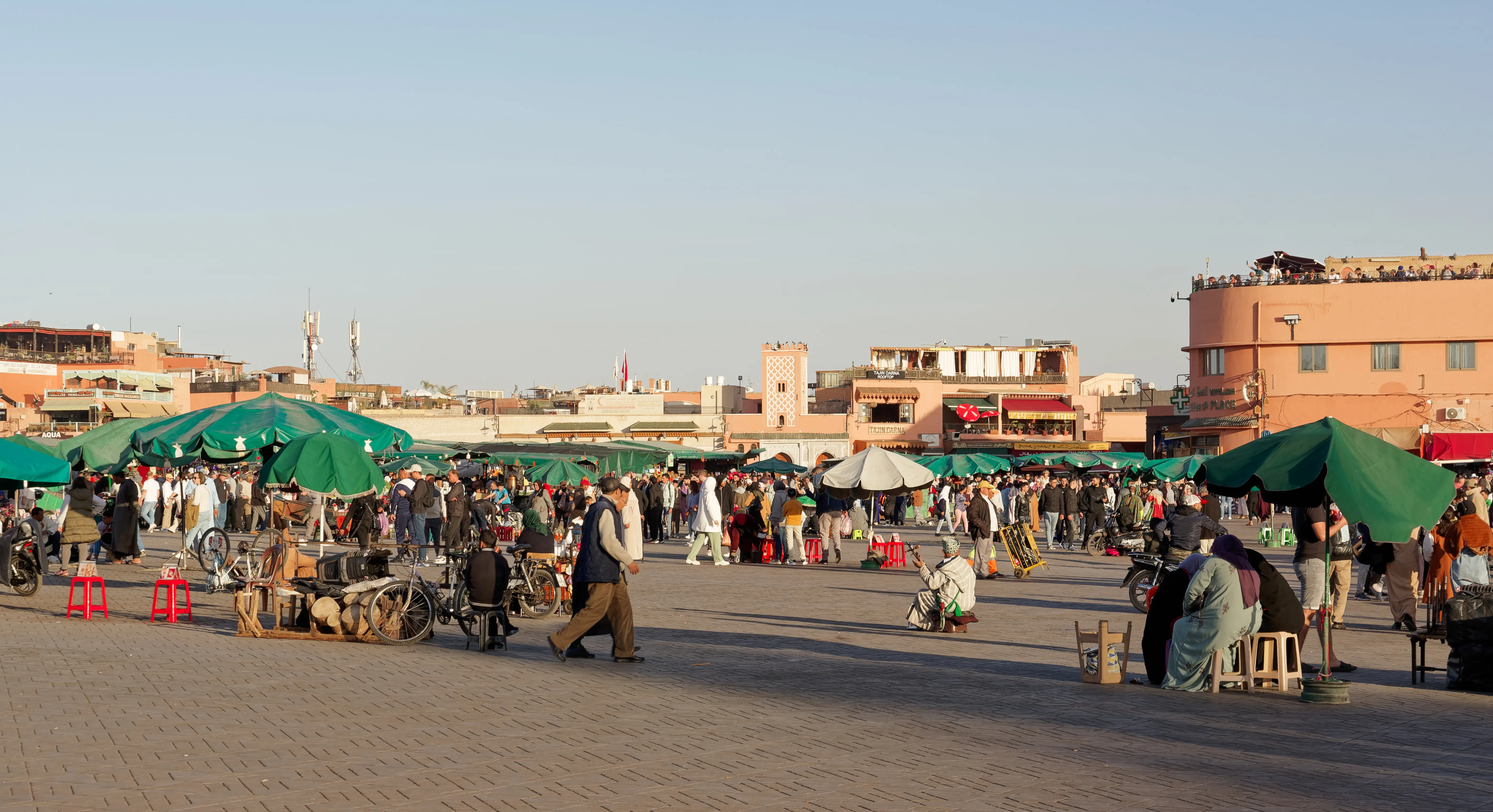
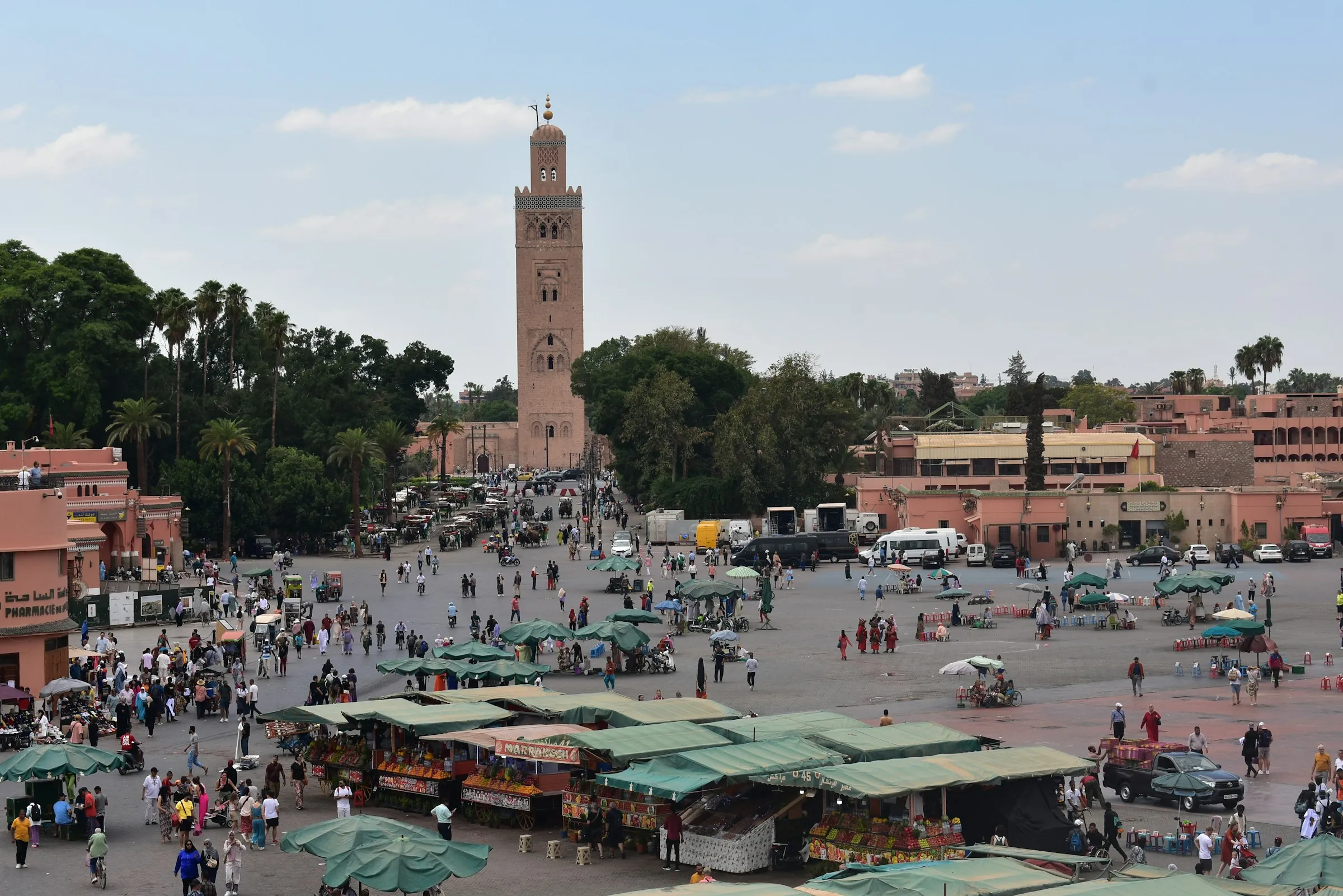
From an indispensable public service, the guerrab became a figure of living heritage. On Jemaa el-Fna, he is now as much a part of the scenery as the storytellers, musicians and acrobats who make the square so rich. This square, listed by UNESCO as part of the intangible cultural heritage of humanity, owes some of its soul to these traditional figures who keep alive the gestures of another age. To understand how this unique place has crossed the centuries, our history of Jemaa el-Fna sets the guerrab within the wider story of the square.
The red costume: decoding a legendary outfit
If the guerrab is so photographed, it is first of all thanks to his red costume, one of the most spectacular in Moroccan folklore. Nothing is left to chance: every element has a purpose, practical or symbolic.
- The bright red outfit: the vivid colour can be spotted from far off in the crowd and among the stalls. It symbolises vitality and made the guerrab instantly recognisable to anyone who was thirsty. It is what turned him into a visual icon.
- The large hat (the tarazza): a wide, colourful headpiece, often adorned with multicoloured pompoms and fringes. It shields him from the sun and crowns his silhouette with a festive touch.
- The skin flask (the guerba): the heart of the trade. This is a goatskin, sewn and made watertight, worn slung over the shoulder, in which the water is kept cool. It is often decorated with old coins and small bells.
- The copper (or brass) cups: hung in a cluster across his chest, these shiny metal cups were used to give clients their drink. Their clinking is part of the guerrab’s audible announcement.
- The bell: the guerrab rings it to signal his passing. In the old days, this sound announced “the water is coming”; today, it catches the visitor’s eye and ear.
The whole ensemble — the red, the hat, the flask weighted with coins, the cups clinking together — makes up a theatrical, sonorous and colourful figure, perfectly suited to the atmosphere of permanent spectacle that reigns over the square.
The guerrab today: the photo rather than the thirst
It must be said plainly: today the guerrab no longer lives from the water he sells, but from the photos taken of him. With bottled water available everywhere and cheaply, almost no one drinks from his flask anymore. His presence on Jemaa el-Fna has become above all cultural and touristic.
In practice, the guerrabs spend their days wandering about, ringing their bells and posing for visitors’ cameras in exchange for a few dirhams. This reinvention lets them stay part of the city’s traditional landscape and keep alive, even in a frozen form, a trade that would otherwise have vanished.
This shift raises a bittersweet question: is the guerrab still a water seller, or a performance of a water seller? Both, no doubt. He embodies a memory, a craft of dress and an art of presence. By photographing and paying him, the visitor takes part, in their own way, in the survival of this figure of Moroccan folklore.
How to photograph a water seller: the rules to know
This is the most important point for any traveller. On Jemaa el-Fna, photographing a guerrab costs money, and that is perfectly fair: it is his livelihood. Ignoring this rule creates needless friction. Here is how to do things properly and walk away with beautiful images and a clear conscience.
- Agree on the price BEFORE you shoot. Never press the button without clarifying the fee first. A few dirhams (around 10 to 20 MAD, as a rough guide) is usually enough for one or two photos.
- Have small change ready. Pulling out a big note drives up the demand and complicates the deal. Prepare your coins in advance.
- A smile and a “salam” open every door. Human contact, politeness and a little humour beat a stolen photo. The guerrabs are used to it and happily play along.
- Don’t “steal” the photo with a telephoto lens. Thinking you’re being discreet is an illusion: it is often spotted and very poorly received. Better to ask openly.
- Respect a refusal or a price you find too high. If the price doesn’t suit you, decline politely and move on, without insisting or haggling aggressively.
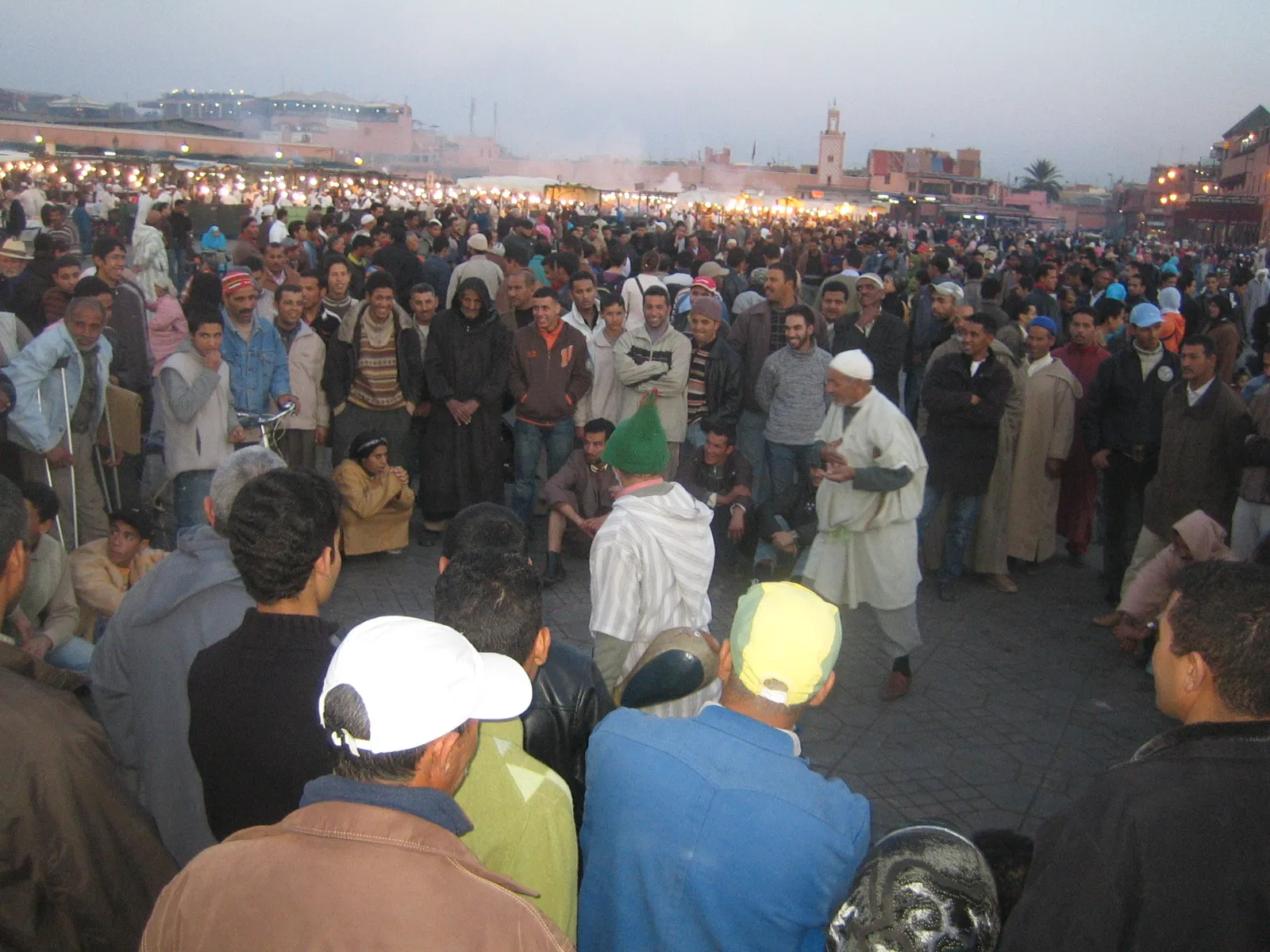
To go deeper into settings, the best times and the ethics of shooting, our dedicated article on photographing Jemaa el-Fna gathers all the advice, from smartphone to DSLR.
A symbol of Moroccan folklore and heritage
Beyond the tourist anecdote, the guerrab is a powerful symbol of Moroccan identity. He appears on countless postcards, posters, stamps and advertisements, to the point of becoming a picture-book image of traditional Morocco, alongside mint tea and carpets. His red silhouette alone says “Marrakech.”
He also embodies an ancient and precious value: the gift of water, the ultimate gesture of hospitality in a culture where offering someone a drink is a sacred act of generosity. The guerrab of old was not merely a tradesman: he brought coolness, good cheer and social bonds to the heart of the city. The profession of water carrier, with its long history, is in fact documented across many cultures, as noted in the Wikipedia article on the water carrier.
To come across a guerrab on Jemaa el-Fna is therefore to meet a bridge between two worlds: the one where water was carried on a man’s back, and ours, where it flows from the tap. A fragile bridge, held up by a handful of men in red who, every day, still ring their bells beneath the Marrakech sun.
Frequently asked questions
What is a guerrab in Marrakech?
The guerrab is the traditional Moroccan water seller, an emblematic figure of Jemaa el-Fna square. Dressed in a bright red costume, crowned with a large pompom hat (the tarazza), carrying a goatskin flask and copper cups, he once quenched the thirst of passers-by. Today he lives mainly from tourist photography. His name comes from the Arabic guerba, the flask.
Why does the water seller wear a red costume?
The bright red made the guerrab easy to spot from far away in the crowds of the souks and the square, whenever someone was thirsty. The colour also symbolises vitality. Combined with the large colourful hat, the flask decorated with coins and the shiny metal cups, it made the guerrab one of the most recognisable and photographed figures of Moroccan folklore.
Do you have to pay to photograph a guerrab?
Yes. On Jemaa el-Fna, photographing a water seller costs money, and that is fair: it is now his main livelihood. Always agree on the price before shooting (a few dirhams, 10 to 20 MAD as a rough guide, is often enough) and have small change ready. Never take a photo on the sly: it is poorly received and a source of friction.
Do the guerrabs still sell water?
Very little. With running water and bottled water available everywhere, the guerrab’s practical function has all but disappeared. Some still serve a cup on occasion, but the bulk of their activity is now cultural and touristic: they keep the tradition alive and pose for visitors’ photos.
What is in the guerrab’s flask?
The flask, called guerba in Arabic, is a goatskin, sewn and made watertight, which gave the trade its name. It is used to keep water cool and is worn slung over the shoulder. It is often decorated with old coins and little bells that ring in time with the carrier’s steps.