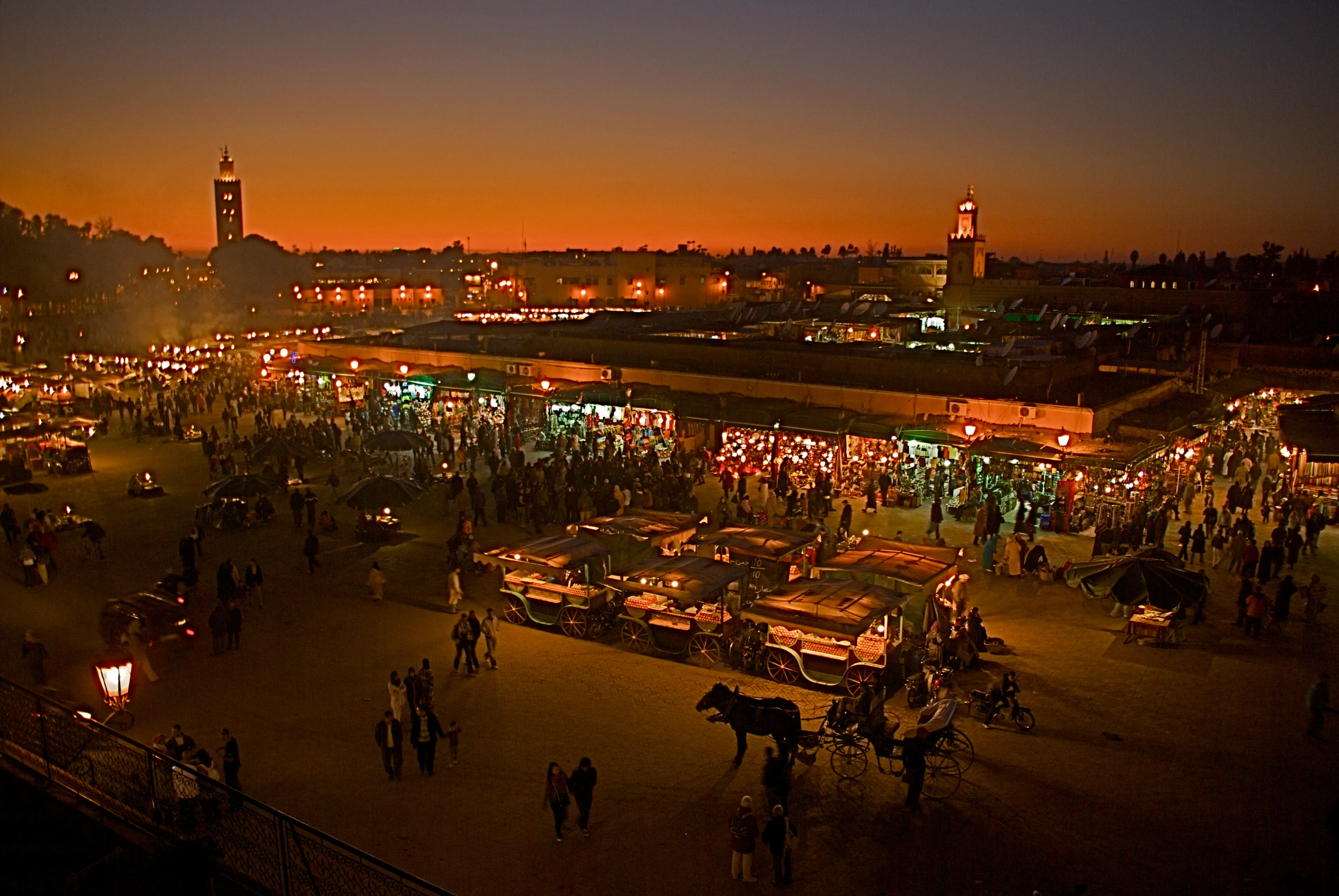
Visiting Jemaa el-Fna as a solo female traveler is entirely doable and generally safe: the square is one of the busiest and most closely watched places in Marrakech, both by day and late into the evening. The real annoyance isn’t physical danger — which is rare — but verbal street harassment: persistent come-ons, comments, “hello gazelle,” touts who follow you for a few yards. It’s tiring, sometimes wearing, but it’s manageable with a confident attitude, a firm refusal, and by sticking to the lively areas.
Let’s be honest without being dramatic: yes, a woman on her own will attract more attention than a couple or a group. No, that doesn’t mean the square is dangerous. Thousands of solo female travelers cross Jemaa el-Fna every week without incident. Here’s exactly what to expect and how to enjoy the square with peace of mind.
Is Jemaa el-Fna dangerous for a solo female traveler?
No, not in the sense of physical danger. Violent assaults against tourists are rare in Marrakech, and even rarer in a place as busy and policed as Jemaa el-Fna. The constant presence of crowds, established vendors, Moroccan families, and a tourist police brigade (officers in uniform and in plain clothes) makes the square an environment where you’re never truly alone.
What you should prepare for is something else: commercial pressure and verbal harassment. Both are everywhere and don’t only target women — every tourist gets approached — but a woman on her own also gets flirtatious remarks, invitations to have tea, unwanted compliments. This is culturally normalized by a minority of men on the street, it isn’t representative of Moroccans as a whole, and it almost always backs off in the face of a clear attitude.
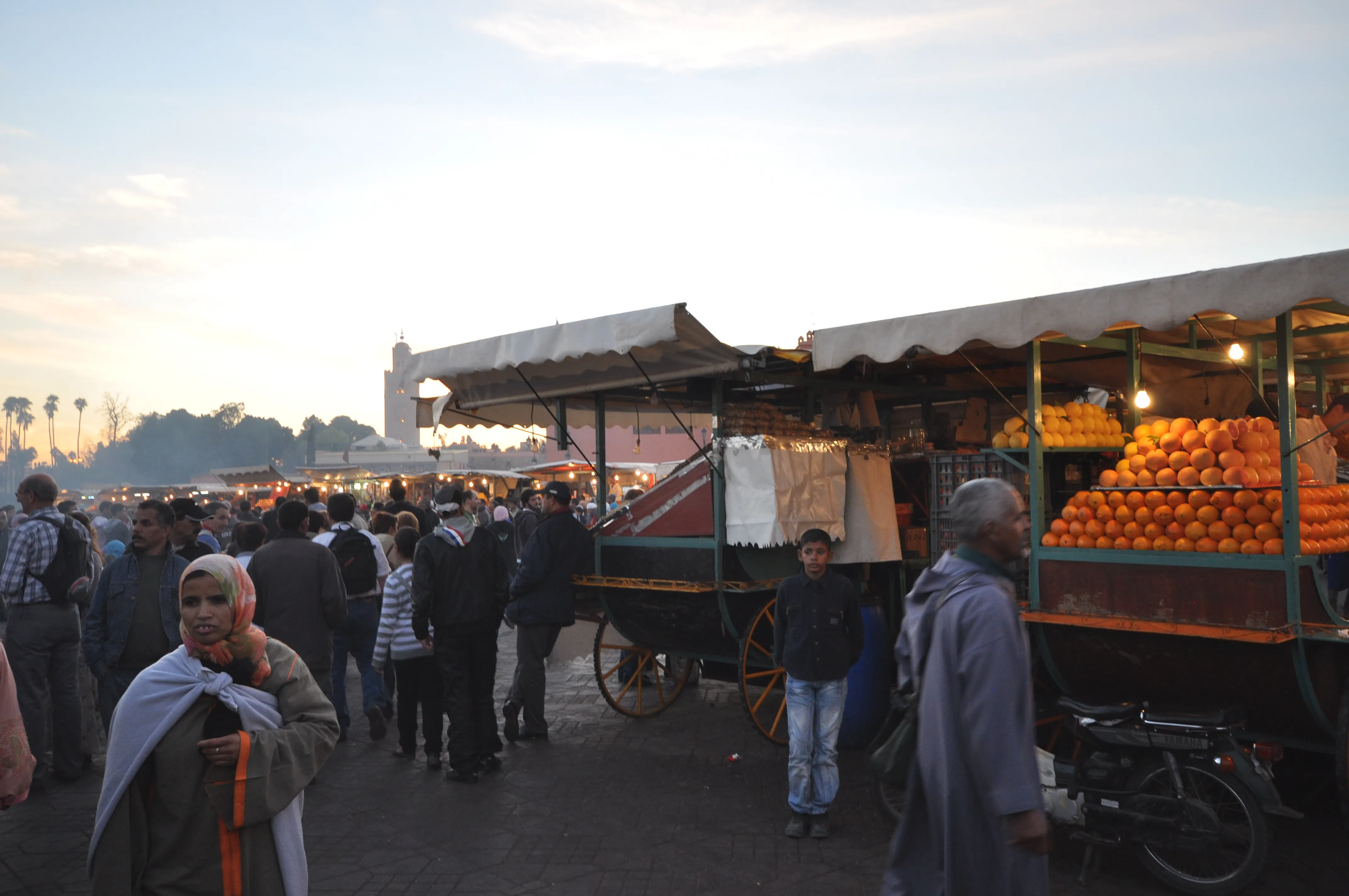
Street harassment: what to expect and how to react
The harassment you’ll encounter is essentially verbal and low-intensity. Concretely:
- Repeated “hello, where are you from?” in French, English, Spanish — the touts are testing your language.
- Compliments (“beautiful gazelle,” “pretty”) tossed at you as you pass.
- Invitations to see a shop, a stall, “just to look,” or to have a glass of tea.
- Sometimes a man who walks alongside you for a few yards, trying to strike up a conversation.
Inappropriate contact (wandering hands) is much rarer in the heart of the square, precisely because there are people everywhere. The risk rises slightly in the narrow, dark alleys of the souks once night has fallen, which is why it’s worth staying on the open square in the evening.
How to react effectively:
- Don’t engage in conversation. Simply answering “where I’m from” opens the door. A nod and you keep going.
- Don’t stop. Most interactions die on their own if you keep up your walking pace.
- Firm refusal, neutral tone. A clear “La, choukran” (no, thank you in Arabic), without an awkward smile or aggression, is very effective — it shows you’re not an easy target.
- Ignore provocations. If a “compliment” turns into an unpleasant remark after you decline, don’t respond: the goal is to get a reaction out of you.
- Sunglasses and earbuds (even without music) create a bubble that discourages approaches.
What to wear at Jemaa el-Fna?
Marrakech is a tourist city and relatively tolerant: you face no legal risk dressing however you like, and you’ll come across tourists in shorts. But dressing a little more covered up noticeably reduces the stares and remarks, and it’s also a mark of respect appreciated in a Muslim country.
The simple principle: cover your shoulders and knees. In practice, what works well:
- Light trousers or a long skirt, rather than short shorts.
- A top that covers the shoulders (T-shirt, loose shirt, tunic).
- A light scarf in your bag: handy against the sun and dust, and to cover up if you enter a more traditional place.
- Closed, comfortable shoes: the square and the souks are paved, dusty, and sometimes slippery in the evening.
A head covering over your hair is not necessary in Marrakech for a tourist. It’s not about disguising yourself, but about staying discreet: the less you stand out, the less attention you draw.
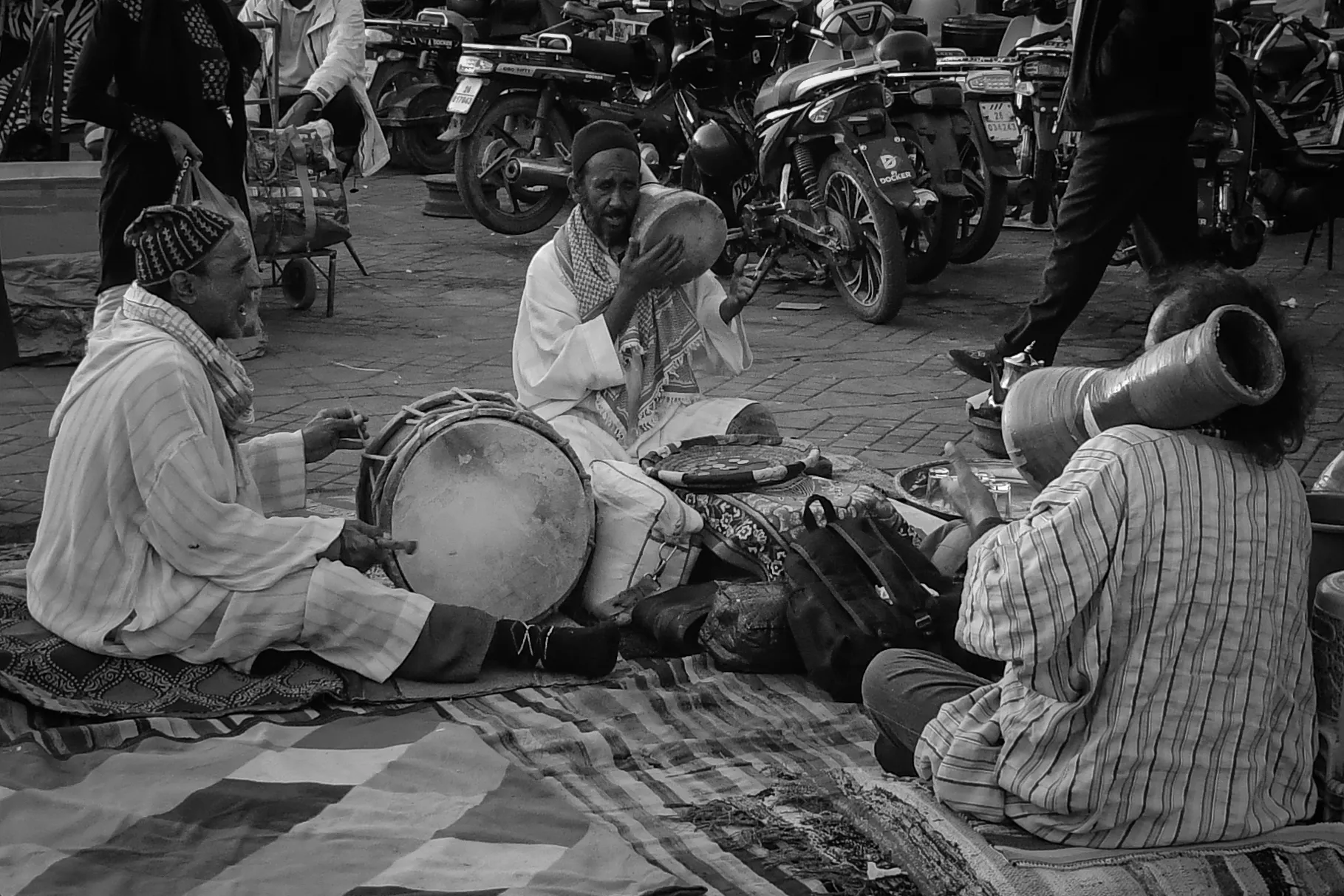
Jemaa el-Fna at night on your own: is it wise?
Yes — and it’s actually the best time to be on the square. As night falls, Jemaa el-Fna transforms: the food stalls light up, the storytellers, Gnaoua musicians, and circles of onlookers (the halqa) form, and the square fills with Moroccan families coming to have dinner. That crowd is your best protection.
Our pointers for a relaxed solo evening:
- Stay on the square and its lit surroundings. Avoid heading alone into the dark alleys of the souks after the shops close (often around 9 or 10 p.m.).
- Have dinner at a lively stall or on a terrace. The big shared tables at the food stalls are sociable and safe; the café terraces around the square offer a superb view and a calm haven.
- Scout your route back to your riad before dark, or take a taxi ordered by your accommodation rather than hailed in the street.
- Keep your phone charged and your riad’s address written down (in Arabic if possible) to show a taxi.
Many solo female travelers describe the square in the evening as a highlight and surprisingly welcoming once you’ve settled into the rhythm. For everything about this nighttime atmosphere, see our dedicated guide to Jemaa el-Fna in the evening.
Protecting your belongings and your money
The real “material” risk on the square isn’t assault but pickpocketing, made easier by the dense evening crowd. A few habits:
- Wear a closed bag across your body, in front of you, with a hand resting on it in the crush.
- Keep your phone and money in an inside pocket or a hidden money belt, never in a back pocket.
- Don’t pull out big wads of cash in public: keep some small change separate to pay for a juice or a stall.
- Beware of staged distractions (someone bumps into you or “helps” you while an accomplice acts).
The approaches that shade into scams (forced henna, fake guides, “paid photos”) affect everyone, but a woman on her own is sometimes targeted more. We detail them in our feature on the scams of Jemaa el-Fna square.
Good habits for a solo female traveler in Marrakech
Beyond the square itself, a few habits make the whole trip more relaxed:
- Choose a well-rated riad in the medina, with staff who can call you taxis and give advice; it’s a valuable anchor point.
- Share your itinerary with someone close and turn on location sharing on your phone.
- Walk with confidence, even when you’re looking for your way: hesitating and going in circles attracts touts. If needed, step into a café to check your map.
- Trust your instinct: if an alley feels too deserted, turn back toward the lively area. You never have to be polite to the point of making yourself uncomfortable.
- Learn three words of Arabic: La, choukran (no, thank you), Salam (hello), Bslama (goodbye). A local word defuses a lot of situations.
To organize the logistical side (opening hours, transport, ATMs, connectivity), see our practical info on Jemaa el-Fna page. And for the full set of precautions, our safety and scams feature usefully complements this advice.
Finally, for official and up-to-date information on the situation in Morocco, you can consult the France Diplomatie travel advice for Morocco.
The final word: going with peace of mind
Jemaa el-Fna isn’t a place to be afraid of. It’s a living, noisy, sometimes overwhelming square, but deeply hospitable once you know the codes. Tens of thousands of women visit it alone every year and leave with the memory of a magical place. Prepare your mindset as much as your suitcase: confident posture, clear refusals, lively areas, and you’ll enjoy the square as it should be enjoyed — free and curious.
Frequently asked questions
Is it dangerous for a woman to visit Jemaa el-Fna alone?
No. Physical assaults against tourists are rare there and the square is very busy and closely watched. The main annoyance is verbal street harassment (come-ons, remarks), bothersome but with no real danger, which is managed with a firm refusal and a confident attitude.
How should you react to street harassment in Marrakech?
Don’t engage in conversation, don’t stop, and respond with a clear, neutral “La, choukran” (no, thank you) while you keep walking. Ignore the provocations that follow a refusal: their aim is to get a reaction out of you. Sunglasses and earbuds help create distance.
What should a woman wear at Jemaa el-Fna?
Nothing is required, but covering your shoulders and knees noticeably reduces unwanted attention and respects the local culture: trousers or a long skirt, a covering top, a light scarf in your bag. A head covering over your hair is not necessary for a tourist in Marrakech.
Can you go to Jemaa el-Fna at night alone?
Yes, it’s actually the best time. The square comes alive with Moroccan families, stalls, and performances; that crowd is protective. Stay on the lit square, avoid the dark souk alleys after closing time, and head back in a taxi ordered by your riad.
What should I do if a man follows me or is too persistent?
Head to a very lively area, a stall, or a terrace, and if needed speak to an established shopkeeper or the tourist police brigade present on the square. Most of the time, stepping into a café or shop is enough to make the following stop.
Should you avoid going out alone at night in Marrakech?
Not on Jemaa el-Fna and its lit surroundings, where the activity doesn’t stop until late. Just use common sense: avoid deserted, dark alleys alone at night, keep your phone charged, and favor taxis ordered by your accommodation for nighttime trips.