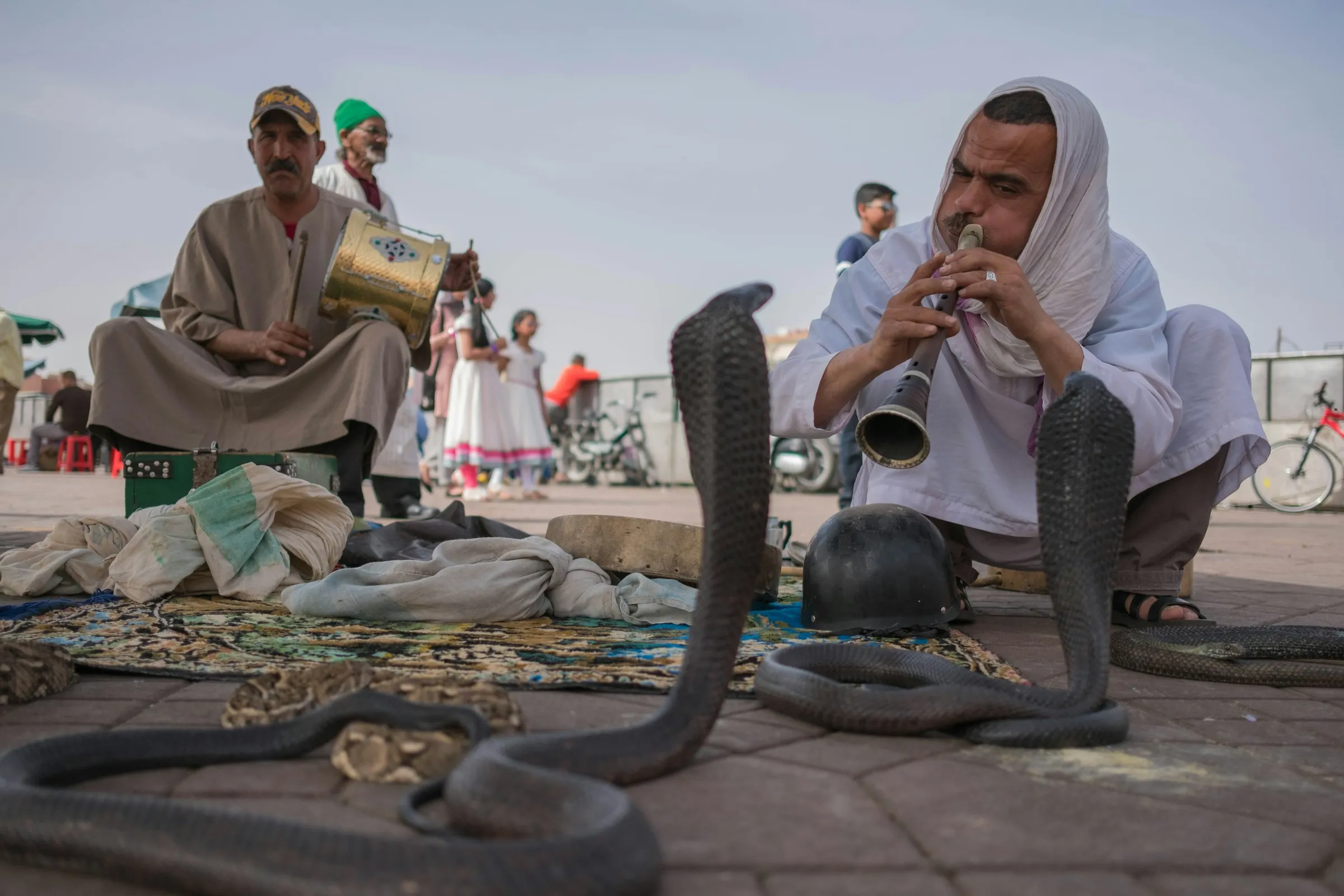
Animal welfare at Jemaa el-Fna is one of the darker corners of the square’s spectacle: behind the costumed monkeys perched on tourists’ shoulders and the cobras that “dance” to the sound of the flute lie animals that are often caught in the wild, mutilated, or kept in conditions that cause them to suffer. The Barbary macaques used for photos belong to an endangered species, and most of the snakes on display have had their fangs pulled out or their mouths sewn shut.
Does this mean you should give up on discovering this thousand-year-old heritage? Not necessarily. This article takes an honest, fact-based look at the reality of these practices, the debate between preserving heritage and protecting animals, what welfare groups recommend, and above all how to visit the square responsibly — without missing out on its unique atmosphere, but without funding cruelty either.
Which animals do you see at Jemaa el-Fna?
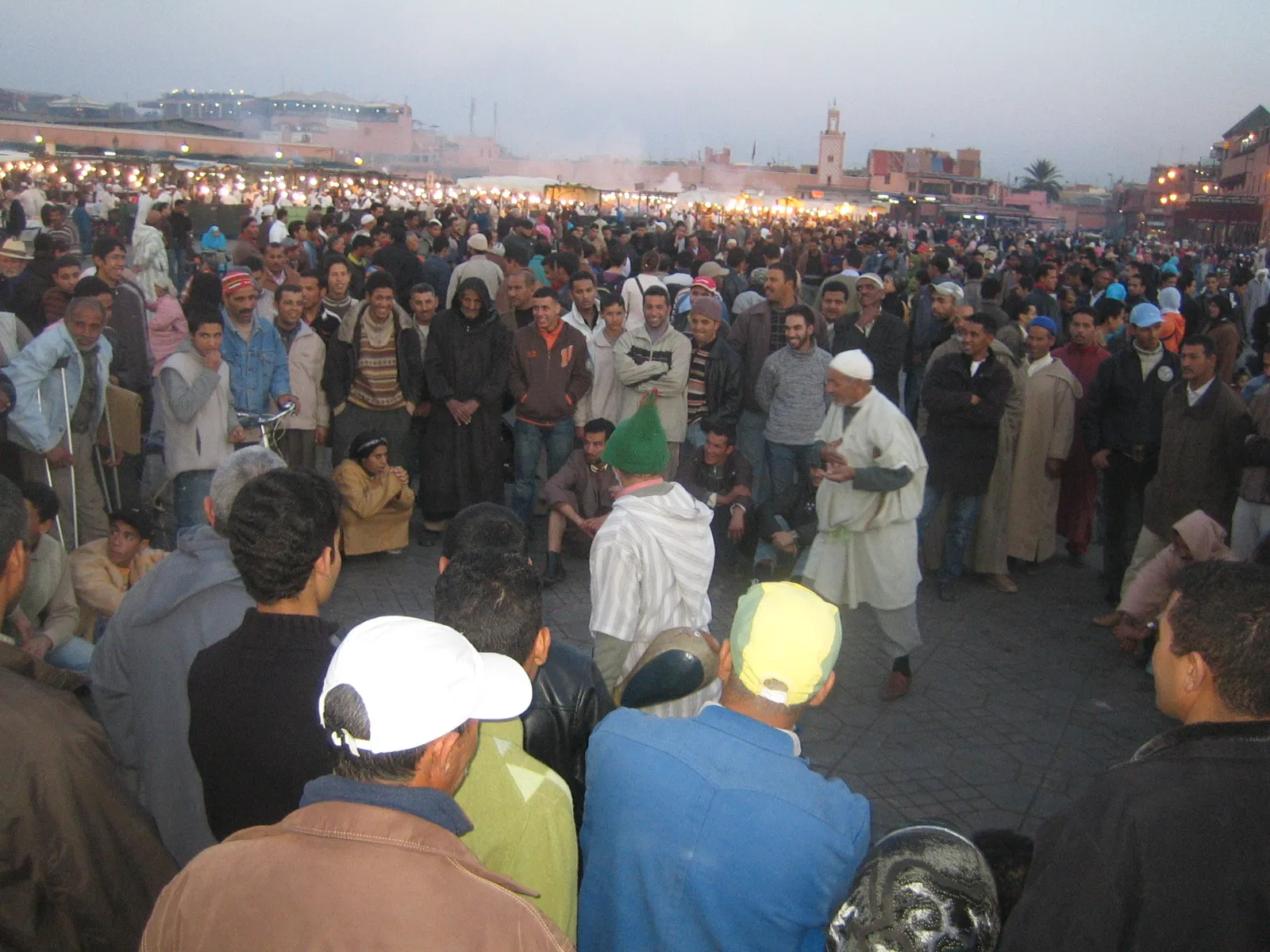
On the square, three animal “attractions” dominate the scene, especially at the end of the day when the halqa (the performance circle) comes alive:
- The monkeys: these are Barbary macaques (Macaca sylvanus), often young, kept on a leash and sometimes dressed in little costumes. The handler places them on visitors’ shoulders for a photo.
- The snakes: cobras and vipers presented by charmers, coaxed out of a basket to the sound of the ghaita (a traditional oboe).
- More occasionally, horse-drawn carriages and horses stationed around the square, which raise their own questions about working conditions in the heat.
These performances have been part of the folklore of Jemaa el-Fna for generations. But the commercial, tourist-facing version you encounter today rests, in practice, on animals that pay a heavy price.
The Barbary macaque: an endangered species exploited for photos
This is the point visitors are least aware of. The little monkey offered to you for a snapshot is not some harmless farmed animal: the Barbary macaque has been classified as “endangered” on the Red List of the International Union for Conservation of Nature (IUCN) since 2008.
The figures speak for themselves. The wild population of the species, found in Morocco and Algeria, has fallen from more than 20,000 individuals in the 1970s to just a few thousand today, with most recent estimates putting the total population below 10,000. In some forests of the Middle Atlas, the decline exceeds 60% since 1990. In response to this collapse, the species was listed in 2016 under CITES Appendix I (the Convention on International Trade in Endangered Species), the strictest level of protection.
Yet photo tourism directly fuels this decline. The young monkeys displayed on the square are frequently poached from the wild, often after the mother has been killed to seize her infant. Part of this poaching also feeds an illegal pet trade into Europe. Every baby macaque taken is one fewer animal for the reproduction of an already fragile species.
The charmers’ snakes: mutilated and under constant stress
The other great animal figure of the square is the snake. The image of the cobra rearing up and “following” the flute is mesmerizing — but it rests on a misunderstanding and on harsh practices.
First, a reminder: snakes are almost deaf to airborne sounds. The cobra is not dancing; it is adopting its natural defensive posture in response to the movement of the ghaita, which it perceives as a threat. The animal is not soothed — it is on high alert.
Then, to make these reptiles harmless, many charmers resort to mutilations that have been widely documented by the press and by animal rights advocates:
- Pulling out the venom fangs, often with no hygiene or anesthesia.
- Piercing the venom glands or, worse, partially sewing the mouth shut: the animal can then no longer feed and slowly starves to death.
- Grueling captivity conditions: dehydration, stress from noise and crowds, and an inability to regulate its body temperature.
The result: many snakes, caught in the wild (particularly in the desert regions of southern Morocco), survive only a few weeks or months. Some of the species on display, such as the Egyptian cobra (Naja haje), are also protected. Snake charming has, moreover, been banned in India since 1972, whereas it remains legal in Morocco. For a full overview of this tradition, see our dedicated article on the snake charmers of Jemaa el-Fna.
Heritage or cruelty: a genuine debate, without caricature
The question deserves to be raised without black-and-white thinking. Jemaa el-Fna has been listed since 2001, then 2008, as part of UNESCO’s Intangible Cultural Heritage of Humanity. The charmers, showmen and musicians belong to a halqa tradition several centuries old, with real cultural depth. For many Marrakchis, this is an inherited craft, and sometimes a modest livelihood in a difficult economic context.
On the other side, the biological reality is inescapable: these performances today rest on wild animals that suffer, including one species threatened with extinction. The UNESCO label protects a living cultural practice, not animal cruelty — and the tension between the two is real.
Most informed travelers settle this with a simple compromise: respect the cultural heritage of the square while refusing to fund the side of it that makes animals suffer. You can acknowledge the historical value of the halqa, listen to the musicians, admire the storytellers — without ever paying for a photo with a monkey or a snake.
What do animal welfare organizations recommend?
Wildlife protection organizations (conservation groups, primate sanctuaries, reptile welfare NGOs) all converge on the same message for tourists. Their reasoning is economic: as long as visitors keep paying, the demand persists, and the animals keep being captured. Their recommendations come down to a few principles:
- Never pay for a photo with a monkey or a snake: this is the act that feeds the entire chain.
- Do not touch or hold the animals, and do not feed them.
- Watch from a distance, without approaching the circles that put animals on display.
- Report clear cases of cruelty, and on excursions, favor serious conservation facilities over attractions.
- To see macaques, choose to observe them in the wild (the cedar forests of Ifrane and the Middle Atlas) with guides who keep their distance and do not feed the animals.
Several programs are working precisely to protect the macaque from poaching and to raise public awareness: you can find out more from organizations such as the macaque conservation program run by Beauval Nature. To understand the species and its status, the Barbary macaque page on Wikipedia is a good starting point.
How to visit Jemaa el-Fna responsibly?
Good news: fully enjoying the square without condoning animal cruelty is not only possible, it is easy. A few simple habits are all it takes.
| Habit | Why | Result |
|---|---|---|
| Don’t pay for animal photos | Cuts off the source of income | No demand, fewer captures |
| Refuse all contact (monkey/snake placed on you) | The gesture triggers a surprise charge | No price trap |
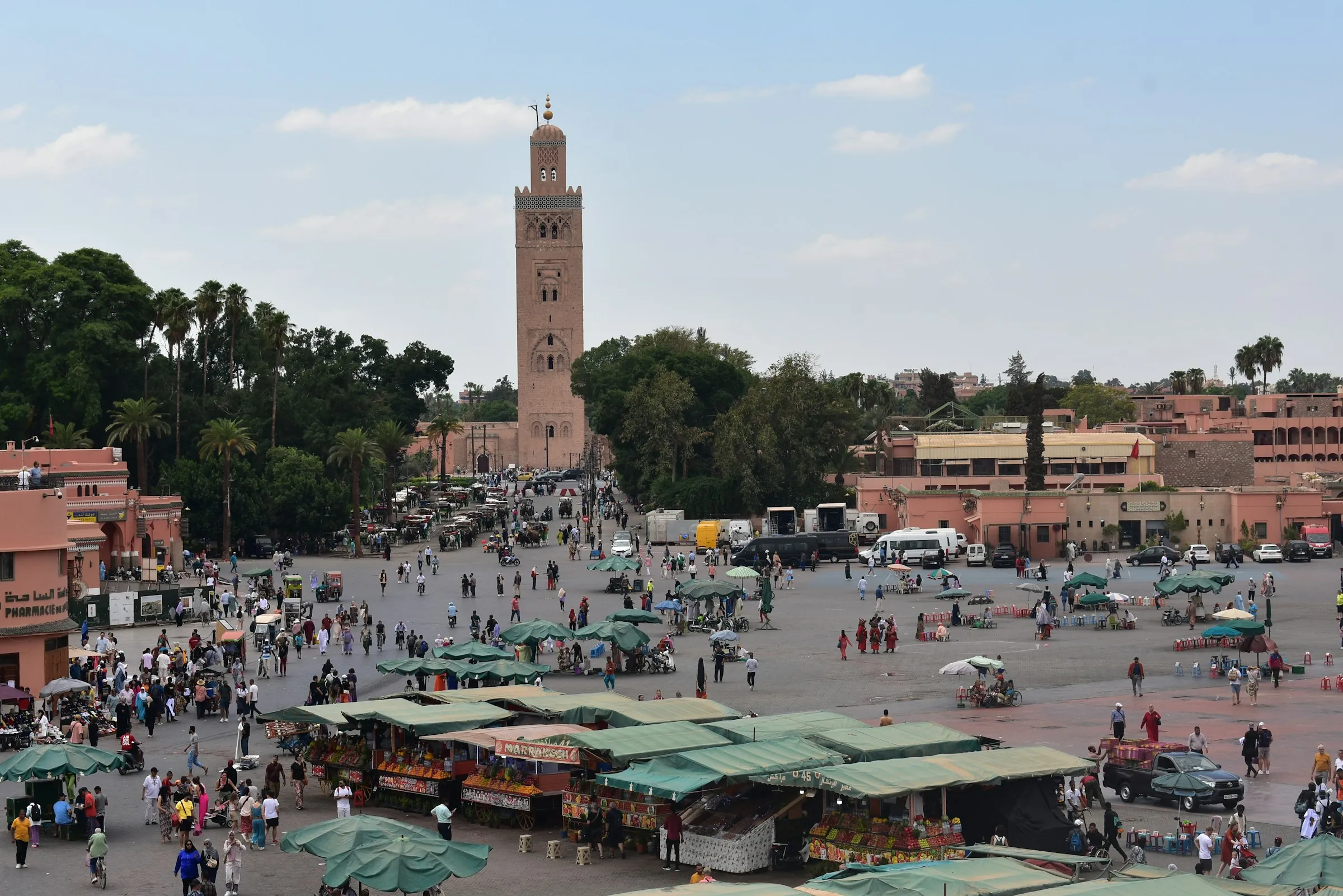
| Watch from a rooftop terrace | A sweeping view, free, with no hassling | The spectacle without the participation |
| Favor animal-free traditions | Storytellers, Gnaoua, acrobats, herbalists | Heritage intact, zero suffering |
The most common trap remains the “surprise” photo: a monkey or snake is placed on your shoulders before any agreement, an accomplice takes the shot with your phone, and then a large sum is demanded. The countermove is simple: don’t reach out your hand or your neck, keep your distance, and if an animal is placed on you without your consent, calmly hand it back and walk away. Our guides on safety and scams at Jemaa el-Fna and what to see and do on the square detail all the animal-free alternatives, which are every bit as spectacular.
The bottom line in one sentence
Jemaa el-Fna is a jewel of humanity’s intangible heritage, and there is no reason to deny yourself the experience. But respecting that heritage carries no obligation toward the animals: by not buying the photos with the monkeys and snakes, every visitor votes, with their wallet, for a living square and a preserved wildlife.
Frequently asked questions
Are the monkeys of Jemaa el-Fna a protected species?
Yes. They are Barbary macaques (Macaca sylvanus), classified as “endangered” by the IUCN since 2008 and listed under CITES Appendix I since 2016. The young ones displayed on the square are often poached from the wild, which worsens the species’ decline.
Why don’t the charmers’ snakes bite?
Because they have generally been mutilated: their venom fangs pulled out, their glands pierced, or their mouths partially sewn shut. These practices, carried out with no hygiene or care, often condemn the animal to die of starvation or infection within a few weeks or months.
Is it ethical to take a photo with a monkey or a snake?
Most animal welfare organizations say no: paying for these photos sustains the demand, and therefore the capture and the cruelty. Many travelers choose to watch from a distance, for free, with no contact whatsoever with the animals.
Does that mean you should boycott Jemaa el-Fna?
No. The square offers plenty of living traditions without animals: storytellers (hlaykia), Gnaoua musicians, acrobats, herbalists, street food. You can savor all of this while simply refusing the animal attractions. See our guide on what to do at Jemaa el-Fna.
Where can you see Barbary macaques without condoning cruelty?
In their natural habitat, mainly the cedar forests of the Middle Atlas (the Ifrane and Azrou region). With a respectful guide, you can observe them from a distance, without feeding or touching them — the only ethical way to encounter these monkeys.
Conservation status according to the IUCN and CITES; practices described based on press reports and animal welfare organizations. This information is provided for general guidance and may change over time.