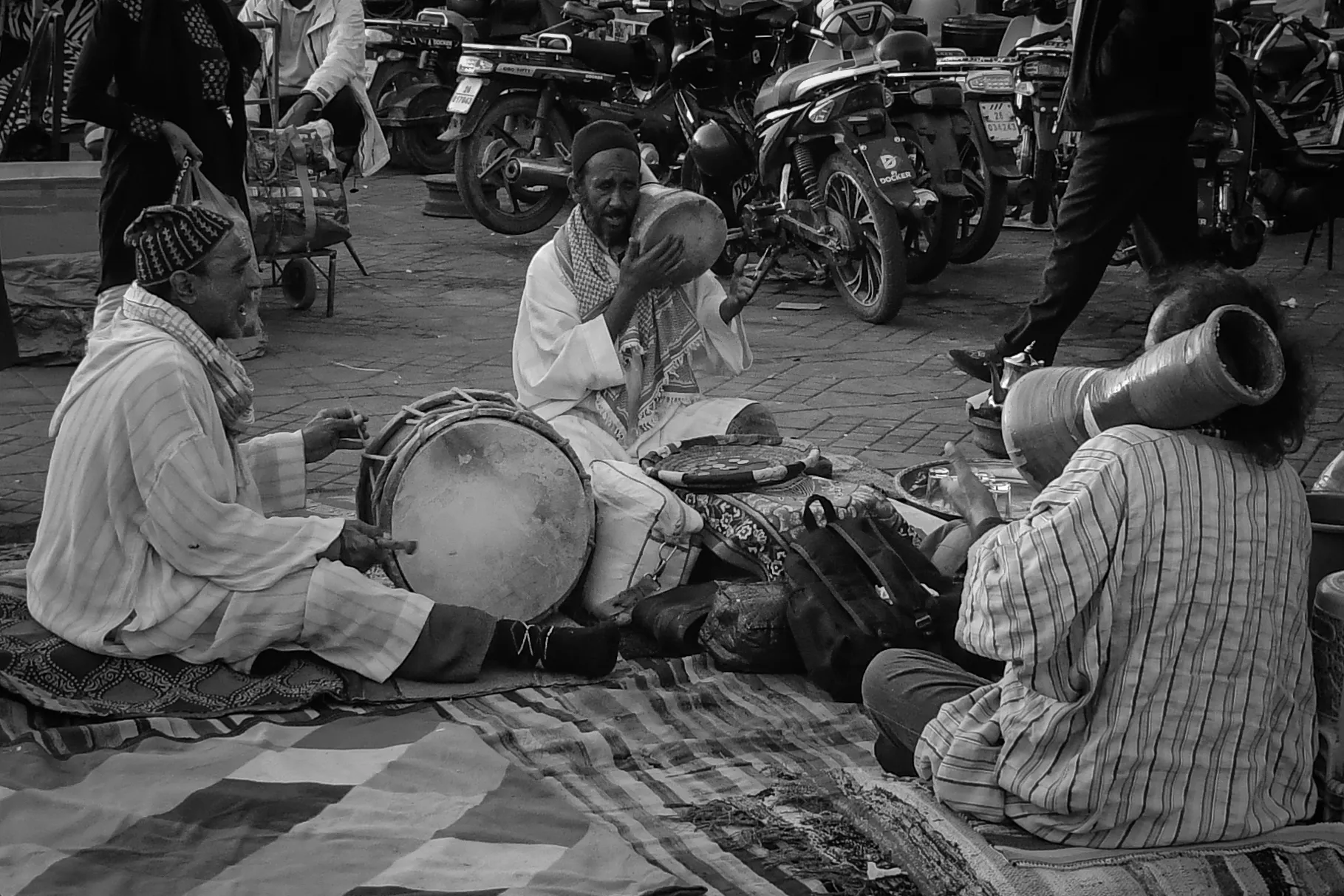
Jemaa el-Fna square was proclaimed by UNESCO in 2001 a “Masterpiece of the Oral and Intangible Heritage of Humanity”, and then inscribed in 2008 on the Representative List of the Intangible Cultural Heritage of Humanity. It is a rare case: the honour does not go to the square as a place, but to what happens there every day — the storytellers, the musicians, the circles of onlookers, the know-how passed on by word of mouth. Jemaa el-Fna was, in fact, the very first site in the world to receive this inaugural title.
This distinction is essential to understanding why the square is protected, and above all what it is being protected from. Here, the treasure is not a monument of stone: it is a living, fragile culture carried by women and men. A storyteller falling silent is a library burning down — and that is exactly what UNESCO set out to prevent by listing the spirit of the square rather than its flagstones.
In this educational guide, we explain in plain terms what intangible heritage is, how it differs from “classic” heritage, the decisive role of the writer Juan Goytisolo, what is concretely protected, and the threats that still hang over this place unique in the world.
Tangible or intangible heritage: what is the difference?
This is the key to understanding everything. UNESCO’s conventions distinguish two broad families of heritage.
- Tangible heritage gathers physical, touchable assets: monuments, archaeological sites, urban ensembles, landscapes. In Marrakech, the medina, the Koutoubia or the Saadian Tombs fall into this category (the medina of Marrakech has in fact been a World Heritage Site since 1985).
- Intangible cultural heritage gathers what cannot be touched: oral traditions, performing arts, social practices, rituals, festivities, craft know-how. These are the living practices passed down from generation to generation.
The great particularity of intangible heritage is that it is living and fragile. An abandoned temple stands for centuries; an oral tradition, by contrast, dies with the last storyteller who knows it. Hence the urgency, for UNESCO, of recognising it, documenting it and encouraging its transmission.
What is intangible heritage according to UNESCO?
The concept was formalised by the Convention for the Safeguarding of the Intangible Cultural Heritage, adopted in 2003. According to this text, intangible heritage refers to “the practices, representations, expressions, knowledge and skills” that communities recognise as part of their cultural heritage.
UNESCO identifies five broad domains:
| Domain | Examples |
|---|---|
| Oral traditions and expressions | Tales, epics, poetry, language |
| Performing arts | Music, dance, street theatre |
| Social practices, rituals and festivities | Ceremonies, games, collective customs |
| Knowledge related to nature | Traditional medicine, herbalism |
| Craft know-how | Henna tattooing, crafts, trades |
At Jemaa el-Fna, these five domains coexist within a few hundred square metres, every evening. It is this exceptional concentration that struck the experts and justified the listing.
Why was Jemaa el-Fna listed as early as 2001?
In 1997, UNESCO launched a new programme: the Proclamation of Masterpieces of the Oral and Intangible Heritage of Humanity. The first list, unveiled on 18 May 2001, included nineteen sites from around the world. Jemaa el-Fna was among them — and it is often cited as the founding element that inspired the programme.
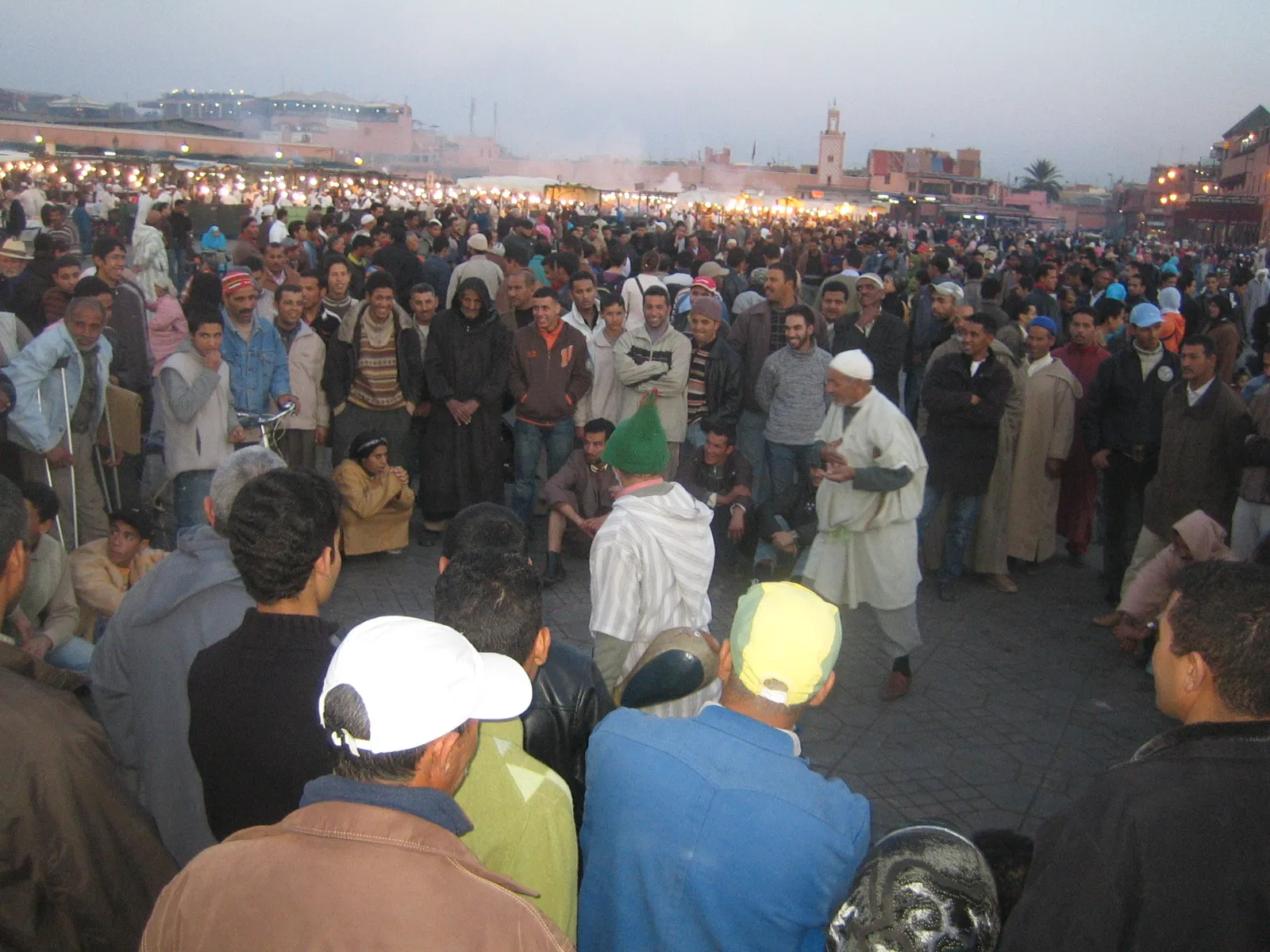
Why it? Because the square embodies the idea of intangible heritage to perfection. Every afternoon, an empty space turns into an open-air theatre: the halqa (circles of spectators) form around the storytellers, the drums of the Gnaoua resound, the herbalists line up their vials. Nothing is fixed, everything is recreated each day by the sheer will of the performers and the audience. It is a tradition that exists only because it is performed, listened to and passed on live.
When the 2003 Convention came into force and created the Representative List of the Intangible Cultural Heritage of Humanity, the masterpieces proclaimed between 2001 and 2005 were incorporated into it. This is how Jemaa el-Fna was officially inscribed on this list in 2008, confirming and cementing the initial recognition.
The decisive role of Juan Goytisolo
You cannot tell this story without mentioning Juan Goytisolo (1931-2017), a Spanish writer who loved Marrakech, where he lived for many years. Fascinated by the square and its storytellers, he became its most tireless defender.
In the late 1990s, a property development threatened the surroundings of the square — there was talk in particular of erecting a glass tower and modernising the esplanade, at the risk of driving the performers away. Goytisolo campaigned, mobilised intellectuals and institutions, and carried the idea of international protection for the oral culture of Jemaa el-Fna to UNESCO. His advocacy was one of the direct triggers of the 2001 proclamation.
Thanks to him, Jemaa el-Fna became a textbook case: proof that an invisible heritage, made of words and gestures, deserves as much protection as a cathedral or a pyramid.
What is concretely protected on the square
UNESCO’s recognition targets “the cultural space of Jemaa el-Fna square”, that is to say all the practices that make up its daily life. Concretely, this includes:
- The storytellers (hlaykia): the heart of the listing, keepers of an oral tradition in dialectal Arabic — epics, moral tales, legends. It is the most endangered practice.
- The halqa: the very form of the circle of spectators around a performer, a centuries-old form of popular entertainment.
- The musicians: Gnaoua (trance music), Berber troupes from the Atlas, singers and percussionists.
- The know-how: henna tattooing, herbalism and traditional medicine, fortune tellers.
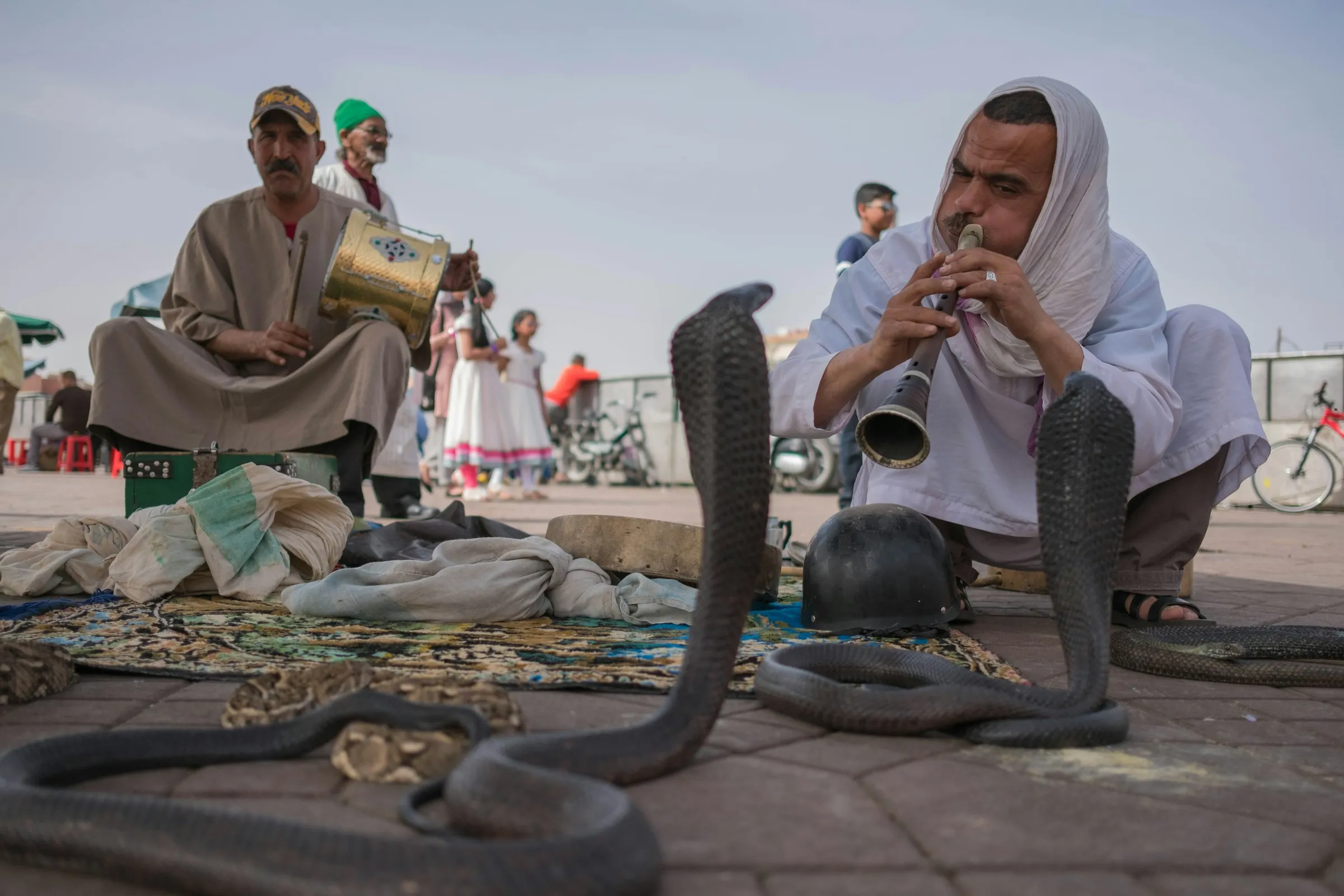
- The trades and figures of the square: water carriers (guerrab) in costume, animal handlers, acrobats, tooth-pullers.
To go deeper into these figures, our dedicated article on the storytellers of Jemaa el-Fna (hlaykia) details this oral tradition and its uncertain future.
The threats that still hang over the square
The listing is not an eternal guarantee. UNESCO itself identifies several very real risks:
- Urban and property pressure: land speculation, the development of road infrastructure and planning projects around the square.
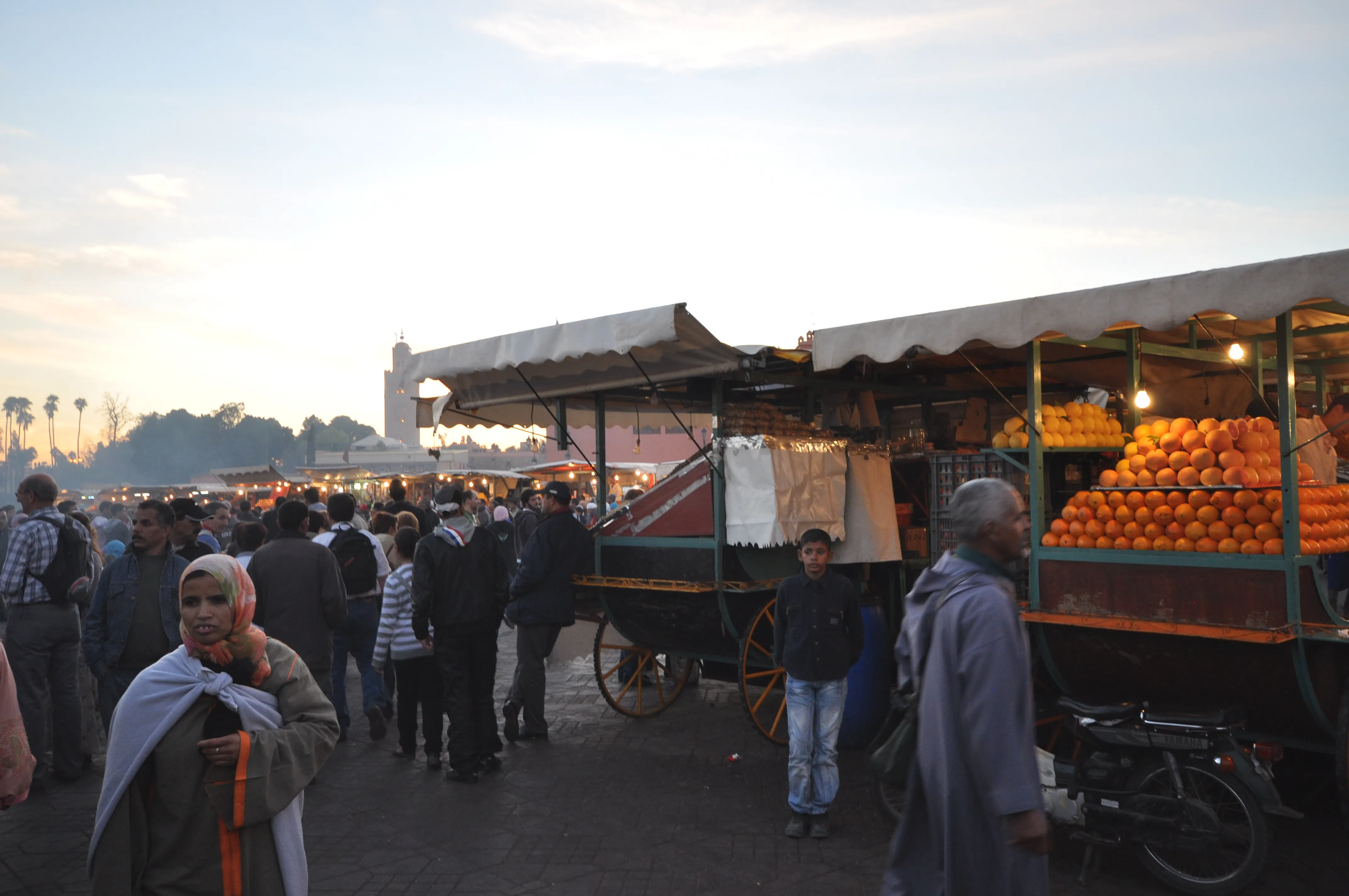
- Acculturation through mass tourism: by putting on too much of a show for visitors, the square risks freezing its traditions into folkloric clichés, emptied of their meaning.
- The disappearance of the storytellers: this is the gravest threat. The great hlaykia are ageing, younger generations are turning to other trades, and oral transmission is running out of breath. On some evenings, only a handful of storytellers remain where there were once dozens.
- Competition from screens and new attractions: amplified music, commercial stalls and touristic solicitations are eating into the space of the traditional arts.
In the face of this, initiatives exist: documenting the tales, supporting the performers, creating a museum of intangible heritage in Marrakech. But the square’s best ally remains the audience — for a halqa exists only as long as there are spectators to form the circle. By stopping to listen to a storyteller, by leaving a few dirhams, you take part, in your own way, in the survival of this heritage.
How to visit the square while respecting its heritage
Understanding the UNESCO value of Jemaa el-Fna changes the way you experience it. A few simple habits:
- Take the time to stop in front of a halqa, even without understanding Arabic: theatricality needs no translation.
- Pay the performers: a small coin in the hat or on the mat is the rent for their art and the fuel of transmission.
- Favour living traditions (storytellers, musicians, herbalists) over animal attractions.
- Photograph respectfully and ask the performers’ permission, as they often request a small contribution.
To prepare your visit, see our full guide to the history of Jemaa el-Fna and our overview of what to see and do on the square.
Frequently asked questions
In what year was Jemaa el-Fna listed by UNESCO?
The square was proclaimed in 2001 a “Masterpiece of the Oral and Intangible Heritage of Humanity”, and then inscribed in 2008 on the Representative List of the Intangible Cultural Heritage of Humanity. It was the first site to receive this inaugural title in 2001.
What is the difference between tangible and intangible heritage?
Tangible heritage covers physical assets (monuments, sites, objects). Intangible heritage covers living practices: oral traditions, music, rituals, know-how. Jemaa el-Fna is listed for its intangible heritage, that is to say its storytellers, musicians and know-how, and not for its buildings.
Who is Juan Goytisolo and what was his role?
Juan Goytisolo was a Spanish writer based in Marrakech. A great defender of the square’s storytellers, he campaigned against urbanisation projects and carried the idea of international protection to UNESCO. His action was decisive in the 2001 proclamation.
What exactly is protected at Jemaa el-Fna?
UNESCO protects “the cultural space” of the square: the storytellers (hlaykia), the halqa (circle of spectators), the Gnaoua and Berber musicians, herbalism, traditional medicine and know-how such as henna tattooing.
Is the UNESCO listing permanent?
No. The recognition aims to raise awareness and encourage safeguarding, but the threats remain: property pressure, mass tourism and above all the gradual disappearance of the storytellers. The vitality of the square depends on transmission and on the interest of the public.
Where can I find UNESCO’s official information?
The official record can be consulted on the UNESCO intangible heritage website: The cultural space of Jemaa el-Fna Square. A concise overview is also available on the Jemaa el-Fna Square page on Wikipedia.